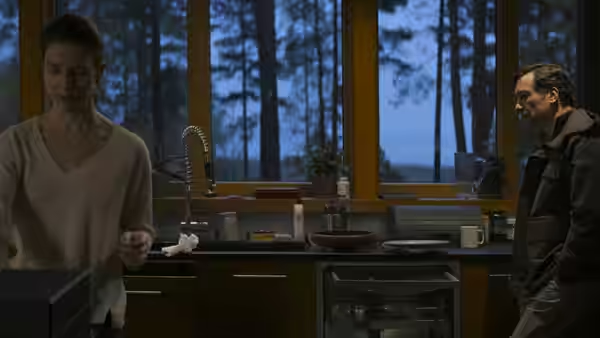
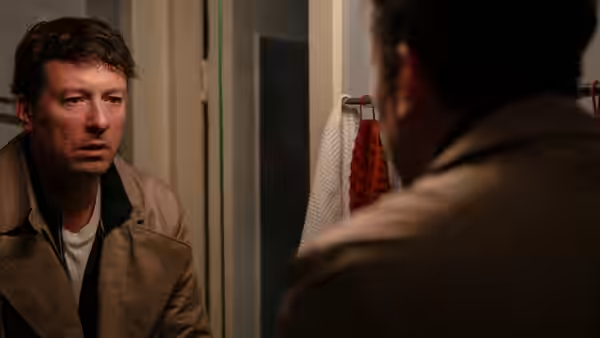
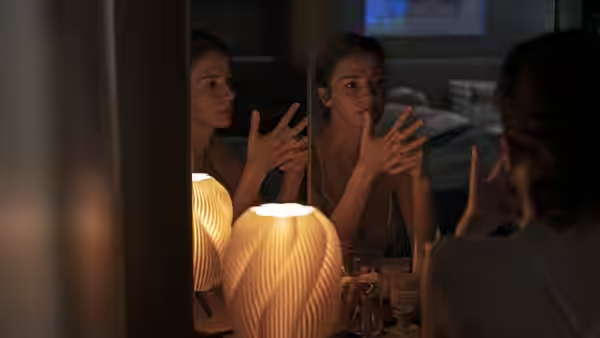
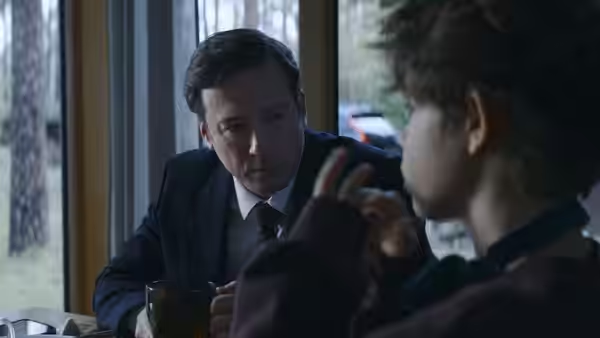
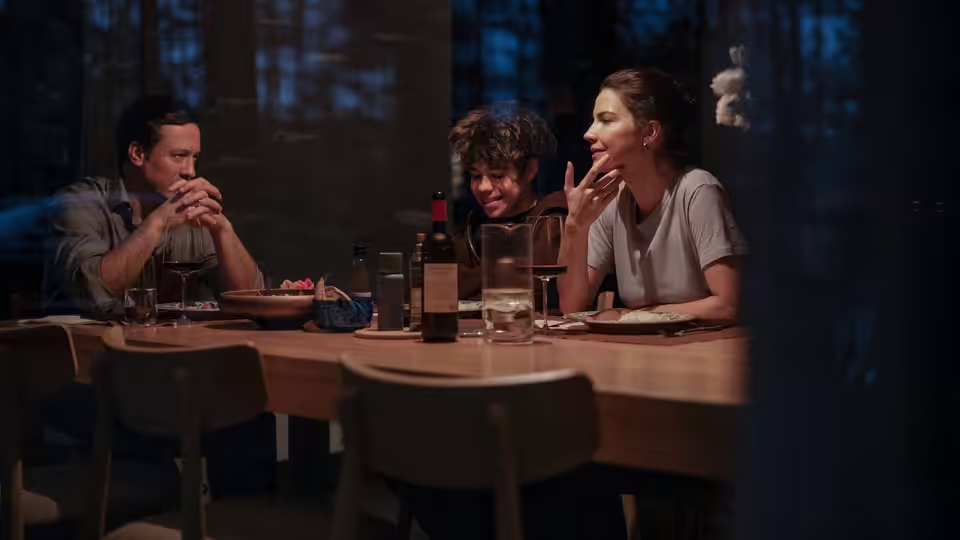
Three people share dinner at a wooden table in a dim forest-side room
Film review

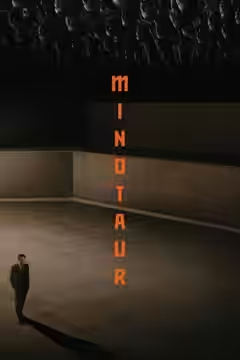
Minotaur

2026 · Directed by Andrey Zvyagintsev · 2h 15m

In a sentenceChabrol moves to a Russian gated estate and finds the exits have been bricked up

Gleb (Dmitriy Mazurov) is a rich man in present-day Russia, with a large house, staff, a wife, Galina (Iris Lebedeva), and a working friendship with the local Mayor (Vladimir Friedman) that pays for all of it. A war is being fought beyond the estate, and nobody inside mentions it more than they have to. The marriage looks well kept from the outside. Natasha (Varvara Shmykova), Dasha (Anastasia Mischenko) and Adrien (Rudgy Pajany) each have their own reason to be in the house. Andrey Zvyagintsev takes a Claude Chabrol domestic thriller about adultery and moves it inside the Russian elite, where the first question is never what happened but who will be made to carry it.

Plays from YouTube when you press play; nothing loads from them until then.

Fi1m review

Andrey Zvyagintsev reworks a Chabrol domestic thriller into a cold, exact account of how a rich Russian household disposes of its problems. Iris Lebedeva is superb and Mikhail Krichman’s frames are pitiless; at 135 minutes the film is a touch too sure of its own patience.

Andrey Zvyagintsev has not made a feature since Loveless in 2017, and Minotaur is the film of a man who has spent the gap getting angrier and quieter. Written with Simon Liashenko, it takes a Claude Chabrol domestic thriller, the kind in which a well-off marriage has something in it that will not stay buried, and moves it to a rich Russian household in the present, with a war going on somewhere beyond the gates. The tagline is “Morality is a maze.” The film is blunter than that. It is about a house, who owns it, and what the people inside it will do to keep it.

Gleb (Dmitriy Mazurov) has the house, the money and the right friends, chief among them the Mayor (Vladimir Friedman), whose approval has to be renewed in person. Galina (Iris Lebedeva) is his wife, and the marriage is kept in good order the way the garden is. Varvara Shmykova’s Natasha, Anastasia Mischenko’s Dasha and Rudgy Pajany’s Adrien move through the rooms around them. Mariya Slavina and Andrey Ponkratov have designed the house as the main character: long corridors, hard surfaces, glass that shows the grounds and nothing past them. By the half-hour mark we knew every room, and we wanted out of all of them.

Mikhail Krichman has shot every one of Zvyagintsev’s features and he has not softened. He frames people in wide, level shots and leaves them there, the way a police photographer frames a room, so that you look for the thing that is wrong before anyone tells you. Zvyagintsev cuts his own film, which explains the pace. Shots run on past the point where another editor would have let us go, and that is the method, not an accident. Evgueni and Sacha Galperine’s score is used sparingly; much of the film plays in the silence of a big house with the heating on, and when the music does arrive it feels like a decision.

Lebedeva carries the film. She plays Galina with a stillness that is never blank, a woman doing arithmetic behind her face, and it is the best performance in the film. She frightened us more than anything the plot does, because we could never tell what she had decided until she had done it. Mazurov is good in the harder part, a man who has mistaken ownership for character. Friedman’s Mayor never raises his voice and never needs to.

What holds it short of Zvyagintsev’s best is the length and the title. At 135 minutes the middle hour has stretches where the stillness stops being tension and becomes waiting, and we felt the difference in our seats. And the Minotaur of the title, the beast at the centre of the maze, is an idea the film states more than once and does not always need; the house and the Mayor say it better than the mythology does. One or two critics have found the film too conventional for its ambitions. We think the conventions are what allow it to be this cruel without appearing to try.

Set beside Leviathan (2014), which went after the Russian state through one stubborn man and his house on the coast, this is smaller, colder and more enclosed, with none of the earlier film’s drink or weather. It is closer to Elena (2011): a domestic crime, a question of who ends up with what, and a camera that never takes a side. The last image looks past the house at something a long way off, and we have not stopped thinking about it.

See it in a cinema if you can bear the quiet. At home the silences will tempt you to look at your phone, and the film will know you did.

Critical consensus AI synthesised

80
Positive
12
Mixed
1
Negative
1

Most critics admire Minotaur: eleven of thirteen reviews are positive. The praise gathers around Zvyagintsev’s direction, described as restrained, exacting and in full command of silence and framing. The compositions draw repeated notice, cold and crime-scene-like, the family home becoming a source of dread. Nearly every review reads the film as a domestic thriller reworked into an attack on Putin-era Russia, and most find it darkly funny as well as bleak. A prolonged corpse-disposal sequence is singled out more than once.

The reservations are about pace and access. Deadline and The Wrap warn that the ambiguity, bleakness and disciplined pacing will frustrate some viewers, and Little White Lies finds stretches lethargic. The one negative verdict comes from Eye for Film, which thinks the Minotaur metaphor stronger than the drama around it and the film too conventional for its ambitions. The spread is narrow at the top; the dissent is thin.

IndieWire
19 May 2026 · A- · Ryan Lattanzio
90

Lattanzio finds the film engrossing and icily exacting, despite its familiar story. He especially praises Iris Lebedeva’s performance and the bleak, politically charged final images.

Read the full review →
Sight and Sound
3 June 2026 · festival review · BFI
90*

The critic finds the film brilliant and blackhearted, turning domestic drama into a potent allegory of Russian authoritarianism. They praise its elegant compositions and lingering final shot, which makes distant clouds evoke explosions.

Read the full review →
The Hollywood Reporter
19 May 2026 · festival review · Leslie Felperin
90*

Felperin finds the film gripping, rigorously made and Zvyagintsev’s most incisive critique of Russia’s political and moral malaise. She praises its intricate irony and economical storytelling, especially a gruesome, comic, and pivotal sequence.

Read the full review →
Variety
19 May 2026 · festival review · Guy Lodge
90*

Lodge finds Zvyagintsev in impeccable form, delivering a despairing and darkly funny critique of corruption and betrayal. He especially praises the film’s meticulous framing and its sharp reworking of a domestic thriller into a portrait of Putin-era patriarchy.

Read the full review →
Slant Magazine
11 September 2026 · ★★★½/4 · Mark Hanson
88

Hanson finds the film a blistering, darkly comic indictment of Russia’s wartime and oligarchic culture. He particularly praises the mesmerizing desolation of its cinematography and compositions.

Read the full review →
Los Angeles Times
22 May 2026 · festival review · Joshua Rothkopf
85*

Rothkopf says Zvyagintsev’s return is worth the wait and praises the film’s distilled expression of the director’s strengths. He especially singles out its brutal daylight climax and its portrait of Putin’s dissociative society.

Read the full review →

Straight answers AI written, from our review

Is Minotaur worth watching?
Minotaur is worth watching for anyone with the patience for a slow, cold Russian domestic thriller, and we scored it 80. Iris Lebedeva's performance and Mikhail Krichman's level, pitiless framing are the reasons to go; the reservation is that at 135 minutes the middle hour has stretches where stillness becomes waiting.
How long is Minotaur, and what is it rated?
Minotaur runs 2h 15m. It is a drama and crime film.
Where can I watch Minotaur in the US?
Minotaur is not on any streaming or rental service in the US at the moment. Availability is checked daily.
How violent or frightening is Minotaur, and is it suitable for children?
Minotaur has no certificate in the UK or the US as yet, and it is a drama about adultery, crime and a rich household disposing of its problems, with a war going on beyond the gates. What the review describes is dread rather than gore, with the most frightening thing being what Galina might decide. It is an adult film in subject and pace, and not one for children.
How does Minotaur compare to The Conformist?
Minotaur and The Conformist are both about careful, well-off people making themselves useful to a regime, but Zvyagintsev's film is colder, quieter and shut inside one house, where Bertolucci's is seductive, mobile and far more beautiful to look at. The Conformist is the richer film and the one we would send a stranger to first; Minotaur suits those who want the same question asked without any warmth at all.
What should I watch after Minotaur?
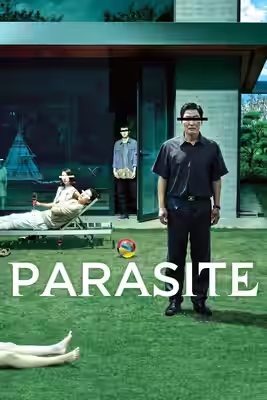
After Minotaur, try The Conformist (1970, Fi1m 87): Bertolucci on how a careful man makes himself useful to a regime. Then Parasite (2019, Fi1m 91): Another house with secrets in the basement, played faster and for bigger laughs; and Force Majeure (2014, Fi1m 84): A comfortable marriage cracks after one bad decision; nobody mentions it at dinner.

Cast

Awards

Cannes Film Festival, 2026

Won
Cannes Film Festival Grand Prix

If you liked this, try…

  1. La Femme infidèle (1969) · not reviewed yetThe Chabrol original: a bourgeois marriage, a lover, and a very practical husband.

  2. Leviathan (2014) · not reviewed yetZvyagintsev’s big one: a man, a house and a state that wants both.

  3. The Conformist (1970, Fi1m 87)Bertolucci on how a careful man makes himself useful to a regime.

  4. Parasite (2019, Fi1m 91)Another house with secrets in the basement, played faster and for bigger laughs.

  5. Force Majeure (2014, Fi1m 84)A comfortable marriage cracks after one bad decision; nobody mentions it at dinner.

Free account

Know what to watch tonight

Two lists that know where things are streaming, collections you can share, your own score beside ours, and Discover that remembers what you have seen.

  • Want to see, sorted by what is streaming now
  • Seen, with your score out of ten
  • No adverts, ever