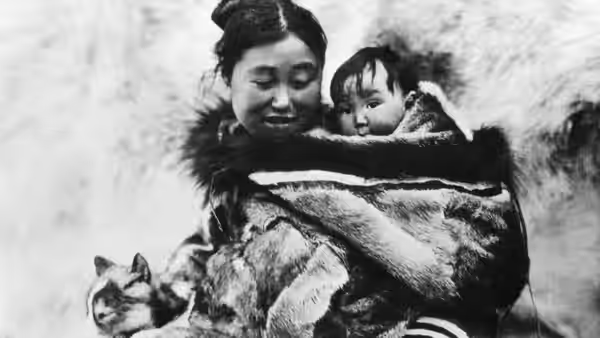
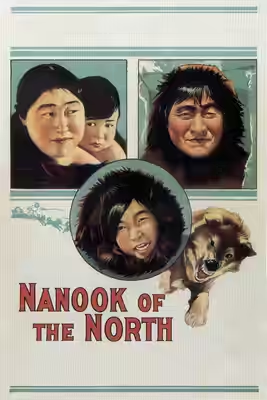
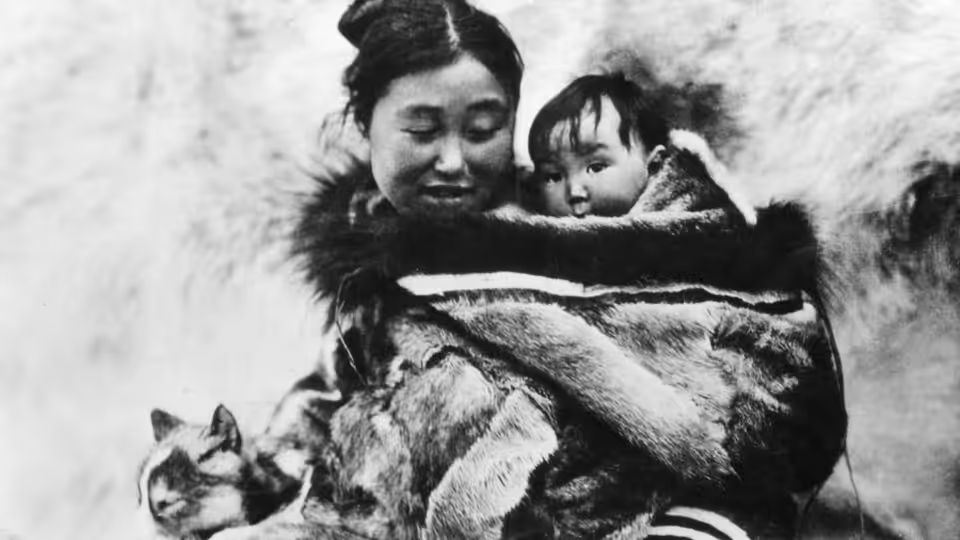
Nanook's wife cradling her child in furs beside a husky
Film review

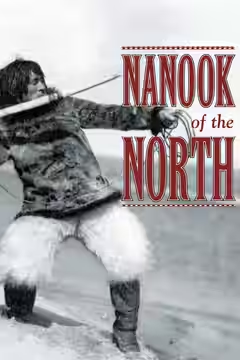
Nanook of the North

1922 · Directed by Robert J. Flaherty · 1h 19m

In a sentenceA hunter bites a gramophone record on instruction and fights a dead seal, and we rooted for him in both

On the eastern shore of Hudson Bay, in the early 1920s, a hunter called Nanook (Allakariallak) climbs out of a kayak onto the rocks, followed by his wife (Alice Nevalinga), whom the titles call the Smiling One, his daughter Cunayou (Cunayou), his sons Allegoo (Allegoo) and Allee (Allee) and a puppy. He needs to feed all of them through a winter that has not yet begun. He paddles to the white man’s trading post to swap fox and bear furs for knives and beads, is shown a gramophone and bites the record to see what it is made of, then takes his kayak and his harpoon out to a rocky shore where a herd of walrus lies asleep in the surf.

Fi1m review

Robert J. Flaherty’s 1922 portrait of an Inuit hunter and his family on Hudson Bay is stitched together, staged in places and openly romantic, and it is still as alive as any silent film we know. Watch it for Allakariallak’s face and forgive the titles.

Robert J. Flaherty had spent years in the north as a prospector before he was a film-maker, and he had shot a great deal of film there that he never showed anyone, because the negative caught fire. When he went back, he went with a different idea: not a survey of a people but a story with a hero in it. One hunter, one family, one year on the eastern shore of Hudson Bay. He wrote it, produced it, shot it and cut it himself, and the result runs 79 minutes, silent, with intertitles doing the talking.

The family arrives by kayak. Nanook (Allakariallak) climbs out onto the rocks, and then a wife (Alice Nevalinga) climbs out after him, then a child, then another, then a puppy, from a boat that seemed to have room for one. It is a music-hall entrance and Flaherty knows it. At the trading post Nanook is shown a gramophone, listens, grins and bites the record to find out what it is made of. We laughed, and a few seconds later we were not sure we should have; the title card has already called him “the happy-go-lucky Eskimo”, and the joke is being arranged for us by the man holding the camera.

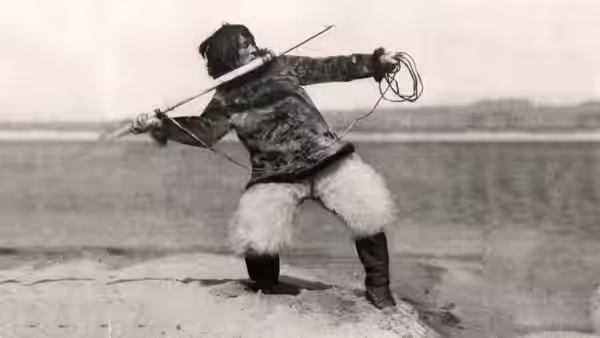
That is the film’s trouble and we may as well name it now. A good deal of what we see was set up. The woman is not Allakariallak’s wife; the harpoons are out of date, because by 1920 men here hunted with rifles; the seal that fights him at the end of a line was dead before the fight started, with men off camera pulling the other end. Flaherty built an igloo with one side missing so the camera could watch the family go to bed. The titles call the people Eskimos, as everyone did in 1922; they are Inuit, and they knew more about what they were doing than the titles allow.

And still the film got us, because Flaherty could see. He lets a shot run for as long as the thing in it takes. The walrus hunt is a line of men on a rope being dragged towards the water by a beast we cannot see, the rest of the herd bellowing from the surf, and there is no cut to rescue us. The igloo goes up block by block, cut from the snow with a long knife, and when Nanook fits a slab of clear ice into the wall for a window, then sets a wedge of snow outside it to bounce the light in, we understood a piece of engineering in ten seconds that a paragraph could not have taught us.

We knew the seal was dead. We had read about it before we sat down. Allakariallak drops his line through the hole in the ice, waits, is yanked flat, digs in his heels, loses ground, and we leaned forward anyway. The knowing did not help at all. Then the family eats, raw, on the ice, while the dogs sit in a ring waiting for what is left, and Flaherty holds on Alice Nevalinga’s face, which the titles call the Smiling One and which is doing exactly that. It moved us more than a staged meal should be able to.

The cutting, credited to Flaherty and Charles Gelb, is the plainest thing in it: one action, then the next. It is right for the material and it is also why the middle sags. The children (Cunayou, Allegoo and Allee) are dried and rubbed down and tucked into fur once more than we needed, and the trading post scenes go on after their point is made. There is no composer, and the music we hear depends on the print; we have seen it with a piano and with a full orchestra and prefer the piano, which does not tell us how to feel about a walrus.

This is the film the documentary starts from, and so does the argument about what a documentary is allowed to do. Every film since that has put a real person in front of a camera and asked them to do the thing again, properly this time, is doing what Flaherty did here. The last reel is a storm, and we will say only that the dogs are outside in it. The tagline promised the actual Arctic, and that, at least, nobody had to fake.

Critical consensus AI synthesised

88
Positive
7
Mixed
0
Negative
0

Seven reviews, all positive, and the verdict has held for ninety years: the earliest, from Variety and the New York Times on the film’s release, say much the same as the most recent. Most critics treat it as the founding document of the documentary and praise Flaherty’s closeness to his subject above anything else. The praise clusters on Nanook himself, whom the New Yorker describes as a great, undefeated man, and on two sequences in particular: the igloo construction and the seal hunt, singled out for their ingenuity and force.

The reservations are few and shared. Nearly every review notes that much was staged for the camera, and nearly every one decides it does not matter. Variety concedes the technique is primitive; Empire finds flaws in form and structure but forgives them for the humanity on show. The spread is narrow, from good to rapturous, with the more recent writers slightly cooler than the older ones, and nobody dissents.

RogerEbert.com
25 September 2005 · Roger Ebert
95*

The critic praises the film as a stark, authentic portrait of Inuit life and survival against nature, despite some staging, highlighting its humanity and the unforgettable vitality of its subject Nanook. He singles out the seal-hunting sequence and igloo construction for their power and ingenuity.

Read the full review →
The New Yorker
21 August 1948 · Philip Hamburger
95*

The critic hails the re-released film as an epic of classic simplicity and profound artistry, praising Flaherty's intimate knowledge of his subject and the camera's power to reveal the Eskimos' struggle and adaptability. He singles out Nanook's mastery of his knife and his portrayal as a great, undefeated man.

Read the full review →
The New York Times
12 June 1922
90*

The review calls the film a powerful, realistic drama of Eskimo life with true dramatic essentials, far surpassing ordinary photoplays in its depiction of real struggles against the elements. It singles out the intelligence and skill of the filmmaking in capturing Nanook's story with force and authenticity.

Read the full review →
Variety
31 December 1921 · Variety Staff
90*

The review deems the film the granddaddy of documentaries and a classic that fully lives up to its reputation despite primitive technique and harsh shooting conditions. It singles out the tremendous interest in detailing Eskimo family life through the seasons with dignity and humor.

Read the full review →
The Guardian
13 April 2000 · Derek Malcolm
85*

The critic praises Nanook of the North as a pioneering work that remains in a class by itself for its purity of style and dramatic skill in depicting Inuit life and the harsh landscape. He notes Flaherty's goal of authenticity, though with some staged elements, and highlights the film's coherent storytelling without a conventional plot.

Read the full review →
Empire
13 June 2006 · David Parkinson
80*

The critic praises Flaherty's pioneering documentary as a remarkable piece of humanist anthropology that creatively treats reality and influenced later filmmakers and the Soviet cinema revolution. They note some flaws in form and structure but highlight its humane and inspiring qualities overall.

Read the full review →

Straight answers AI written, from our review

Is Nanook of the North worth watching?
Nanook of the North is worth watching for anyone with patience for a silent documentary that is partly staged and openly romantic, and we scored it 84. Flaherty lets the walrus hunt and the building of the igloo run at their own pace, and Allakariallak's face carries the rest. The middle sags and the titles condescend; forgive them.
How long is Nanook of the North, and what is it rated?
Nanook of the North runs 1h 19m. It is a documentary and drama film.
Where can I watch Nanook of the North in the US?
Nanook of the North is streaming on HBO Max, Tubi, The Roku Channel and Hulu in the US, and it is also available to rent from Apple TV from $3.99. It leaves HBO Max on 30 September. Availability is checked daily; the links above go straight to each service.

Cast

If you liked this, try…

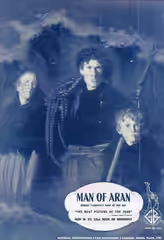
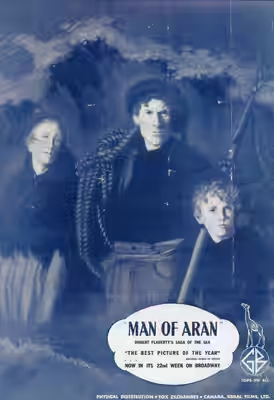
  1. Man of Aran (1934) · not reviewed yetFlaherty does it again off Ireland, with a shark hunt he had to teach the islanders.

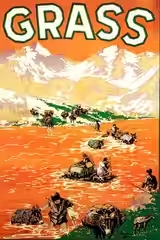
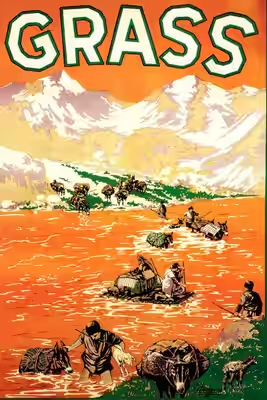
  2. Grass: A Nation's Battle for Life (1925) · not reviewed yetBakhtiari herders drive their animals over snow mountains; the same awe, less arranging.

  3. Atanarjuat: The Fast Runner (2001) · not reviewed yetAn Inuit cast and crew tell their own story, and the ice looks different.

  4. Nanook Revisited (1990) · not reviewed yetClaude Massot goes back to Inukjuak and asks what the town remembers of Flaherty.

  5. Angry Inuk (2016) · not reviewed yetAlethea Arnaquq-Baril on the seal hunt today, and who gets to be outraged about it.

Free account

Know what to watch tonight

Two lists that know where things are streaming, collections you can share, your own score beside ours, and Discover that remembers what you have seen.

  • Want to see, sorted by what is streaming now
  • Seen, with your score out of ten
  • No adverts, ever