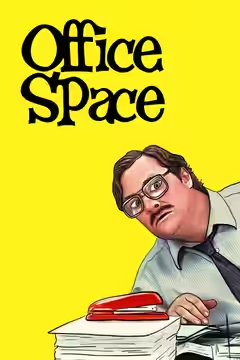
Mike Judge’s Office Space is a sharply observed workplace comedy, with Gary Cole and Stephen Root making small humiliations painfully funny. The thin plot loses force in the final third, but the people are worth staying for.
Mike Judge understands how little an office needs to do to make its employees miserable. A tiresome routine, a petty manager and the knowledge that the same thing awaits tomorrow will do. Office Space is a funny, observant comedy that trusts those everyday grievances for most of its 90 minutes, and we recommend it with a reservation about the thin story. Judge’s screenplay is strongest when work itself supplies enough trouble without much plot getting involved.
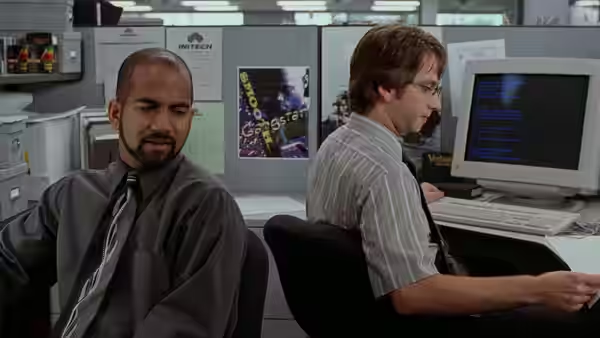
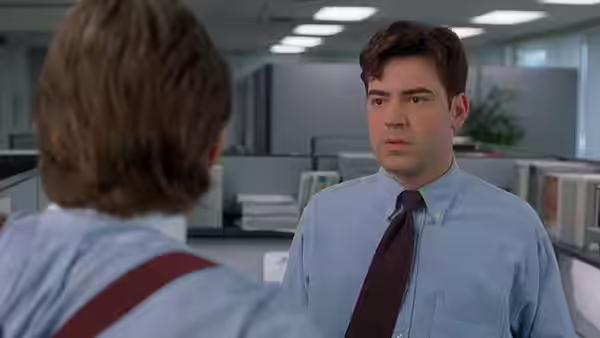
Ron Livingston keeps Peter’s dissatisfaction quiet enough to be recognisable, giving the film room for louder grievances around him. David Herman’s Michael Bolton and Ajay Naidu’s Samir make that frustration feel shared across the workforce. The joke about Bolton’s name is slight, but Herman gives the annoyance enough conviction to sustain it. Jennifer Aniston’s Joanna is agreeable company in the romantic scenes, though those scenes are less sharply observed than the workplace relationships.
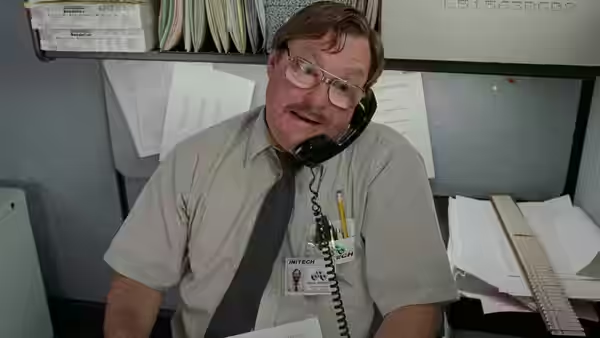
Gary Cole is especially good as Bill Lumbergh, making managerial pettiness feel capable of occupying an entire working day. He need not turn the boss into a monster; the small aggravations are quite sufficient. We laughed at Milton’s discomfort, then regretted it. Stephen Root makes his mistreatment feel so ordinary that laughing starts to feel like joining in, and Judge lets that discomfort persist alongside the jokes.
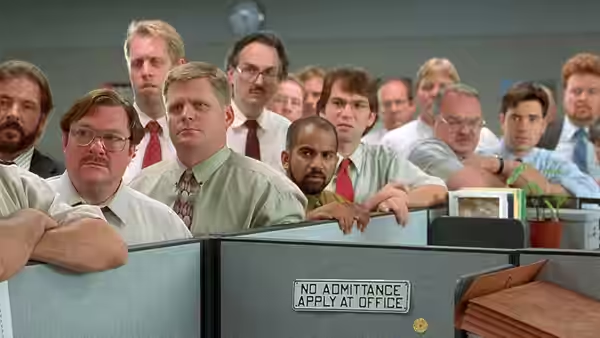
Tim Suhrstedt’s cinematography keeps the cubicle setting plain enough for the performers’ discomfort to hold our attention. Edward T. McAvoy’s production design gives those frustrations a credible home, with the office technology contributing to the irritation. The effect is satisfyingly mundane. These are surroundings in which a small inconvenience can seem enormous, especially when there is no prospect of leaving for several hours.
David Rennie’s editing serves the deadpan humour well, giving the characters’ exasperation time to register. The individual encounters feel more assured than the way they fit together, and the momentum weakens as the story needs to go somewhere. John Frizzell’s score is a modest asset, supporting the comedy without becoming its main source of energy. The performances supply that, even when the screenplay is asking them to carry a little too much.
That becomes a problem in the final third, when Judge has less to offer than the precision of his early observations promised. The plot is too thin to sustain the interest generated by the people, and the romantic material does not fully compensate. The cast remain engaging, but the film starts to run out of useful things for them to do. The loss of comic force is noticeable even within a 90-minute running time.
Workplace comedy can settle for an assortment of eccentrics and a shared dislike of the boss. Judge gets further by noticing how routine and petty authority wear people down, though he struggles to give those workers an equally interesting story. Cole and Root keep the complaints personal enough to matter. Watch it after a trying day, with someone who will not spend the next hour explaining that their office is worse.