a woman in a light robe stands on a balcony above a ruined smoky city
Film review

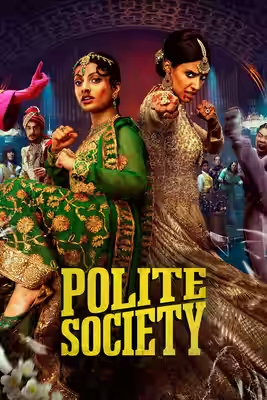
Polite Society

2023 · Directed by Nida Manzoor · 1h 44m · MPA PG-13

In a sentenceThe bride’s sister would rather fight everyone at the wedding than sit through it, and for an hour we agreed with her

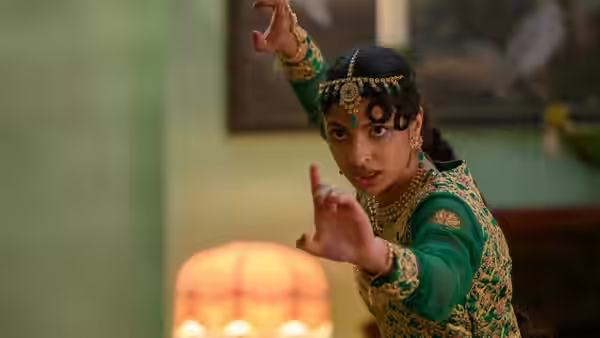
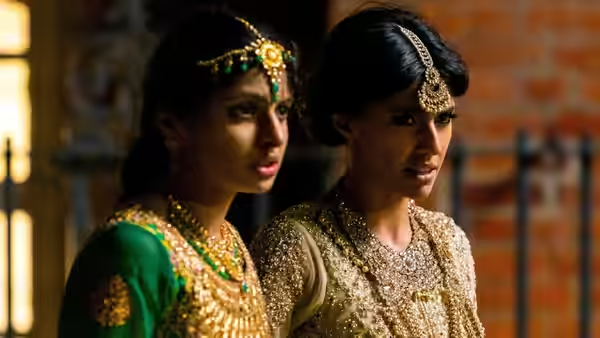
Ria Khan (Priya Kansara) is a London schoolgirl who wants to be a stuntwoman and practises her kicks on anyone who will stand still. Her older sister Lena (Ritu Arya) has left art school and spends her days in bed, which suits Ria, since Lena films the stunts. Then Lena is taken to a party thrown by Raheela (Nimra Bucha), meets her son Salim (Akshay Khanna), and within weeks there is an engagement. Ria decides the match is wrong, though she cannot say why, and with her friends Clara (Seraphina Beh) and Alba (Ella Bruccoleri) sets out to stop the wedding. Their parents, Fatima (Shobu Kapoor) and Raff (Jeff Mirza), would like everyone to behave.

Plays from YouTube when you press play; nothing loads from them until then.

Fi1m review

Nida Manzoor’s debut is a fizzing comedy about a girl who would rather fight than lose her sister, and Priya Kansara is a find. It is best in the kitchen; the last act trades the sisters for a plot we neither believed nor laughed at.

Nida Manzoor made We Are Lady Parts for television, and Polite Society is her first film. It is about Ria Khan (Priya Kansara), a schoolgirl who wants to be a stuntwoman, and her older sister Lena (Ritu Arya), who has given up art school and gone to bed. When Lena gets engaged, Ria takes it as a declaration of war and treats the wedding the way she treats everything else, as a fight to be won. The first hour of this is as much fun as we have had at a British comedy in a while. The last half hour is not, and we will explain why without saying what happens.

Kansara is the reason to see it. She is small, quick and permanently affronted, and she plays Ria as a girl who decided who she was before anyone asked. Her fighting looks like her own fighting; you can see her land. She announces “I am the Fury” before her set pieces, and by the third time we were saying it with her. Arya has the quieter part and does more with it than the script gives her. Lena’s misery is the thing the film is actually about, and Arya lets it sit under every joke.

Ashley Connor shoots the fights like westerns, with whip pans and slow zooms into narrowed eyes, and Robbie Morrison cuts them like comics, freezing on a face so a title card can slap down over it. The school fight between Ria and Kovacs (Shona Babayemi) is where the style declares itself: a bout between two teenagers over nothing, filmed with the gravity of a duel. We laughed out loud, and kept laughing, because the film was taking the fight exactly as seriously as Ria was and not a bit more. Shez Manzoor and Tom Howe score it with twanging guitar and Bollywood drums, and the best single sequence is not a fight at all but a dance, Ria performing Maar Dala at the engagement party with the fixed smile of someone planning a crime.

Nimra Bucha’s Raheela, the mother of the groom, is the villain, and she is a good one. PC Williams dresses her in silks in colours nobody else in the film can afford, and Simon Walker gives the Shahs a house that is all white surfaces and glass, set against the Khans’ terrace of coats on banisters and food on every table. Bucha plays Raheela as a woman who has never once been contradicted and finds the experience interesting. Every scene she shares with Kansara has the charge of two people who understand each other far too well.

The trouble starts when the film stops asking whether Ria is right and starts answering. For an hour the joke is that she is a teenager who has read the situation as a film because films are all she knows, and Manzoor’s script keeps you unsure whether the plot is in Lena’s marriage or in Ria’s head. Then it takes the story somewhere we will not describe, except to say it is louder, stranger and much less interesting than what came before. The sisters, who were the point, are kept apart for most of it. The fights get bigger and mean less. The BFI billed this as a Matrix-inspired action comedy, and the last act is where the borrowing shows: bits of Bond, bits of horror, bits of heist, all done capably and none of them hers in the way the kitchen scenes are. We sat there waiting for the film to come back to the two women at the table, and it took its time.

At 104 minutes it is not long, and Morrison keeps it moving even when it has nowhere much to go. Shobu Kapoor and Jeff Mirza, as the parents Fatima and Raff, are warmer and funnier than the plot needs them to be. Ella Bruccoleri and Seraphina Beh, as Ria’s friends Alba and Clara, are a proper double act, and we would watch a film about them.

Most critics have gone a little further than we have. They are right about Kansara and Bucha and the first hour; we think the swerve costs more than they allow. Set against British debuts of its kind it is confident, noisy and made by someone who knows exactly what she likes. Watch it with a sibling who has ever annoyed you, and forgive it the ending.


Critical consensus AI synthesised

80
Positive
12
Mixed
1
Negative
0

The reviews for Polite Society are almost uniformly warm and the spread is narrow: nearly every critic is positive, one is mixed, none is negative. The praise gathers around Nida Manzoor’s debut direction, the fight choreography and the chemistry between the two sisters, with Priya Kansara’s physical performance singled out again and again; several also pick out Nimra Bucha’s villain. Most critics describe the film as a genre mash-up, citing Scott Pilgrim, Edgar Wright and Jane Austen, and most enjoy the borrowing.

The reservations cluster in the second half. Several find the late swerve into social thriller uneven, and a few say the finale loses momentum. The dissent is mild rather than sharp: Time Out thinks it bites off more than it can chew, The Times finds the hyperactive style a little grating, and Vulture calls it fun but unsatisfying, lacking full commitment to its genre swings. Nobody disputes the energy; the disagreement is over whether there is enough underneath it.

Empire
24 April 2023 · Ella Kemp
85*

Manzoor's debut is a delightful mash-up of British comedy and genre-bending action that celebrates sisterhood and ambition. It excels through the leads' chemistry and inventive stunt work, though the second-half thriller turn is slightly uneven.

Read the full review →
RogerEbert.com
28 April 2023 · Monica Castillo
85*

Nida Manzoor’s riotously funny and action-packed film is a bold feature debut that defies categorization, at its core about the power of supportive sisters while critiquing cultural, generational, and gendered expectations amid high kicks and punches. It is an action comedy in the style of Edgar Wright mixed with cross-cultural commentary, sibling dynamics, and Jane Austen-style defiance, but most importantly a damn good time at the movies.

Read the full review →
Variety
21 January 2023 · Critics Pick · Peter Debruge
85*

Sixteen-year-old Ria doesn't want her older sister to get married, and she'll go to extreme lengths to keep the ceremony from happening in Nida Manzoor’s 'Scott Pilgrim'-esque Sundance sensation. Writer-director Nida Manzoor’s rowdy feature debut channels everything from Sergio Leone to “Scott Pilgrim vs. the World” in its wild and frequently outrageous route to sparing Lena the indignity of an (almost) arranged marriage.

Read the full review →
Little White Lies
25 April 2023 · 4/4/4 · Fatima Sheriff
80

The critic calls the film a completely delightful debut with in-your-face comedy about crane-kicking traditional mores, highlighting South Asian Scott Pilgrim energy that is heaps of fun. Martial arts combatting marital annihilation makes for a winning combination.

Read the full review →
Los Angeles Times
27 April 2023 · Robert Abele
80*

It’s a sisterhood of the traveling fists and feet in Nida Manzoor’s rowdy and uplifting action-comedy, a movie with a lot of fight in it literally and figuratively in advocating for centering more young women in a genre typically dominated by men. British writer-director Manzoor slams together a tangy spice mix of girl power, family drama and freaky evil into one colorfully funny good time, with music cues adding raucous punch to a badass party.

Read the full review →
Radio Times
★★★★ · Amber Wilkinson
80

The critic finds it an effervescent and unpredictable blend of kick-ass action and comic capers from the We Are Lady Parts creator, with slick martial arts set pieces and jokes that land squarely. The unreliable first-person perspective from the sparky heroine keeps viewers guessing.

Read the full review →

Straight answers AI written, from our review

Is Polite Society worth watching?
Polite Society is worth watching for anyone who likes a comedy with kicks in it, and we scored it 77. Priya Kansara's Ria, a London schoolgirl who treats her sister's wedding as a fight to be won, carries the first hour, and Nimra Bucha is a fine villain. The last half hour swaps the sisters for a louder, sillier plot, so forgive it the ending.

How long is Polite Society, and what is it rated?
Polite Society runs 1h 44m and is rated PG-13 by the MPA in the US. It is a comedy and action film.
Where can I watch Polite Society in the US?
Polite Society is streaming on Peacock, The Roku Channel and Amazon Prime Video in the US, and it is also available to rent from Amazon Prime Video from $3.99. Availability is checked daily; the links above go straight to each service.
How violent or frightening is Polite Society, and is it suitable for children?
Polite Society carries a 12A certificate and its violence is comic, not cruel: schoolgirl fights shot like westerns, with whip pans and freeze-frames, and nobody in real distress. The review notes bits of horror in the last act, but nothing it found frightening, so children of secondary-school age and their squeamish relatives should manage it comfortably.
How does Polite Society compare to We Are Lady Parts?
Polite Society is Nida Manzoor's first film; We Are Lady Parts is her television series about an all-female Muslim punk band, with the same quick, rude, warm jokes and more room to let them breathe. The series is the more consistent work, while the film is the noisier one. Start with the film if you want action; start with the series if you want the songs.
What should I watch after Polite Society?
After Polite Society, try We Are Lady Parts (2021, Fi1m 80): Manzoor’s television series: a Muslim punk band, the same jokes, more room to breathe. Then Scott Pilgrim vs. the World (2010, Fi1m 81): The obvious cousin: a young man’s love life staged as a string of boss fights; and Kung Fu Hustle (2004, Fi1m 83): Stephen Chow’s slum comedy, where the landlady fights better than the gangsters.

Cast

If you liked this, try…

  1. We Are Lady Parts (2021, Fi1m 80)Manzoor’s television series: a Muslim punk band, the same jokes, more room to breathe.

  2. Scott Pilgrim vs. the World (2010, Fi1m 81)The obvious cousin: a young man’s love life staged as a string of boss fights.

  3. Kung Fu Hustle (2004, Fi1m 83)Stephen Chow’s slum comedy, where the landlady fights better than the gangsters.

  4. Bend It Like Beckham (2002, Fi1m 76)Another west London daughter with a talent her family would rather she dropped.

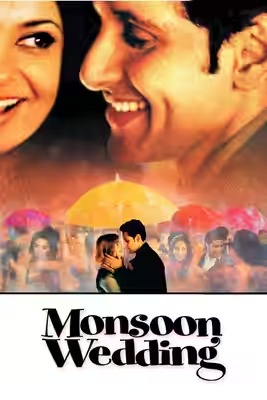
  5. Monsoon Wedding (2001, Fi1m 80)A Delhi wedding where every relative has a secret and the rain holds off just long enough.

Free account

Know what to watch tonight

Two lists that know where things are streaming, collections you can share, your own score beside ours, and Discover that remembers what you have seen.

  • Want to see, sorted by what is streaming now
  • Seen, with your score out of ten
  • No adverts, ever