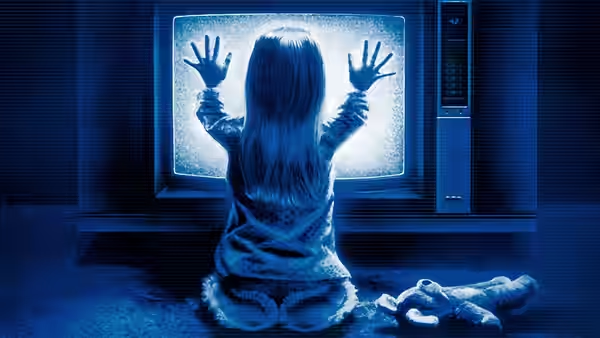
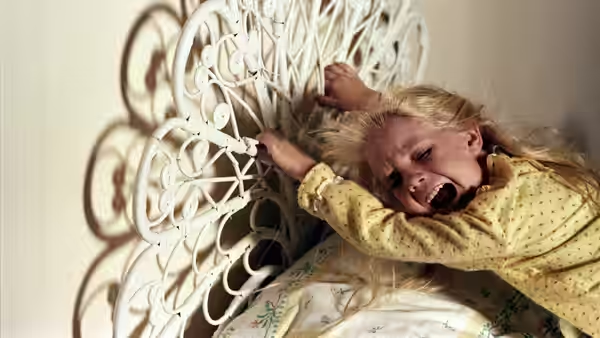
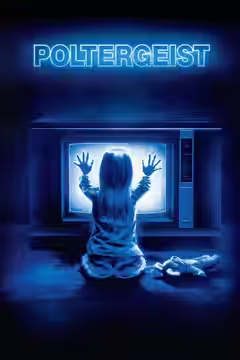
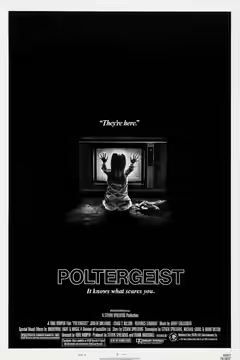
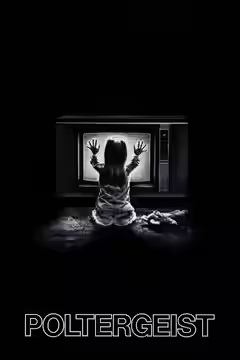
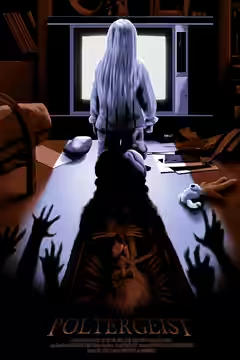
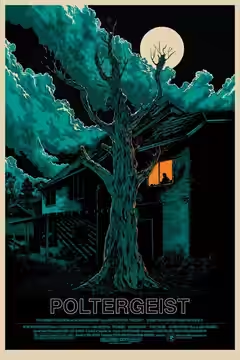
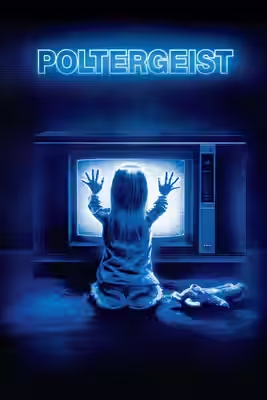
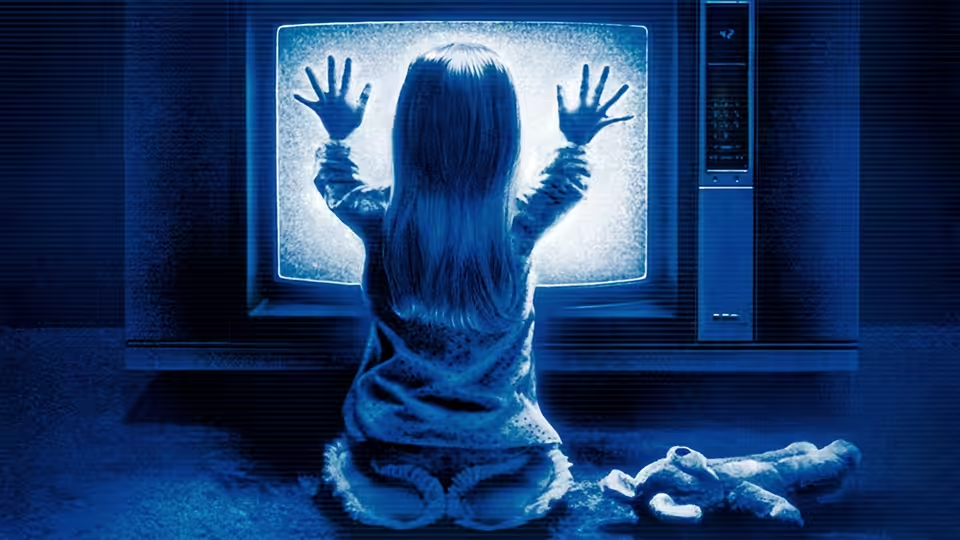
a young girl presses both hands against the glowing screen of a television
Film review

Poltergeist

1982 · Directed by Tobe Hooper · 1h 54m · MPA R

In a sentenceA haunted house whose perfectly likeable residents don’t deserve all these special effects

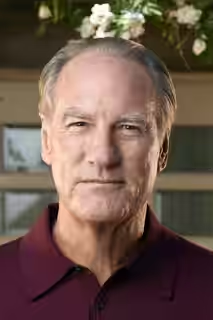
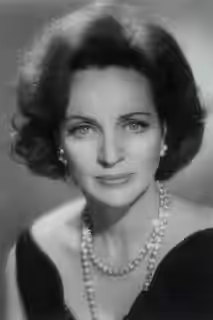
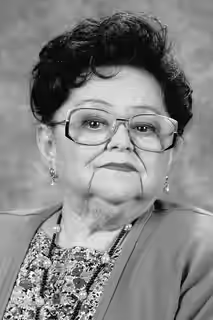
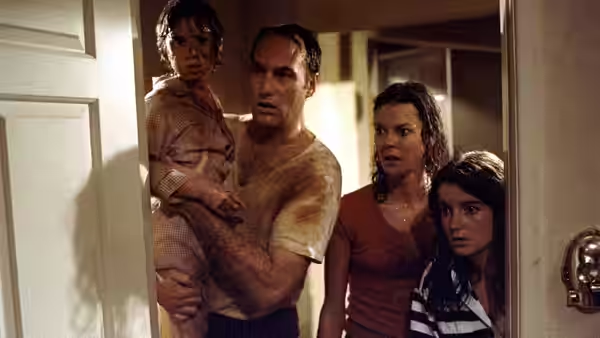
The Freeling family live in an American suburb, where strange events begin to disturb the routines of home. Diane (JoBeth Williams) and Steve (Craig T. Nelson) face a haunting with their children Dana (Dominique Dunne), Robbie (Oliver Robins) and Carol Anne (Heather O’Rourke). As the disturbances become harder to dismiss, the parents have to respond to something that their ordinary family life has not prepared them for. Tobe Hooper directs a ghost story rooted in the household’s relationships, with Beatrice Straight as Dr. Lesh and Zelda Rubinstein as Tangina Barrons.

Plays from YouTube when you press play; nothing loads from them until then.

Fi1m review

Tobe Hooper’s Poltergeist is a frightening haunted-house film because its family feels worth protecting. The effects sometimes get too busy, but JoBeth Williams and Craig T. Nelson keep us concerned for the people.

Poltergeist is a frightening, unusually affectionate haunted-house film, and its family is the reason it works. Tobe Hooper gives the Freelings enough ordinary life for us to mind when the ghosts interfere; getting to know the household is part of the pleasure. Moving the haunting into an American suburb makes the threat easy to understand, since these parents expect their home to be safe. The humour helps establish that expectation without making the family foolish. We have time to like them before the supernatural business takes over.

JoBeth Williams plays Diane Freeling and Craig T. Nelson plays Steve, with an ease together that makes the marriage persuasive without much fuss. Their responses to the disturbances grow out of recognisable parental concern, and neither actor needs to insist on how much the children matter. We were frightened by their helplessness, especially the distress Williams brings to a mother who cannot make her own home safe. Dominique Dunne, Oliver Robins and Heather O’Rourke play the children, and the family relationships give the scares consequences we care about.

James H. Spencer’s production design is crucial here: the suburban house convinces as somewhere a family would choose to live, which gives the haunting something worth disrupting. The setting does not need to advertise that it belongs in a horror film. Matthew F. Leonetti’s photography keeps the home recognisable amid the effects, so we can still think about the people trying to live there. Even when there is plenty to look at, our attention returns to the household.

Michael Kahn’s editing gives the domestic exchanges enough time to establish the people. The comedy and the scares can sit close together because the cast remain believable through both; the film does not have to start again whenever its mood changes. Jerry Goldsmith’s music makes the affection for the children audible, and its warmth helps sustain our concern through the more elaborate supernatural displays. The quieter stretches are worth watching without treating them merely as preparation for the next fright.

Steven Spielberg supplies the story and shares the screenplay credit with Michael Grais and Mark Victor, as well as serving as a producer. Their attention to childhood fears gives Hooper plenty to work with, but the physical manifestations sometimes become too much of an attraction in themselves. We start inspecting the effects when we ought to be worrying about the Freelings, and a little less display would have helped. At 114 minutes, the film can afford to lose some supernatural commotion. The actors remain persuasive even when the film is busy finding another way to disturb their home.

Haunted-house films often get by with people we know only through their willingness to investigate a noise. The Freelings are better company than that, and spending time with them is a substantial part of the recommendation. The warmth should not be mistaken for gentleness; some of the horror is grisly. Choose it for an evening when a proper scare is welcome and nobody requires the ghosts to be discreet.
Critical consensus AI synthesised

78
Positive
12
Mixed
1
Negative
1

Most critics like it, and they like it for the same reasons. The haunted house is moved to an ordinary American suburb, and the reviews return again and again to the family at its centre: warm, believable, worth caring about before anything starts rattling the cupboards. The effects and the craft of the scares draw steady praise, as does the film’s suspicion of television. Almost every review treats the question of authorship as unavoidable, and most conclude that, whatever the credit says, this plays as a Spielberg film with a nastier edge.

The reservations gather around the script. Several critics find it loose, with the ghosts’ behaviour never explained and the ideas about children and television raised and then dropped; The New Yorker makes that case most fully. Variety goes further, calling the story foolish for all the talent involved. The spread is wide, but the harshest notices date from the original release, and the reviews written for later re-releases are warmer.

Los Angeles Times
24 October 2025 · Joshua Rothkopf
90*

The critic calls the film one of the most subversive movies ever made by Hollywood, noting how it screams to turn off the TV as suburban comforts turn deadly. It highlights the 1982 timing amid Reagan-era blockbusters and credits Spielberg's hands-on influence over Hooper's onscreen credit.

Read the full review →
Slant Magazine
23 October 2007 · Eric Henderson
90*

The film stands out for relocating the haunted house to mundane American suburbia and delivering a professionally mounted effects-driven scare show. The critic highlights the productive tension between Spielberg's and Hooper's sensibilities as a key strength.

Read the full review →
The AV Club
25 October 2007 · A- · Scott Tobias
90

The review affirms that the film holds up beautifully as the malevolent flipside to Spielberg's suburban fantasies, with his stylistic fingerprints everywhere and playful visual wit throughout. It notes the assurance of a safe landing even amid scares, making it a family film that guarantees nightmares.

Read the full review →
The New York Times
4 June 1982 · Vincent Canby
90*

It is a marvelously spooky ghost story full of creepy effects and witty moments that manifests childhood fears and wishes. The film is like an enjoyable nightmare that ends harmlessly, with strong performances from the cast.

Read the full review →
The Times
21 October 2022 · ★★★★☆ · Kevin Maher
90*

The re-release review calls it one of the great anti-TV movies and a suburban horror classic that highlights television as a danger to the family. It notes its iconic status and enduring appeal.

Read the full review →
Time Out
26 October 2016 · DP
90*

The critic calls it a barnstorming ghost story that is every inch a Spielberg film despite the Hooper credit. They single out the dazzling sense of craft and a structural surprise that rivals the opening of Psycho.

Read the full review →

Straight answers AI written, from our review

Is Poltergeist worth watching?
Poltergeist is worth watching for anyone who wants a proper haunted-house scare with a family worth caring about, and we scored it 84. JoBeth Williams and Craig T. Nelson make the Freelings good company, which gives the frights consequences. The effects sometimes become too busy, but the household holds our attention through them.
How long is Poltergeist, and what is it rated?
Poltergeist runs 1h 54m and is rated R by the MPA in the US. It is a horror film.
Where can I watch Poltergeist in the US?
Poltergeist is available to rent from Amazon Prime Video from $5.99. Availability is checked daily; the links above go straight to each service.
How violent or frightening is Poltergeist, and is it suitable for children?
Poltergeist carries a UK 15 certificate, and it is frightening rather than gentle: some of the horror is grisly, and the parents' helplessness in their own home is distressing. It is not for young children, and the squeamish should expect the ghosts to be anything but discreet. Older teenagers who like a scare should be fine.
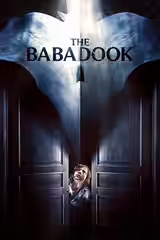
How does Poltergeist compare to The Babadook?
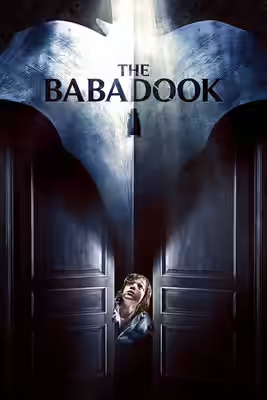
Poltergeist and The Babadook are both haunted-house films built on a mother who cannot keep her home safe, but they differ in temperature. Hooper's film is warmer and busier, with a likeable whole family and elaborate effects; Kent's is bleaker and more claustrophobic, driven by Essie Davis's exhaustion. Choose Poltergeist for scares with affection, The Babadook for something closer to the bone.
What should I watch after Poltergeist?
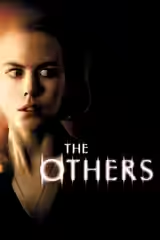
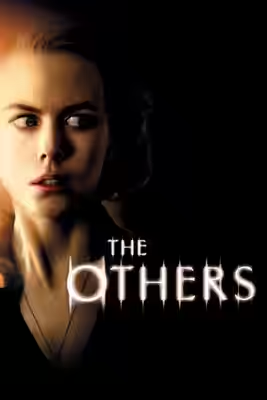
After Poltergeist, try The Babadook (2014, Fi1m 86): A mother’s exhaustion makes the haunting feel painfully close to home. Then The Others (2001, Fi1m 80): Family tensions and patient scares, with rather less supernatural commotion.

Cast

Awards

Academy Awards, 1983

Nominated
Best Original Score
Nominated
Best Sound Editing
Nominated
Best Visual Effects

Saturn Awards, 1983

Won
Best Make-up

If you liked this, try…

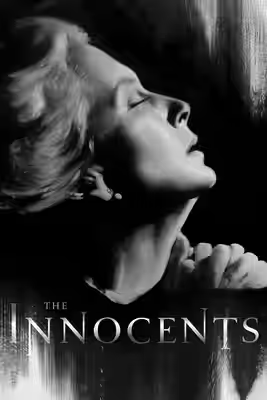
  1. The Innocents (1961) · not reviewed yetChildren, adult anxiety and a house whose quiet is difficult to trust.

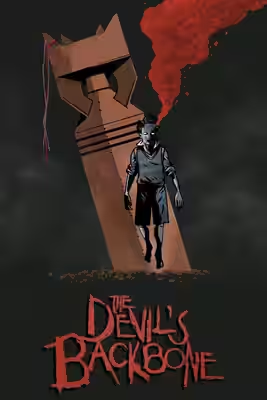
  2. The Devil's Backbone (2001) · not reviewed yetA ghost story that makes its threatened children worth caring about.

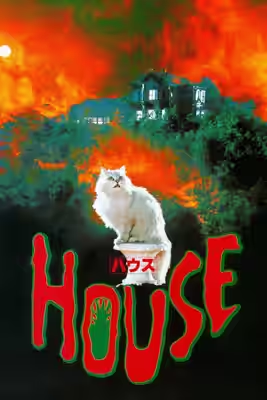
  3. House (1977) · not reviewed yetDomestic space becomes an unruly playground for effects, jokes and childhood fears.

  4. The Babadook (2014, Fi1m 86)A mother’s exhaustion makes the haunting feel painfully close to home.

  5. The Others (2001, Fi1m 80)Family tensions and patient scares, with rather less supernatural commotion.

Free account

Know what to watch tonight

Two lists that know where things are streaming, collections you can share, your own score beside ours, and Discover that remembers what you have seen.

  • Want to see, sorted by what is streaming now
  • Seen, with your score out of ten
  • No adverts, ever