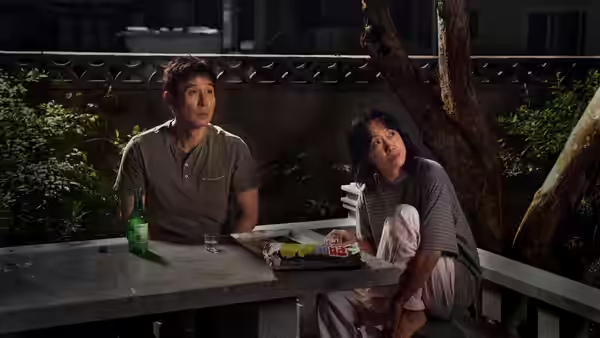
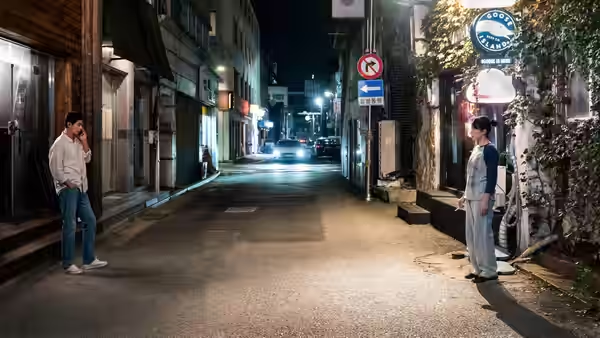
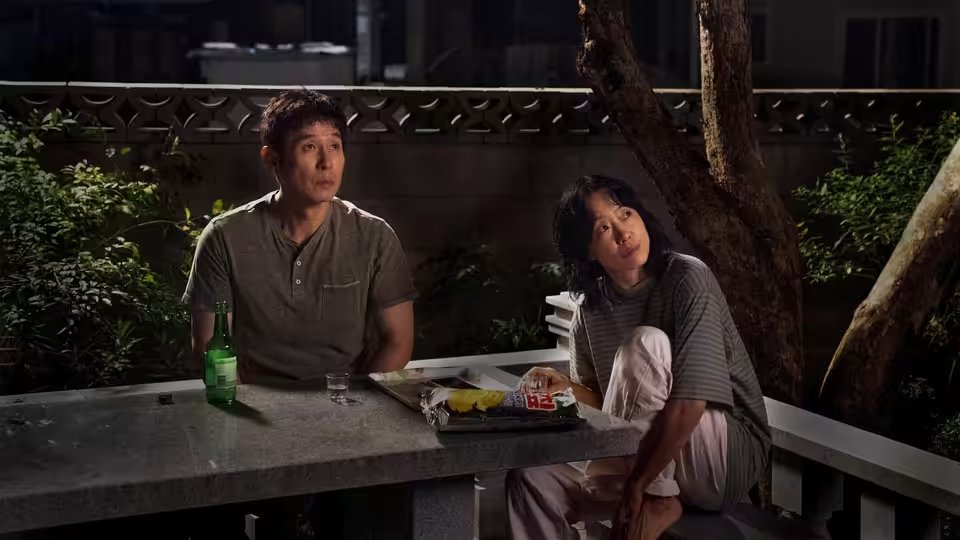
Choi Ho-seok (Sul Kyung-gu) and Ahn Mi-ok (Jeon Do-yeon) at an outdoor table at night
Film review

Possible Love

2026 · Directed by Lee Chang-dong · 2h 45m · MPA R

In a sentenceTwo marriages and a documentary camera make awkward company worth spending an evening with

A wealthy documentary filmmaker turns her attention to laid-off workers, bringing two married couples of sharply different means into contact. At the centre are Ahn Mi-ok (Jeon Do-yeon), Choi Ho-seok (Sul Kyung-gu), Sang-woo (Zo In-sung) and Lee Ye-ji (Cho Yeo-jeong). The documentary connects households facing different financial pressures, while the relationship between filmmaker and subjects extends into their personal lives. Friendship and desire complicate the work of recording other people’s difficulties. As the couples become involved with one another, unemployment and unequal wealth affect what they can offer, what they need and the terms on which they meet.

Plays from YouTube when you press play; nothing loads from them until then.

Fi1m review

Lee Chang-dong’s drama about two couples and a documentary is patient, perceptive and worth the long evening. The performances justify the attention, even when the writing makes the connections between marriage and money too explicit.

Possible Love is an absorbing drama that earns most of its 165 minutes, though its relationships sometimes feel too carefully arranged. Lee Chang-dong brings two married couples of markedly different means together through a documentary about laid-off workers. The wealthy filmmaker’s interest in her subjects creates an opportunity for friendship, with considerable scope for misunderstanding what either side expects. The film takes those expectations seriously enough to make the awkwardness worth sitting through.

We find the documentary arrangement uncomfortable: a wealthy filmmaker acquires material from workers who have lost their jobs. Her interest may be sincere, but sincerity does little to equalise what the participants stand to gain. Lee Chang-dong and co-writer Oh Jung-mi pursue that difficulty through the couples’ personal relationships, where affection can make an unequal exchange harder to recognise. The question of what people owe one another becomes more difficult once they have reasons to enjoy one another’s company.

Jeon Do-yeon, playing Ahn Mi-ok, gives the drama its strongest claim on our attention. Her performance accommodates the competing feelings that the story needs without making them seem like a list of themes to be addressed. Sul Kyung-gu, Zo In-sung and Cho Yeo-jeong help sustain the interest across the ensemble, essential in a film that asks this much time for two marriages. The performances make room for sympathy without requiring us to approve of everyone, and keep the economic pressures attached to recognisable human wants.

The restrained filmmaking suits these encounters. Kim Ji-yong handles the cinematography and Jang Min-woo the production design; their contributions belong to an approach that keeps the contrast in wealth from entirely overwhelming the people involved. That is important when the premise has already made the financial imbalance clear. The actors need space to complicate our understanding of the couples, and the film’s unshowy presentation allows their work to remain its principal attraction.

With Kim Da-won editing and Jung Jae-il providing the music, the drama builds its effects gradually. Much of that patience is justified: the relationships need time if friendship, envy and desire are to carry comparable weight. Some stretches nevertheless ask for more attention than they repay, and 165 minutes leaves little room to excuse repetition as necessary preparation. The accumulated force comes chiefly from the ensemble, which gives us a reason to stay interested when the pace becomes demanding.

The more substantial reservation concerns the writing’s occasional insistence on making its connections plain. Lee Chang-dong and Oh Jung-mi bring marriage, unemployment and the ethics of documentary filmmaking into close contact, but the arrangement sometimes feels too convenient. As the drama develops, its explanations can reduce the uncertainty that made the relationships interesting in the first place. These are intermittent problems, though they matter in a film whose strongest quality is its willingness to consider people without immediately settling what to think of them.

As a domestic drama, it gives money the sustained attention that stories about desire sometimes avoid. As a film about filmmaking, it takes seriously the difficulties of turning somebody else’s circumstances into material. Both concerns benefit from performances strong enough to hold our interest through the slower passages, although a little less explanation would help. Give it an evening when a difficult conversation sounds more inviting than a quick resolution.

Critical consensus AI synthesised

84
Positive
14
Mixed
0
Negative
0

Every one of the fourteen reviews is positive, and most of them say roughly the same thing: Lee Chang-dong’s first film in eight years is a patient, closely observed drama about two married couples, one wealthy and one not, whose lives cross during the making of a documentary. The praise clusters on Lee’s handling of class and desire, which the reviews find both specific to South Korea and widely applicable, and on the ensemble cast. Variety picks out Jeon Do-yeon’s central performance in particular.

The reservations are small and mostly about length. Deadline and The Wrap both find the near three-hour runtime a test of patience, though neither thinks the film fails it. Sight and Sound feels the later acts lose some subtlety, and The Guardian calls the plotting somewhat contrived. The spread is narrow: the coolest notices are still warm, and nobody dissents.

Radio Times
6 September 2026 · ★★★★★
100

Lee Chang-dong’s rich and utterly absorbing drama explores human nature and desire through two couples whose lives intersect during a documentary. Strong performances and a vast spectrum of emotions make the long runtime rewarding.

Read the full review →
Vulture
6 September 2026 · festival review · Bilge Ebiri
95*

Ebiri calls the film Lee Chang-dong’s most powerful and political work, and among the year’s best. He singles out its patient, engrossing character-building and subtle exploration of class and privilege.

Read the full review →
The Hollywood Reporter
6 September 2026 · festival review · David Rooney
91*

Lee Chang-dong's latest is another stunner from one of the greats of contemporary world cinema, a transfixing meditation on economic and emotional unease. The critic singles out the director’s humanistic observational skills and the superlative ensemble cast for particular praise.

Read the full review →
IndieWire
6 September 2026 · festival review · David Ehrlich
90*

Lee Chang-dong delivers another masterpiece in this sprawling Netflix drama. The critic highlights how class conflict achieves vivid new dimension through the relationship between a rich documentary filmmaker and her blue-collar subjects.

Read the full review →
Variety
6 September 2026 · festival review · Jessica Kiang
90*

The critic calls it a wonderfully rich and deep new movie that delivers wit, soul, social insight and a scintillating central performance from Jeon Do-yeon. Lee seamlessly integrates themes of class, desire and relationships with elegant, unshowy filmmaking and a generous if rueful conclusion.

Read the full review →
Time Out
4 September 2026 · ★★★★ · Phil de Semlyen
80

Two couples of wildly contrasting means connect awkwardly in Lee Chang-dong’s perceptive and empathetic new drama about the ruin wreaked by late capitalism. It blossoms over its long runtime into an absorbing parable and gesture of defiance.

Read the full review →

Straight answers AI written, from our review

Is Possible Love worth watching?
Possible Love is worth watching for its perceptive treatment of marriage and money and its strong ensemble performances; we score it 83/100. Its 165 minutes suit an evening devoted to patient, uncomfortable drama, though some passages drag and the writing occasionally explains connections that the actors already make clear.
How long is Possible Love, and what is it rated?
Possible Love runs 2h 45m and is rated R by the MPA in the US. It is a drama film.
Where can I watch Possible Love in the US?
Possible Love is not on any streaming or rental service in the US at the moment. Availability is checked daily.
How violent or frightening is Possible Love, and is it suitable for children?
Possible Love carries a US R certificate and has no UK certificate supplied, so we would not recommend it for children. The rating indicates restricted suitability for younger viewers, but we cannot give a specific warning about violence or frightening material from the details available.
How does Possible Love compare to Poetry?
Possible Love shares Poetry’s patient interest in responsibility and difficult compassion, but centres on two marriages, unequal wealth and documentary filmmaking. We favour Poetry for emotional impact, with Yoon Jeong-hee’s grandmother facing illness and her grandson’s wrongdoing; Possible Love suits an appetite for ensemble drama and sustained attention to money. Both ask patience, and neither entirely avoids overlong passages.
What should I watch after Possible Love?
After Possible Love, try Poetry (2010, Fi1m 87): Another Lee Chang-dong drama for an interest in responsibility and difficult compassion. Then A Separation (2011, Fi1m 93): Marriage and class complicate a dispute nobody can settle cleanly; and Secrets & Lies (1996, Fi1m 88): Family tensions emerge through patient performances and painfully awkward conversation.

Cast

If you liked this, try…

  1. Poetry (2010, Fi1m 87)Another Lee Chang-dong drama for an interest in responsibility and difficult compassion.

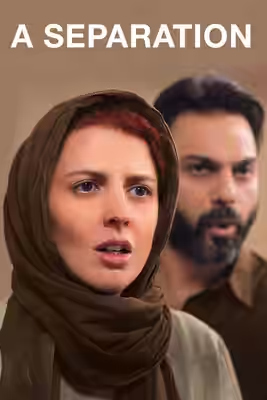
  2. A Separation (2011, Fi1m 93)Marriage and class complicate a dispute nobody can settle cleanly.

  3. Secrets & Lies (1996, Fi1m 88)Family tensions emerge through patient performances and painfully awkward conversation.

  4. Close-Up (1990, Fi1m 92)Filmmaking, class and personal longing meet in an unusually searching reconstruction.

  5. Two Days, One Night (2014, Fi1m 88)Economic pressure becomes personal through a worker’s visits to her colleagues.

Free account

Know what to watch tonight

Two lists that know where things are streaming, collections you can share, your own score beside ours, and Discover that remembers what you have seen.

  • Want to see, sorted by what is streaming now
  • Seen, with your score out of ten
  • No adverts, ever