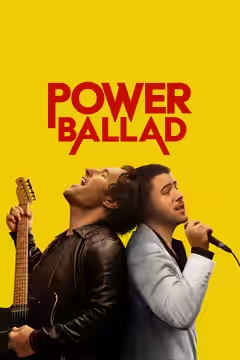
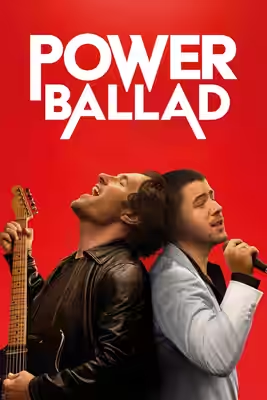
John Carney’s comedy about a stolen song opens with the best scene he has shot in years and then keeps its two leads apart for most of what follows. Rudd is good company; the film around him is thinner than it thinks.
John Carney has made a career out of two people and a song. Once (2007) put a busker and a pianist in a Dublin music shop; Sing Street (2016) put a schoolboy in a band to impress a girl. Power Ballad starts the same way and then does something Carney has not done before: it breaks the pair up in the first act and asks whether the song survives the friendship. It is a good idea. The film is amiable, sometimes funny, and it fumbles the idea it had.
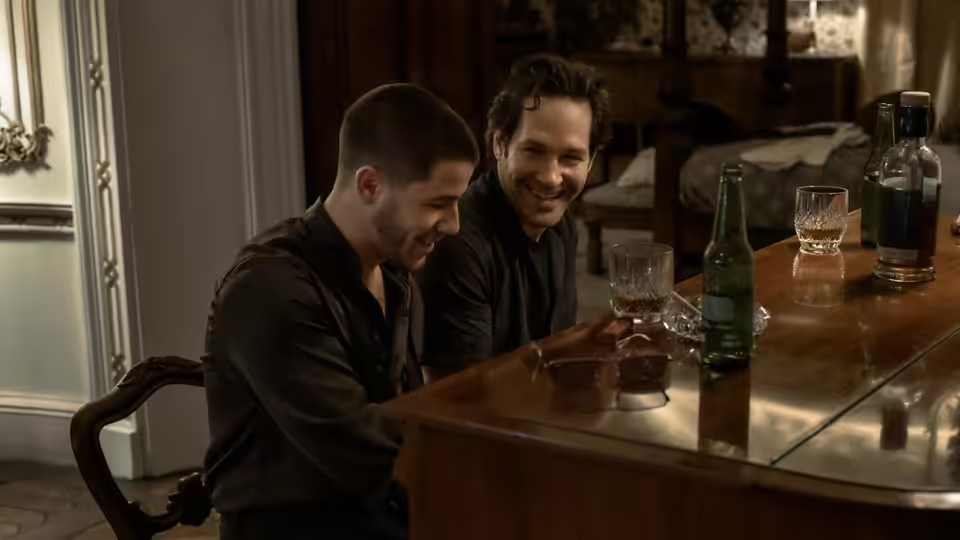
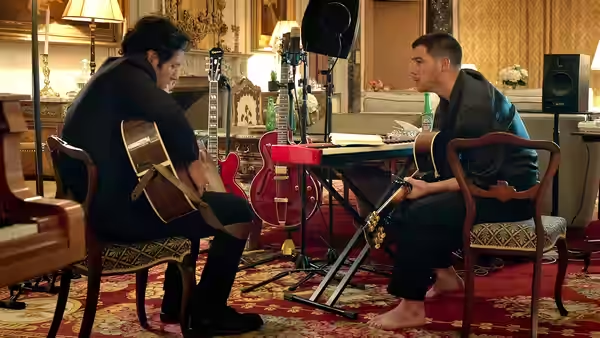
The writing scene is the reason to go. Rick and Danny sit down with a fragment and argue it into a song, and Carney, who co-wrote the script with Peter McDonald and the music with Gary Clark, lets it play. Stephen O’Connell does not cut it into a montage; we watch the chorus arrive a line at a time, and we sat forward without meaning to. This is the thing Carney does better than anyone working, the moment a tune stops belonging to one person. The song itself is catchy enough that we were humming it in the car park, and it has to be, because the whole film is a dispute about who owns it.
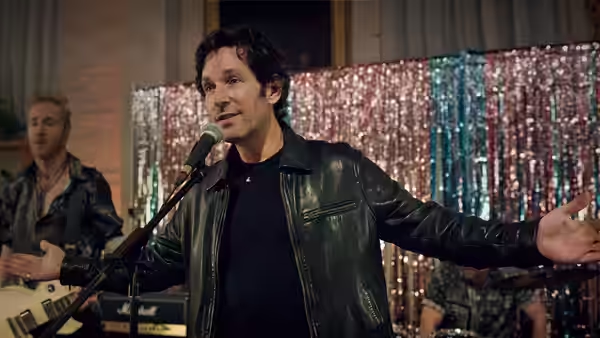
Then Danny takes it, and the film has a problem it never solves. Having built the pair, Carney separates them, and Power Ballad becomes a film about a man stewing. Rudd is good at this. He has always been able to play decency curdling, and Rick’s grievance is funny because he knows how small it looks from outside. But a comedy about two men needs the two men in the same shot, and for long stretches Rick is complaining to whoever is nearest. Peter McDonald, as Sandy, is dry and good in the scenes he has. The others begin to repeat.
Jonas is the harder case. He is playing a man who has been a product for most of his life and is trying to find out whether there is anyone underneath, and the casting is clever, because he knows the territory. But the script cannot decide whether Danny is a villain, a victim of his own handlers or simply weak, and Jonas, without a firm decision to play, tries all three in turn. His vocals sound like the finished record rather than a man singing live in front of us. That may be the point of Danny, but it makes his duet with Rudd sound like two different films singing at once.
It is a tidy production. Yaron Orbach gives the wedding gigs the flat, forgiving light of a function room and Danny’s world a harder, whiter finish, so the two men look as if they are in different price brackets even when they share a frame. Anna Carney’s production design does the same work, cluttered rooms for Rick and clean ones for Danny. Triona Lillis dresses Rick in the clothes of a man who stopped buying new ones some time ago. All of it is well judged and none of it is surprising.
The tone slips. Carney wants the sadness of a man who never got his shot and the broad comedy of a wedding singer doing requests, and he changes gear faster than the film can manage; a scene plays as farce a minute after one that asked us to feel Rick’s humiliation, and we did not know which to keep. The last stretch takes a turn we will not describe, except to say that after most of its length insisting the theft mattered, the film loses its nerve about how much. We left mildly annoyed that a story about setting the record straight had settled for smoothing it over.
Most critics have been warmer, and we understand why: Rudd is a pleasure and the song is a proper song. But a film with its one great scene at the start peaks early, and 99 minutes is a long time to wait for it to come back. See it for the writing scene, and for Rudd. You will have the tune for a week; the rest is gone by the drive home.