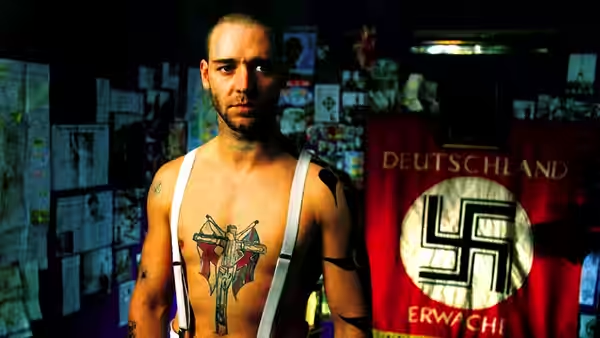
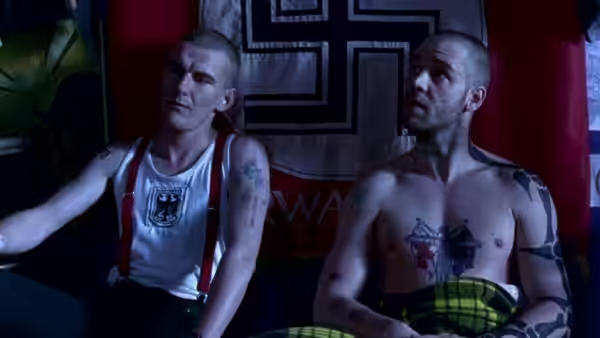
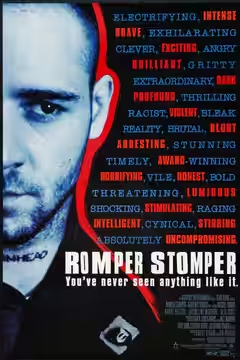
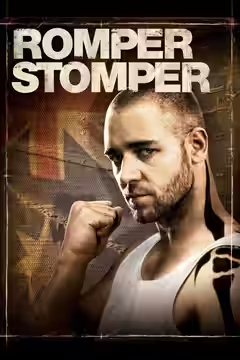
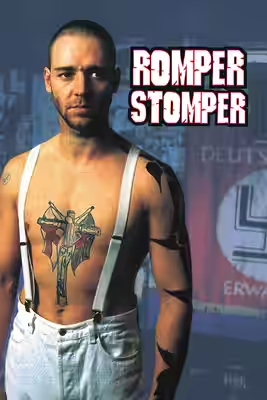
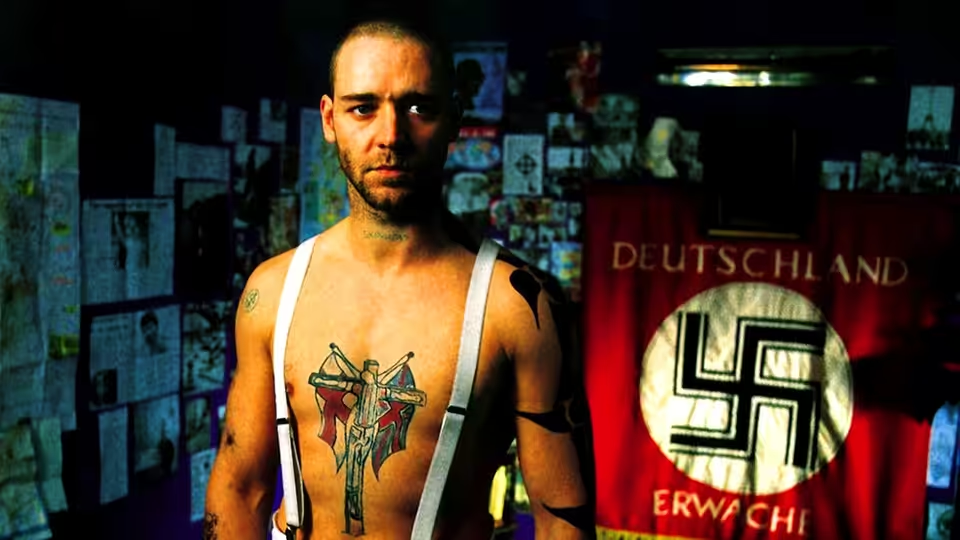
Hando (Russell Crowe) stands shirtless before a red Deutschland swastika flag
Film review

Romper Stomper

1992 · Directed by Geoffrey Wright · 1h 34m · MPA R

In a sentenceEven the editing seems reluctant to leave these racists alone

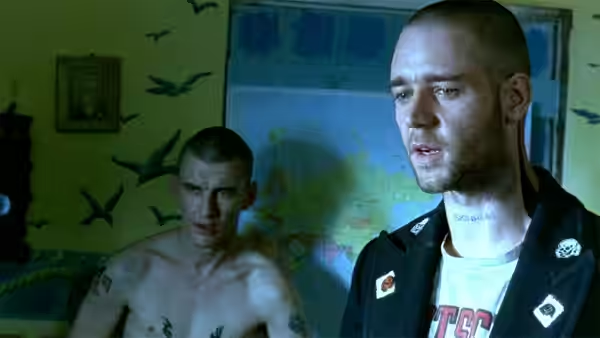
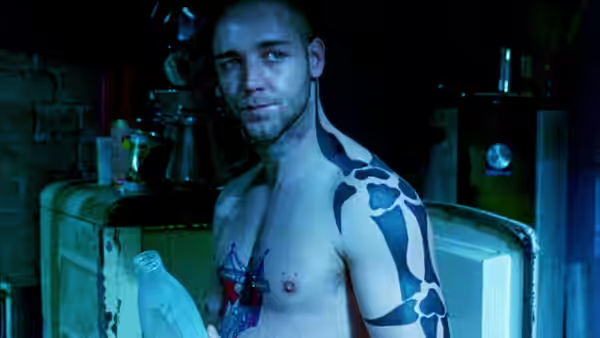
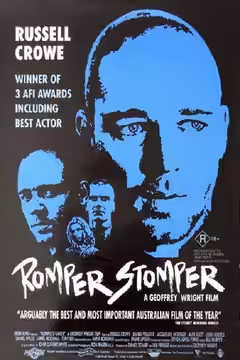
Set in Melbourne, Romper Stomper follows a gang of neo-Nazi skinheads whose racist aggression is directed at the city’s Vietnamese community. Russell Crowe plays Hando, alongside Daniel Pollock as Davey and Jacqueline McKenzie as Gabe. The gang makes its hatred public through attacks on Vietnamese immigrants, bringing the threat of violence into the community’s daily life. Writer-director Geoffrey Wright keeps the story centred on the perpetrators, following the people responsible for the attacks rather than telling the story chiefly through those they target.

Fi1m review

Russell Crowe and Daniel Pollock are compelling, but Geoffrey Wright gives racist violence so much attention that his drama becomes numbing. We cannot recommend it on the strength of its performances alone.

We cannot recommend Romper Stomper, despite the force of its performances. Geoffrey Wright writes and directs a drama about neo-Nazi skinheads in Melbourne, with their attacks on Vietnamese immigrants providing the threat that drives it. His decision to stay close to the perpetrators could have made their hatred more intelligible without making it excusable. Instead, the repeated aggression takes up the space where that examination ought to happen, and the film becomes wearing long before it becomes illuminating.

Russell Crowe, as Hando, gives the film much of its hold on us. His performance makes Wright’s approach more troubling: good acting keeps us interested long after the screenplay has run short of things to say. Daniel Pollock, as Davey, also holds our attention through the surrounding aggression. Both performances deserve consideration, though the screenplay gives us too little reason to spend so much time in these people’s company.

Ron Hagen’s cinematography and Bill Murphy’s editing give the attacks the velocity of an action thriller. We were horrified by the violence against Vietnamese immigrants, and unsettled by how insistently the film made those attacks exciting to watch. The speed and visual force make it difficult to sit comfortably outside what is happening. That is an effective way of producing alarm, but the excitement needs more questioning than Wright’s screenplay gives it.

John Clifford White’s music adds to the pressure, which is effective in the moment and exhausting across the film. Steven Jones-Evans’s production design helps establish the gang’s surroundings, though Wright gives us little opportunity to consider Melbourne beyond its confrontations. We need more sense of the lives being disrupted, beyond their usefulness as targets. Without that attention, the setting too often becomes somewhere for the next bout of violence to happen.

It would be easy to demand a speech explaining that racism is wrong. The film does not need one, and its anti-racist purpose is clear enough. What Wright’s screenplay needs is more curiosity about how these people sustain their hatred, and more attention to what their victims stand to lose. Prolonged exposure to aggression cannot do all that work, especially when the staging keeps supplying the pleasures of a fight scene.

There is a legitimate place in thrillers for being trapped with people we would avoid outside a cinema. Wright understands how to make that proximity unpleasant, and the film’s rawness prevents the violence from becoming merely tidy entertainment. Yet it becomes monotonous when the same aggression keeps driving the drama without deepening it. At 94 minutes, this is hardly an overlong film by the clock, but its repeated confrontations leave us waiting for something more to emerge from them.

Those interested in Crowe and Pollock will find performances worth considering, and Wright plainly knows how to make violence register. Neither achievement makes the experience sufficiently rewarding. A drama that spends this much time with racist attackers needs to give us more than repeated proof that they are dangerous. Approach it for the acting only if sustained, numbing brutality is a price you are prepared to pay.

Critical consensus AI synthesised

45
Positive
2
Mixed
0
Negative
5

Most critics find Romper Stomper a hard film to admire. The reviews agree that Geoffrey Wright’s portrait of Melbourne skinheads has real force: the violence is staged with speed and conviction, and Russell Crowe’s Hando is singled out again and again as the reason to watch, a performance of flat, unreflective menace that at least one reviewer ranks as his most frightening. Where the film earns praise, it is for energy and for Crowe, not for thought.

The reservations cluster around exactly that energy. Most critics feel the film gets carried along by the mayhem it means to condemn, leaving its moral position unclear and its closing message thin. Variety calls it a Clockwork Orange without the intellect; the Los Angeles Times finds the violence numbing and without a point. The spread is wide: the Guardian and, much later, Collider defend it as uncompromising, but five of the seven reviews land negative.

The Guardian
19 May 2000 · ***
70*

The critic finds the film provocative and uncompromising, praising its adrenalin rush and Russell Crowe's menacing performance as the neo-Nazi leader. It is described as powerful and disturbing, though less thought-provoking than comparable films like La Haine.

Read the full review →
Empire
1 January 2000 · Mark Dinning
40*

The film offers a savage portrayal of suburban racism that remains prescient, but its brutally visceral power is undermined by a lack of class and an overly ambivalent treatment of the perpetrators.

Read the full review →
The New York Times
9 June 1993
40*

The viscerally supercharged film runs on the adrenaline of hate and exults in savagely violent action sequences involving neo-Nazi skinheads terrorizing Vietnamese immigrants and facing retaliation. Its perspective is disturbingly ambivalent, presenting a delirious energy that stirs the emotions while pretending to critique a malignant social phenomenon.

Read the full review →
Time Out
10 September 2012 · GA
40*

The critic questions the wisdom of the film's visceral, high-adrenaline style despite its anti-racist intent in portraying Melbourne skinhead life. The raw narrative and souped-up visuals result in a lack of moral perspective, with a cheap ending message failing to salvage the misguided effort.

Read the full review →
Los Angeles Times
16 June 1993 · Peter Rainer
30*

The film offers numbing violence without a point as writer-director Geoffrey Wright gets taken in by all the mayhem and clobbering among Melbourne skinheads. A great movie could be pulled from this horror of dispossessed white kids working up racist rage, but the execution focuses too much on the clobbering.

Read the full review →
Variety
31 December 1991 · **
30*

The film is a Clockwork Orange without the intellect and is in many ways genuinely appalling, centering on a gang of moronic neo-Nazi skinheads battling Melbourne's Vietnamese community. It is well acted and directed with a certain slickness, with strong performances from Russell Crowe and Daniel Pollock.

Read the full review →

Straight answers AI written, from our review

Is Romper Stomper worth watching?
Romper Stomper is not a film we can recommend, and we scored it 43. Russell Crowe and Daniel Pollock give compelling performances as members of a neo-Nazi gang in Melbourne, but Geoffrey Wright gives their racist violence so much screen time that the drama becomes numbing rather than illuminating. Approach it for the acting only if sustained, repeated brutality is a price you are prepared to pay.
How long is Romper Stomper, and what is it rated?
Romper Stomper runs 1h 34m and is rated R by the MPA in the US. It is an action and drama film.
Where can I watch Romper Stomper in the US?
Romper Stomper is streaming on Amazon Prime Video and Tubi in the US, and it is also available to rent from Amazon Prime Video and Apple TV from $2.99. Availability is checked daily; the links above go straight to each service.
How violent or frightening is Romper Stomper, and is it suitable for children?
Romper Stomper carries an 18 certificate in the UK and is not suitable for children or most teenagers. The film follows a gang of neo-Nazi skinheads whose attacks on Vietnamese immigrants are shot and cut with the speed of an action thriller, and we were horrified by the violence and unsettled by how exciting the film makes it to watch. The squeamish should stay away.
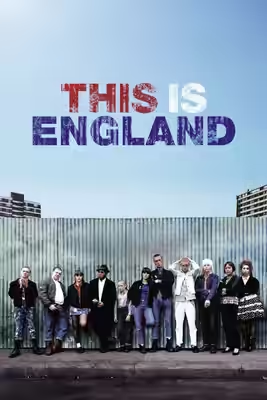
How does Romper Stomper compare to This Is England?
Romper Stomper and This Is England both follow skinhead gangs, but Shane Meadows's film is much the better of the two. Where Geoffrey Wright keeps supplying racist violence without deepening our understanding of the people committing it, Meadows examines how a gang recruits and why its appeal takes hold, with warmth and humour alongside the fear. Choose This Is England unless your interest is chiefly in Russell Crowe.
What should I watch after Romper Stomper?
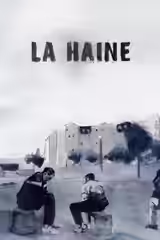
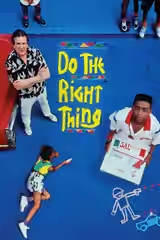
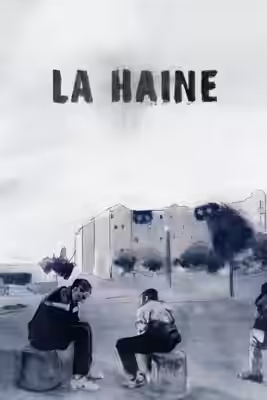
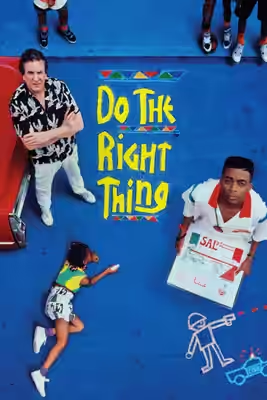
After Romper Stomper, try This Is England (2006, Fi1m 85): Shane Meadows gives racist recruitment the social and emotional scrutiny missing here. Then La Haine (1995, Fi1m 90): Young men, mounting aggression and a city observed beyond its street fights; and Do the Right Thing (1989, Fi1m 93): A neighbourhood gets the attention that racist violence too often steals from it.

Cast

Awards

AACTA Award for Best Actor in a Leading Role, 1992

Won
AACTA Award for Best Actor in a Leading Role

AACTA Award for Best Actor in a Supporting Role, 1992

Nominated
AACTA Award for Best Actor in a Supporting Role

AACTA Award for Best Costume Design, 1992

Nominated
AACTA Award for Best Costume Design

AACTA Award for Best Direction, 1992

Nominated
AACTA Award for Best Direction

AACTA Award for Best Editing, 1992

Nominated
AACTA Award for Best Editing

AACTA Award for Best Film, 1992

Nominated
AACTA Award for Best Film

AACTA Award for Best Original Music Score, 1992

Won
AACTA Award for Best Original Music Score

AACTA Award for Best Production Design, 1992

Nominated
AACTA Award for Best Production Design

AACTA Award for Best Sound, 1992

Won
AACTA Award for Best Sound

If you liked this, try…

  1. This Is England (2006, Fi1m 85)Shane Meadows gives racist recruitment the social and emotional scrutiny missing here.

  2. La Haine (1995, Fi1m 90)Young men, mounting aggression and a city observed beyond its street fights.

  3. The Believer (2001) · not reviewed yetAnother forceful lead performance, with more interest in the contradictions beneath racist certainty.

  4. Do the Right Thing (1989, Fi1m 93)A neighbourhood gets the attention that racist violence too often steals from it.

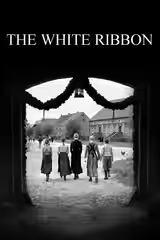
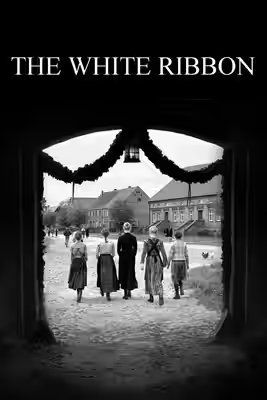
  5. The White Ribbon (2009, Fi1m 86)A village’s cruelty offers a quieter, more searching account of how hatred takes root.

Free account

Know what to watch tonight

Two lists that know where things are streaming, collections you can share, your own score beside ours, and Discover that remembers what you have seen.

  • Want to see, sorted by what is streaming now
  • Seen, with your score out of ten
  • No adverts, ever