Romain Gavras stages a party worth crashing, with Chris Evans very funny as a man who cannot stop performing, and then the film walks out of the gala and loses its nerve, its targets and its jokes.
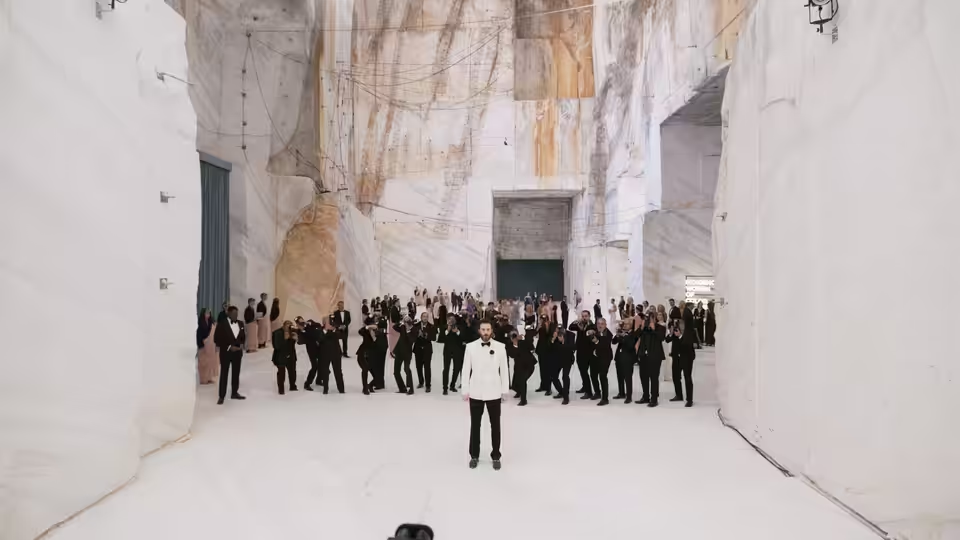
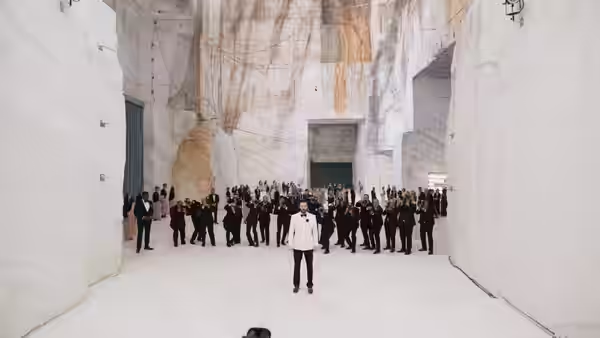
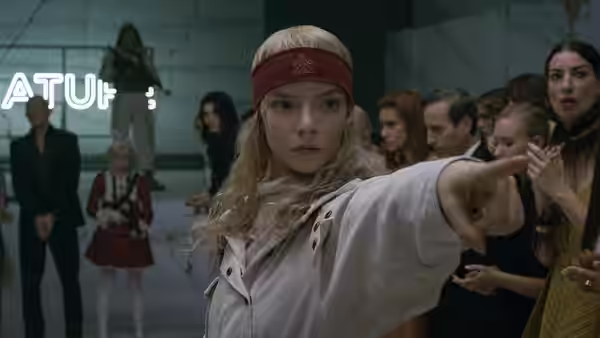
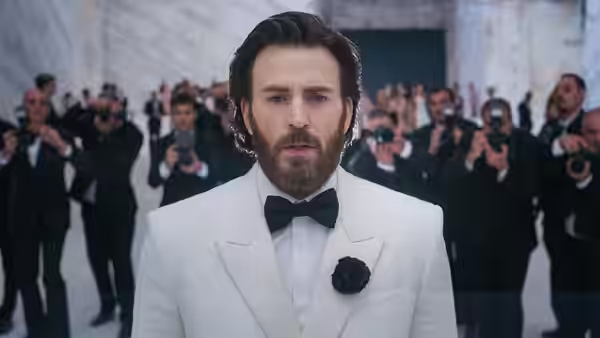
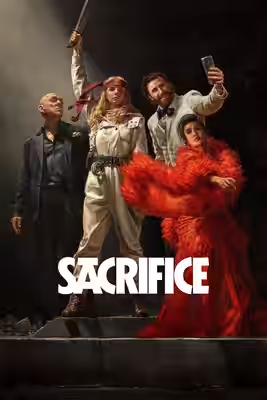
Romain Gavras’s Sacrifice runs 103 minutes and spends the first stretch of them at a party, and the party is the film. Mike Tyler (Chris Evans) is an action star who has flown in to a gala for the planet so that people can watch him care about it. Ben and Gloria Bracken (Vincent Cassel and Salma Hayek) are the kind of hosts who have a speech ready. Then Joan (Anya Taylor-Joy) and her activists take the evening over. For as long as Gavras stays in that room, the film is quick, sharp about how the rich talk to each other, and often funny. Once it leaves the party it has to decide what it thinks, and it decides several things in turn, none of them for long.
Evans is the reason to be here. He plays Mike as a man who has not had an unwatched moment in twenty years and has stopped noticing, so that even fear comes out of him with his chin up and his good side to the light. The script, by Gavras and Will Arbery, gives him the best lines and, more usefully, the best silences, the little pauses in which you can see him checking how he is coming across. We laughed at that, more than once and out loud, and then somewhere past the hour we caught ourselves waiting for the joke to develop, because the film has found one note for him and it plays it until the party ends. It is a fine note. It is still one.
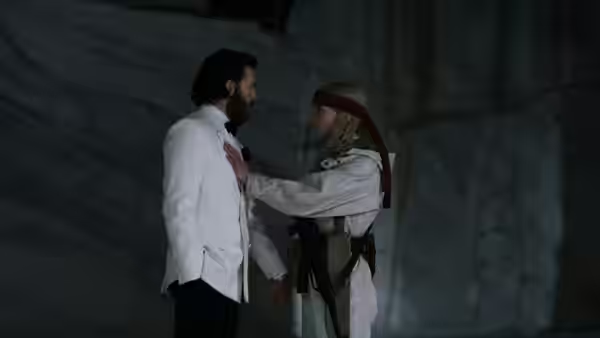
Taylor-Joy does the harder, quieter work. Her Joan is certain in the way only the young and the devout are certain, and she never raises her voice when a look will do; the scenes in which she and Evans size each other up are the film’s real tension, and it has less of them than it should. Cassel and Hayek are played broad, and Hayek in particular finds something in Gloria beyond the caricature the script hands her. John Malkovich, as Gunnar, does the dry, unhurried thing he does, and does it well. The casting of Charli xcx as Mother Nature is a joke before it is a part, and the film treats it as the former; Yung Lean, as Arthur, is asked mostly to stand where the camera can find him.
The craft is real, and it is where the film’s confusion shows. Matias Boucard lights the gala warm and shallow, faces floating in gold, and then, when the story moves outside, opens the frame wide and cools it, and the later passages have a hypnotic pull that nothing in the writing matches. Arnaud Roth’s design of the party is exact: the right glassware, the right art, the right number of people not looking at it. Hannah Edwards dresses everyone as if for a photograph, which is the point. Surkin’s score is electronic, insistent and loud, and by the second half it is doing the work the script has stopped doing. Benjamin Weill cuts the party fast and the fable slow, and the film changes gear so hard between them that you can hear it.
That second half takes a turn we will not describe. What we can say is that it wants us to take seriously, as an idea about faith and sacrifice, something it spent the first hour laughing at, and it has not done the work to earn the switch. The satire aims at people it is easy to hit and hits them; the earnest part aims at something harder and mostly waves in its direction. Neither half is lazy, exactly. Both are incomplete.
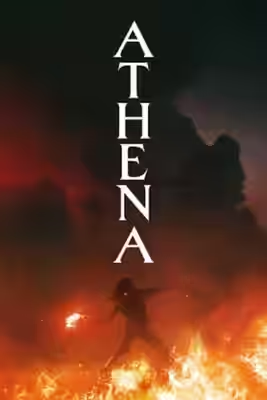
Gavras’s Athena, from 2022, knew what it was angry about from its first shot and never let go. This one is angry about several things and pleased with itself about most of them. It has the eye of that earlier film and none of its grip.
Most critics have landed close to where we have, split between a party they enjoyed and a sermon they did not. See it for Evans, who is better than the film around him, and for a first act that earns its laughs. At home you can stop when the guests leave the building, and we would understand if you did.