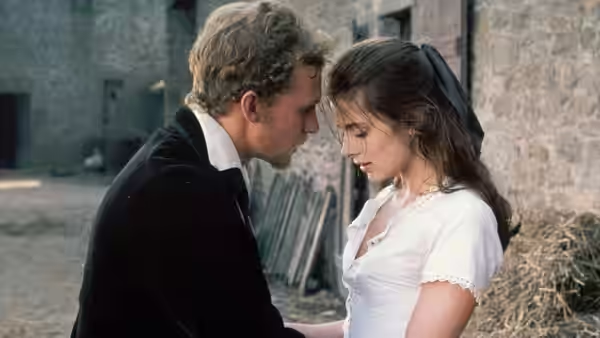
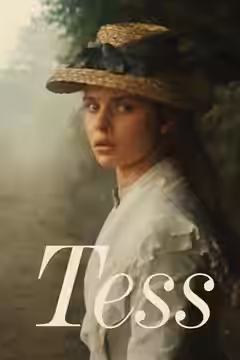
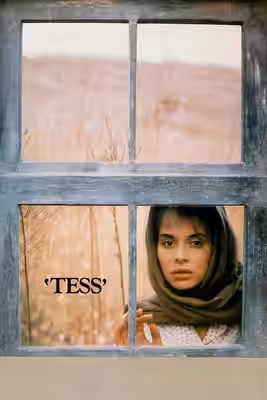
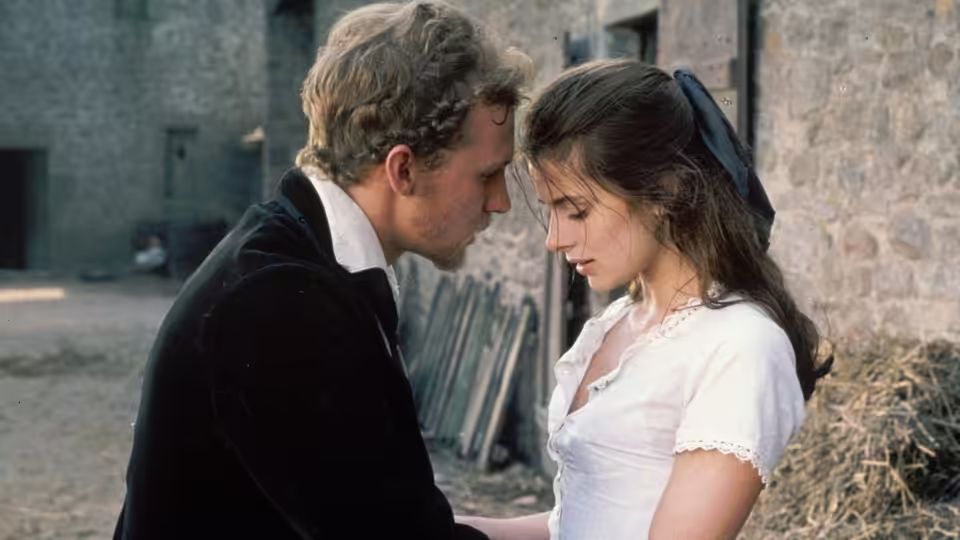
Angel Clare (Peter Firth) and Tess (Nastassja Kinski) stand close outdoors by stone walls
Film review

Tess

1979 · Directed by Roman Polanski · 2h 52m · MPA PG

In a sentenceThree hours of exquisite weather happening to a girl who never raises her voice

Marlott, a village in Hardy’s Wessex, in the last years of the nineteenth century. John Durbeyfield (John Collin), a carter who drinks, is told by Parson Tringham (Tony Church) that he descends from the ancient d’Urbervilles, and the news goes to his head. His eldest daughter Tess (Nastassja Kinski) is sent to Trantridge to claim kinship with a rich family of the same name. There she meets Alec d’Urberville (Leigh Lawson), who feeds her strawberries from his own hand, offers her work minding his mother’s poultry and drives her about the lanes in his trap far faster than she would like. Angel Clare (Peter Firth), a parson’s son, has already passed through Marlott once, dancing with the village girls on a May afternoon and not with her. What Alec does in the fog of the Chase shapes everything that follows.

Fi1m review

Roman Polanski’s Hardy is patient, quiet and as handsomely made as anything he has done, with Nastassja Kinski a still, wounded centre. It is also 172 minutes long and moves at the speed of farm work. Worth the evening, if you have the whole evening.

Roman Polanski, with his regular collaborator Gérard Brach and John Brownjohn on the script, has taken Thomas Hardy’s novel about a country girl ruined by two men and made a film that moves at the pace of the seasons it photographs. Tess runs 172 minutes. It is beautiful, it is faithful in outline, and it is about half an hour longer than it needs to be. We recommend it, with that plainly stated.

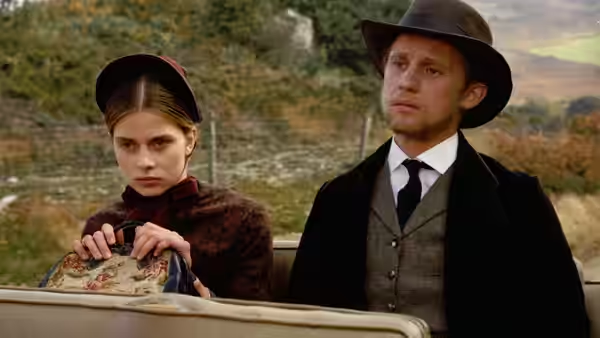
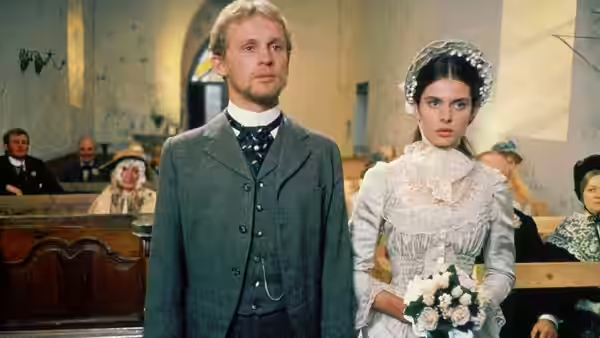
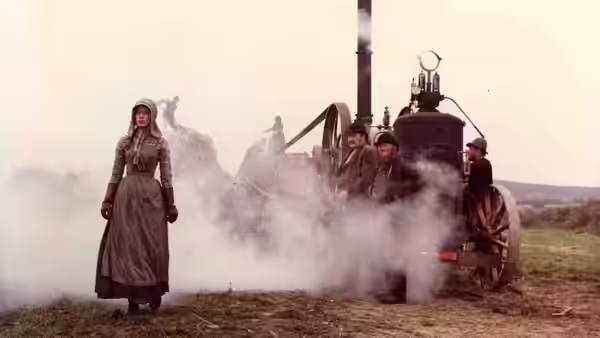
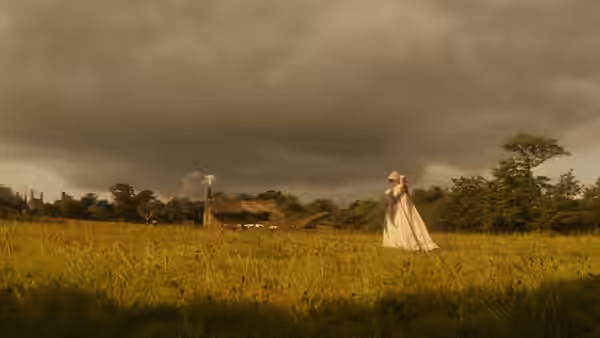
The pictures are the reason to sit down. Two cinematographers are credited, Geoffrey Unsworth and Ghislain Cloquet, and between them the film has a consistent look: low sun through mist at dawn, cottage interiors lit by a single window, fields the colour of wet straw. Pierre Guffroy’s production design puts real mud in the farmyards and real dust in the d’Urberville house, and Anthony Powell dresses the field workers in cloth that looks slept in and the gentry in cloth that has never been near a hedge. Nothing here is prettified. The lanes are rutted, the milk is warm, and the girls’ feet are dirty.

Kinski plays Tess as a young woman who has learned to wait. She barely moves her face; she watches, and lets things happen to her, and speaks only when there is no way round it. Her accent wanders, and there are stretches where the stillness reads as absence rather than depth. But when the film asks her to hold a look, as it does across a kitchen table with Firth late on, she holds it and something breaks behind it, and we were moved more than we had expected to be by an actress who has been so quiet for so long.

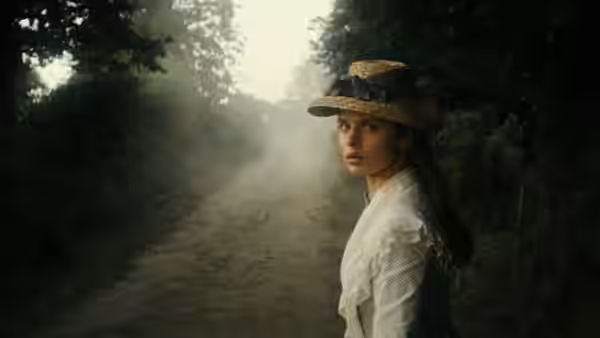
The scene in the Chase, which closes the first act, is where Polanski shows what restraint can do. Alec finds Tess asleep under the trees, the fog comes in, and the camera does not stay. We were horrified, and the horror came from how little we were shown: a face in mist, then trees, then morning. A cruder film would have made a set piece of it. This one treats it as weather, which is worse.

Leigh Lawson’s Alec is a bounder with a moustache and a fast trap, and he plays him without apology, which is right. Peter Firth’s Angel Clare is the more damaging man because he thinks he is the kind one, and Firth lets us see the vanity under the gentleness without ever pointing at it. John Collin is funny and sad as the father who cannot hold a shilling or a thought. Suzanna Hamilton, Carolyn Pickles and Caroline Embling, as the dairymaids, give the middle stretch its only warmth, and the film is sunniest when they are on screen.

The trouble is the length, and it is not a small trouble. Tom Priestley and Alastair McIntyre have kept every season, every walk between farms, every slow approach up a drive, and around the two-hour mark we found ourselves admiring a hayfield and wondering why we were still in it. Philippe Sarde’s score, soft and folk-tinged, tells us to feel sorry for Tess in scenes where Kinski had already done the work.

Polanski’s best films happen in rooms: a flat, a boat, a city that behaves like a locked door. This is his first long film shot mostly under the sky, and he is not quite at home there. The fog and the kitchens are his; the wide fields belong to his cameramen. Most critics like it a little less than we do, and the ones who call it hollow have a point about the second half, where suffering becomes the whole of Tess’s character and the film watches it rather than arguing with it.

See it in one sitting or not at all; broken up, it loses the slow pressure that is its only real design. It carries a 15 certificate, and it opened in British cinemas on 9 April 1981, two years after it was made.

Critical consensus AI synthesised

72
Positive
5
Mixed
2
Negative
1

Most critics admire Tess, and the praise gathers almost entirely around how it looks. Review after review names the colour photography and the production design as the film’s chief virtues, with one critic likening the scale to David Lean. Nastassja Kinski’s performance draws steady approval, described as delicate and deeply moving. A number of critics also note how unlikely a project this seems for Polanski, and read it through his own history and his recurring interest in innocence spoiled.

The reservations start where the beauty ends. The New Yorker finds the film smooth and hypnotic but tame, going soft on Hardy’s rawer material and reducing Tess to a pure victim. Empire calls it good in parts but far too long, blaming the pace on fidelity to the novel. Time Out goes furthest, judging it cloying and hollow, more interested in the director’s preoccupations than the book’s. The spread is wide, though the dissenters are a minority.

Slant Magazine
25 February 2014 · Budd Wilkins
90*

The critic emphasizes the film's ravishing visual poetry and personal resonance for Polanski, connecting it to themes of exploitation and loss seen in Chinatown, while praising the Criterion Blu-ray's transfer and extensive extras on the adaptation and production.

Read the full review →
The Guardian
24 March 2013
85*

The critic calls the film an outstanding piece of work. They single out Nastassja Kinski's deeply moving performance as Tess and the ravishing cinematography for praise.

Read the full review →
Variety
31 December 1978 · Variety Staff
85*

Polanski has delivered a sensitive, intelligent screen treatment that combines fidelity to the novel with beauty. First-rate contributions include the color photography and superb production design.

Read the full review →
The AV Club
26 February 2014 · B+ · Ben Kenigsberg
83

The critic highlights the film's sumptuous visuals and cinematography as a departure toward epic scope for Polanski, likening it to David Lean while tying it thematically to his personal history and recurring motifs of innocence defiled. It notes the strong 4K restoration and bonus features on the Criterion release.

Read the full review →
The New York Times
12 December 1980 · Janet Maslin
80*

Polanski has turned Hardy's novel into a lovely, lyrical, unexpectedly delicate movie that might seem an unlikely project for him. It stands as one of the best films of the season for its handsome, sweeping and deft adaptation.

Read the full review →
The New Yorker
26 January 1981 · Pauline Kael
60*

The film is a sustained feat of craftsmanship that is textured, smooth and hypnotic but tame and lacking in Hardy's visual passion and emotional danger. Kinski gives a delicate performance as a pure sufferer, but the movie reduces Tess to a victim and goes soft on the story's raw elements.

Read the full review →

Straight answers AI written, from our review

Is Tess worth watching?
Tess is worth watching for anyone with a whole evening to give it, and we scored it 74. Roman Polanski's version of Hardy is handsomely made, faithful in outline and very quiet, with Nastassja Kinski a still, wounded centre. It is also 172 minutes long and about half an hour more than it needs, so see it in one sitting or not at all.
How long is Tess, and what is it rated?
Tess runs 2h 52m and is rated PG by the MPA in the US. It is a drama and romance film.
Where can I watch Tess in the US?
Tess is available to rent from Amazon Prime Video from $5.99. Availability is checked daily; the links above go straight to each service.
How violent or frightening is Tess, and is it suitable for children?
Tess carries a 15 certificate in the UK and is a slow period drama rather than a frightening one. The scene that closes the first act, in which Alec finds Tess asleep in the fog, is an assault handled with restraint; we see a face in mist, then trees, then morning, and it is worse for how little is shown. Not for children, and older teenagers should know what it depicts.
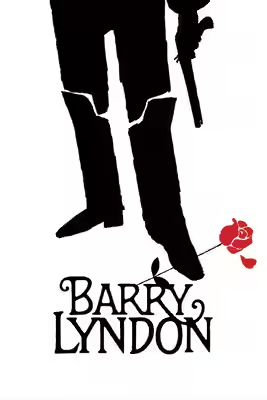
How does Tess compare to Barry Lyndon?
Tess and Barry Lyndon are both long, slow costume dramas built on natural light, and Kubrick's is the better film. It moves even more slowly than Polanski's and rewards the patience more often, whereas Tess has half an hour it does not need. Choose Tess for Kinski's stillness and the Wessex farmyards; choose Barry Lyndon if you want the pace to pay off.
Is Tess based on a true story or a book?
Tess is based on Thomas Hardy's novel, not a true story. Polanski, writing with Gérard Brach and John Brownjohn, follows the book faithfully in outline: a carter's daughter, told her family descends from the ancient d'Urbervilles, is ruined by two men. You do not need to have read Hardy, though readers will recognise how patiently the film keeps to his seasons.
What should I watch after Tess?
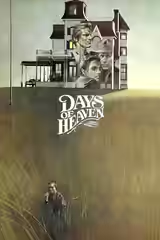
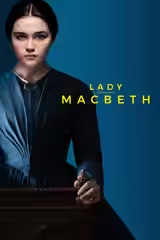
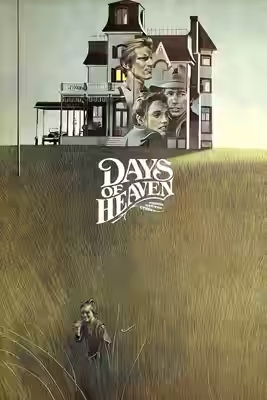
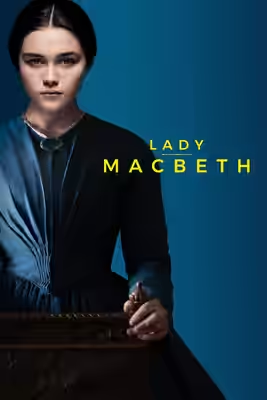
After Tess, try Barry Lyndon (1975, Fi1m 85): Kubrick’s candlelit costume drama moves even more slowly and rewards it more often. Then Days of Heaven (1978, Fi1m 85): Malick’s wheat fields at dusk, a rich man, a poor girl, and very little talking; and Lady Macbeth (2016, Fi1m 80): A Victorian country wife who declines to suffer quietly; brisk, cold and 89 minutes.

Cast

Awards

Academy Awards, 1981

Nominated
Best Director
Nominated
Best Original Score
Nominated
Best Picture
Won
Best Cinematography
Won
Best Costume Design
Won
Best Production Design

César Award for Best Actress, 1980

Nominated
César Award for Best Actress

If you liked this, try…

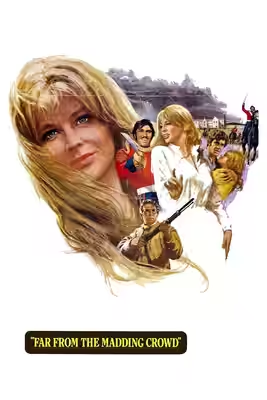
  1. Far from the Madding Crowd (1967) · not reviewed yetSchlesinger’s Hardy, brisker and sunnier, with Julie Christie choosing between three men and choosing badly.

  2. Barry Lyndon (1975, Fi1m 85)Kubrick’s candlelit costume drama moves even more slowly and rewards it more often.

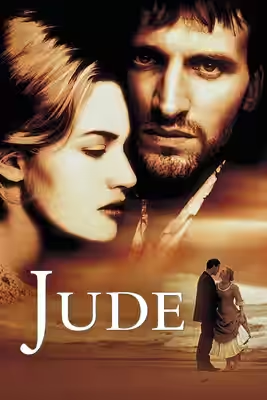
  3. Jude (1996) · not reviewed yetWinterbottom’s Hardy is grey, angry and short; Kate Winslet gives it its pulse.

  4. Days of Heaven (1978, Fi1m 85)Malick’s wheat fields at dusk, a rich man, a poor girl, and very little talking.

  5. Lady Macbeth (2016, Fi1m 80)A Victorian country wife who declines to suffer quietly; brisk, cold and 89 minutes.

Free account

Know what to watch tonight

Two lists that know where things are streaming, collections you can share, your own score beside ours, and Discover that remembers what you have seen.

  • Want to see, sorted by what is streaming now
  • Seen, with your score out of ten
  • No adverts, ever