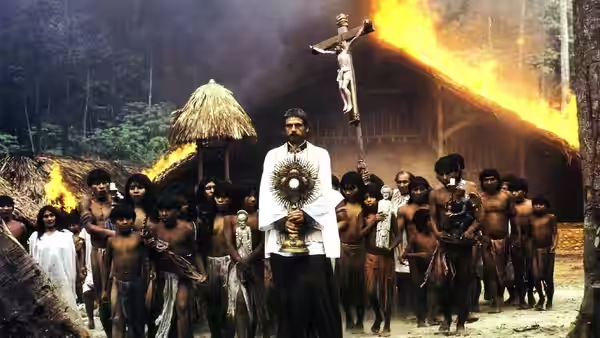
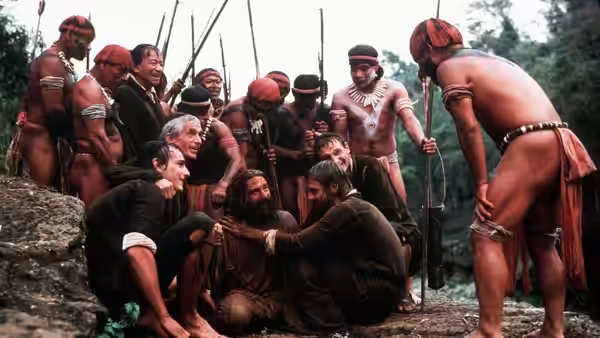
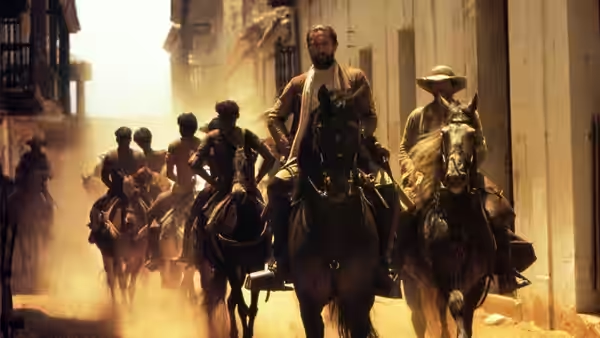
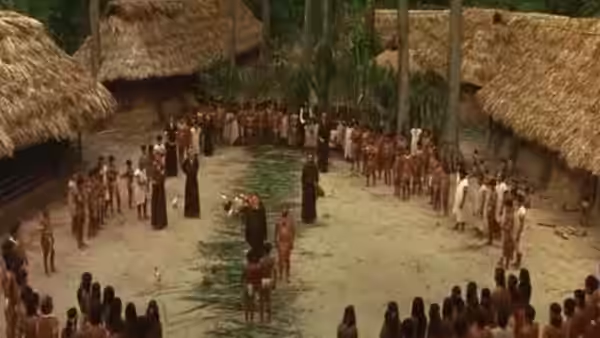
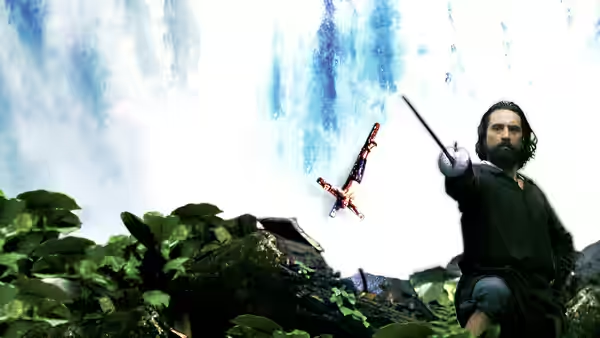
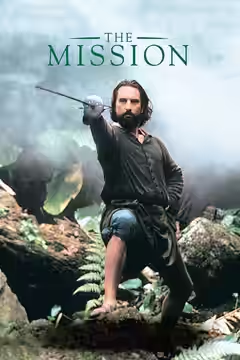
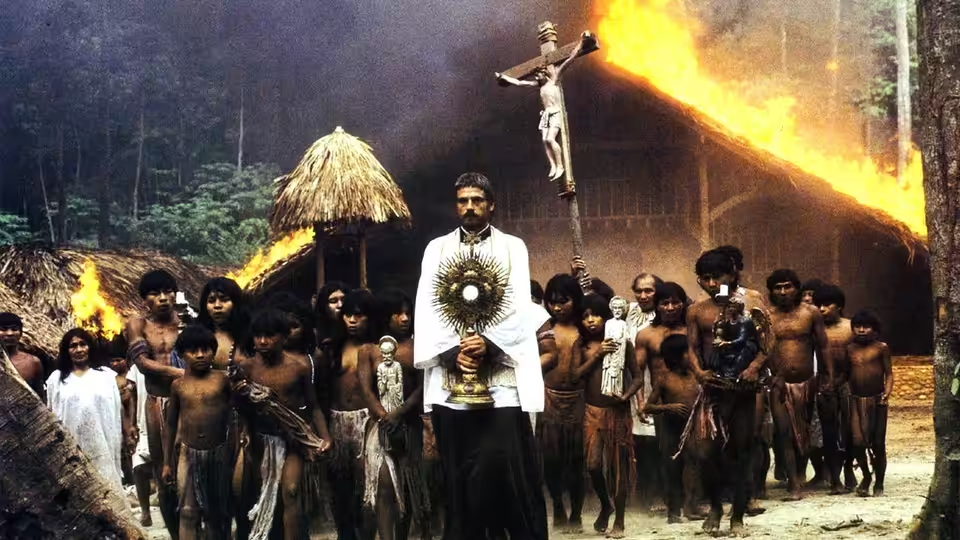
A priest holds a golden vessel among indigenous people near burning huts and a crucifix
Film review

The Mission

1986 · Directed by Roland Joffé · 2h 05m · MPA PG

In a sentenceThe waterfalls could reasonably have asked for top billing

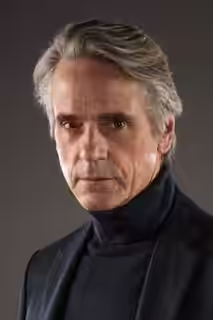
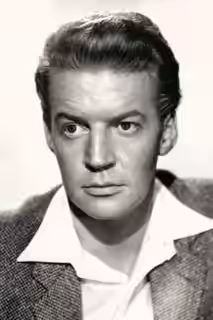
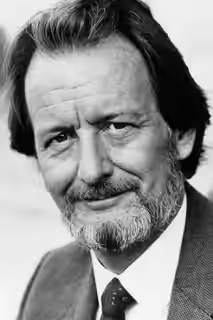
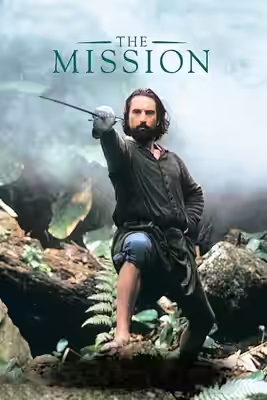
Around the Iguazu Falls, questions of faith and redemption become entangled with political upheaval. Jeremy Irons plays Father Gabriel, and Robert De Niro is Rodrigo Mendoza. Prayer and the use of force offer competing responses to a conflict that brings religious conviction into contact with political authority. Ray McAnally plays Cardinal Altamirano, with Liam Neeson as Father John Fielding and Aidan Quinn as Felipe Mendoza. Roland Joffé directs a historical drama about the demands of belief, the choices people make under pressure and the people with the power to decide how others live.

Plays from YouTube when you press play; nothing loads from them until then.

Fi1m review

Roland Joffé’s historical drama has the scenery, music and conviction to hold us, but Robert Bolt’s script leaves its people underdeveloped. Jeremy Irons supplies some of the feeling the writing misses.

Roland Joffé’s The Mission is worth considering for its landscapes, its music and Jeremy Irons, with a substantial caveat about the writing. It wants to make faith, redemption and political power feel urgent, and it has the scale for that undertaking. Robert Bolt’s screenplay gives the competing convictions plenty of weight, but leaves the people carrying them insufficiently developed. We can see why these questions matter without becoming much involved in the lives through which the film asks them.

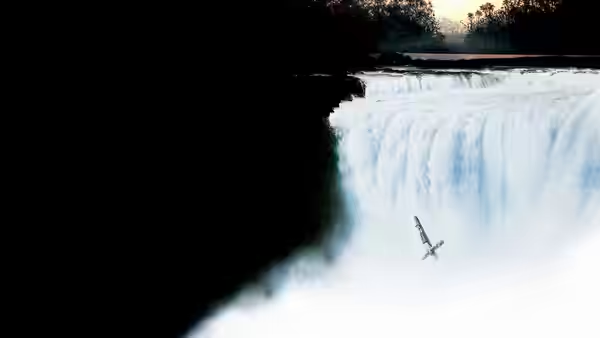
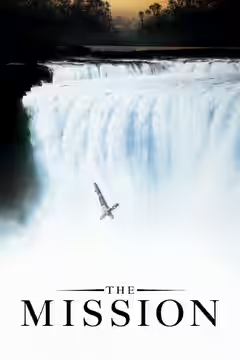
The opening gives us the film at its most direct: a crucified missionary at the Iguazu Falls. We were horrified by that small human figure against so much water. Chris Menges makes the difference in scale do the work; the setting offers no consolation for what is happening within it. Joffé needs no explanation here, because the image is enough to establish the cost of religious conviction. It also sets a level of immediacy that the subsequent drama struggles to sustain.

Irons, as Father Gabriel, comes closest to sustaining it. His performance has a quiet certainty that makes religious belief seem possible as a daily habit, not merely a position to defend. Robert De Niro gives Rodrigo Mendoza a forceful physical presence, but Bolt’s writing leaves too little room for uncertainty or contradiction. We understand the strength of these men’s convictions well before we feel we know them. Irons is particularly good at making that limited space seem sufficient.

Ray McAnally gives Cardinal Altamirano enough individual presence to make the supporting cast worth attending to. He suggests that authority involves a person making decisions, which is something the larger drama can forget. Stuart Craig’s production design keeps the historical setting credible without distracting from the actors, though the falls are what we remember. The discrepancy matters because the film needs those people and their dealings to hold our attention once the landscape has done its work.

Ennio Morricone’s score is a considerable reason to stay. It gives the film’s religious feeling a warmth that the dialogue often lacks, and we found ourselves moved by it despite our reservations about the people. The music makes the solemnity easier to bear because it allows some tenderness into the picture. This is also where the film’s ambition seems most convincingly met: belief feels like something that might sustain a person through suffering.

Jim Clark’s editing is less reliable. The opening has a clean, frightening progression, while the later action becomes difficult to follow at precisely the moments when physical danger ought to make the moral dispute urgent. Joffé can stage an imposing image, but he and Clark do not always make clear how one piece of action connects to the next. A historical adventure needs that basic clarity, however serious its subject.

Those drawn to historical dramas about religious conviction will find enough here to justify the 125 minutes. We would be more cautious with anyone hoping the adventure will carry them through the theological questions. The film expects patience, and not every passage repays it. Choose it for an evening when the discussion afterwards is part of the attraction.
Critical consensus AI synthesised

57
Positive
3
Mixed
2
Negative
2

The reviews split almost evenly, with a slight lean towards approval, and they agree on what works before they disagree on whether it is enough. Nearly every critic singles out the Iguazu Falls and the opening image of the crucified missionary sent over the water; more than one says the location steals the film from its actors. Jeremy Irons and Robert De Niro are praised for physical, largely wordless performances, and Variety finds Ray McAnally in the supporting cast the most enjoyable presence on screen. Joffé’s refusal to prettify the period is admired.

The reservations cluster on the script. Several critics call the film lumpy or structureless, arguing that it states its points about church, state and money without dramatising them, and the climactic battle is described as botched or disorganised by more than one. The spread is wide: the Los Angeles Times finds it passionate and haunting, while Time Out, reviewing decades later, finds it curiously uninvolving and lacking exactly that passion. The later reviews are no warmer than the originals.

Los Angeles Times
14 November 1986 · Sheila Benson
80*

Benson praises the film as haunting spectacle that is serious and passionate, establishing Joffé as a great action director through his collaboration with the cinematographer and editor. She singles out the Iguazu Falls as the scene-stealers and Jeremy Irons' pure performance.

Read the full review →
The Guardian
30 July 2009 · B · Alex von Tunzelmann
77

The critic finds the film powerful and atmospheric, with a strongly political view of the conflict between church, state and capitalism. It is praised for its magnificent filming, accurate historical depiction of the destruction of South American native culture, and superbly recreated battle sequences, though noted as oddly structureless.

Read the full review →
Empire
1 January 2000 · Ian Nathan
75*

The critic highlights the film's ambitious scope and the strong, physically expressive performances from Robert De Niro and Jeremy Irons in a thematically complex historical drama about faith, redemption and political upheaval. Joffé's restrained, un-prettified vision is noted as admirable though it may have contributed to the film's commercial underperformance.

Read the full review →
The New York Times
31 October 1986 · Vincent Canby
50*

Canby calls the film a singularly lumpy movie that states points without dramatizing them effectively. He singles out the riveting opening sequence with the crucified missionary at the Iguassu Falls as the film's most compelling moment.

Read the full review →
Variety
festival review
50*

The review finds the script cardboard thin and the characters labeled rather than developed, though it notes some stunning scenes using the Iguazu falls to advantage. It singles out supporting performances like Ray McAnally's as the most enjoyable while criticizing the botched climactic battle.

Read the full review →
RogerEbert.com
14 November 1986 · Roger Ebert
40*

Ebert finds the film visually striking but ultimately incoherent and lacking emotional pull, despite strong individual elements. He singles out the spectacular waterfall locations and opening image for praise while criticizing the disorganized narrative and battle scenes.

Read the full review →

Straight answers AI written, from our review

Is The Mission worth watching?
The Mission is worth watching for anyone drawn to historical dramas about religious conviction, and we scored it 64. Chris Menges's photography of the Iguazu Falls, Ennio Morricone's score and Jeremy Irons's quiet certainty as Father Gabriel hold the film together. Robert Bolt's script leaves the people underdeveloped, so viewers hoping the adventure will carry them may find their patience tested.
How long is The Mission, and what is it rated?
The Mission runs 2h 05m and is rated PG by the MPA in the US. It is an adventure and drama film.
Where can I watch The Mission in the US?
The Mission is streaming on The Roku Channel and Amazon Prime Video in the US, and it is also available to rent from Amazon Prime Video and Apple TV from $4.99. It leaves The Roku Channel on 1 October. Availability is checked daily; the links above go straight to each service.
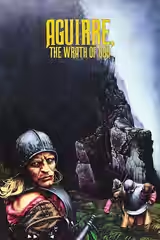
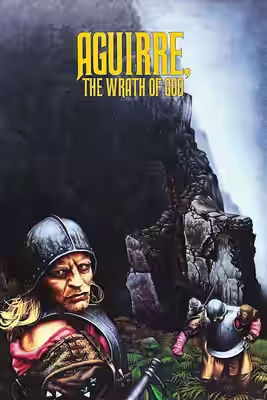
How does The Mission compare to Aguirre, the Wrath of God?
The Mission and Aguirre, the Wrath of God both set human ambition against a landscape that takes no notice of it, but Herzog's film is the stronger and stranger of the two. Aguirre has Klaus Kinski's frightening performance and the physical force of the river journey to drive it; The Mission has scenery and music but characters we admire more than we know. Choose The Mission for a calmer, more solemn evening, Aguirre for one that unsettles.
What should I watch after The Mission?
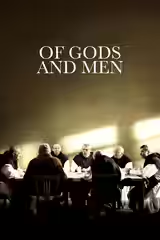
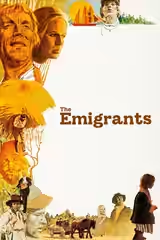
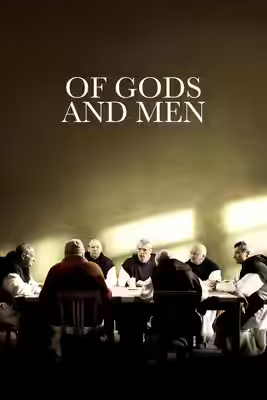
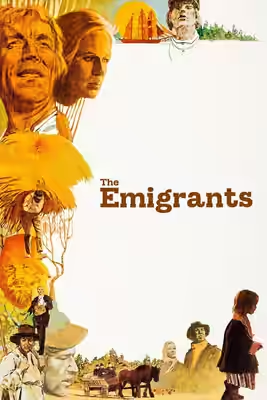
After The Mission, try Aguirre, the Wrath of God (1972, Fi1m 91): Colonial ambition meets a landscape indifferent to human claims of authority. Then Of Gods and Men (2010, Fi1m 84): Religious conviction becomes convincing through daily work, shared meals and difficult choices; and The Emigrants (1971, Fi1m 85): Faith, hardship and displacement explored through patient attention to the people enduring them.

Cast

Awards

Academy Awards, 1987

Nominated
Best Costume Design
Nominated
Best Director
Nominated
Best Film Editing
Nominated
Best Original Score
Nominated
Best Picture
Nominated
Best Production Design
Won
Best Cinematography

Cannes Film Festival, 1986

Won
Palme d'Or

If you liked this, try…

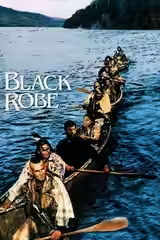
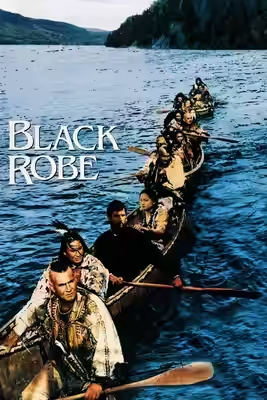
  1. Black Robe (1991) · not reviewed yetAnother encounter between missionaries and Indigenous communities, with harsher doubts about conversion.

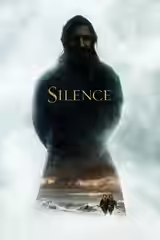
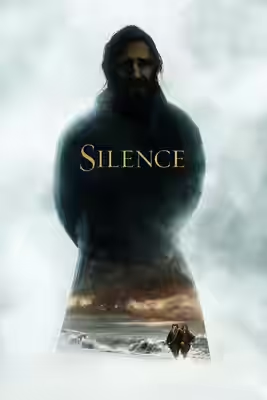
  2. Silence (2016) · not reviewed yetFor a more searching treatment of faith tested by suffering and power.

  3. Aguirre, the Wrath of God (1972, Fi1m 91)Colonial ambition meets a landscape indifferent to human claims of authority.

  4. Of Gods and Men (2010, Fi1m 84)Religious conviction becomes convincing through daily work, shared meals and difficult choices.

  5. The Emigrants (1971, Fi1m 85)Faith, hardship and displacement explored through patient attention to the people enduring them.

Free account

Know what to watch tonight

Two lists that know where things are streaming, collections you can share, your own score beside ours, and Discover that remembers what you have seen.

  • Want to see, sorted by what is streaming now
  • Seen, with your score out of ten
  • No adverts, ever