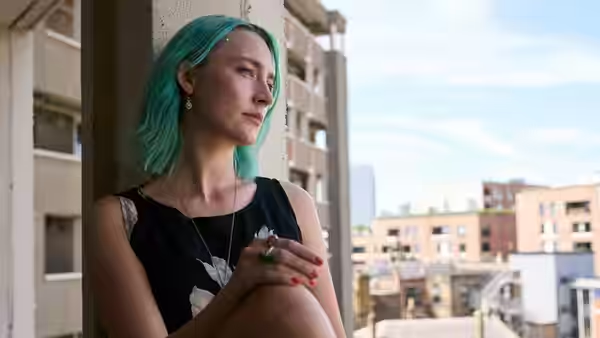
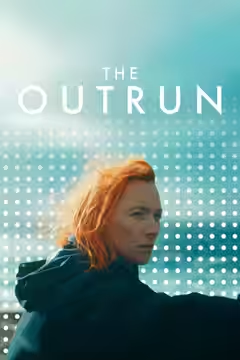
Rona (Saoirse Ronan) stands on a beach with head tilted upward
Film review

The Outrun

2024 · Directed by Nora Fingscheidt · 1h 58m · MPA R

In a sentenceSaoirse Ronan versus the North Atlantic, with the voiceover stepping in every ten minutes to referee

Rona (Saoirse Ronan) returns to Orkney, where she grew up, after years in London that ended in rehab. She moves between her mother, Annie (Saskia Reeves), and her father, Andrew (Stephen Dillane), who lives in a caravan on the farm and whose moods run high and low. Nora Fingscheidt’s film, written with Amy Liptrot and Daisy Lewis from Liptrot’s memoir, cuts back and forth between the island present and the London years, including a relationship with Daynin (Paapa Essiedu) that did not survive the drinking. Rona tries to stay sober and keeps count of the days. It runs 118 minutes and carries a 15 certificate.

Plays from YouTube when you press play; nothing loads from them until then.

Fi1m review

Nora Fingscheidt’s film of Amy Liptrot’s memoir is fractured, wind-blasted and built almost entirely around Saoirse Ronan, who carries it without visible strain. The cutting is bold; the voiceover explains too much, and the last half hour repeats itself. Worth your evening.

Rona (Saoirse Ronan) has come home to Orkney from London with her drinking a few weeks behind her and nothing yet in front of it. Nora Fingscheidt’s film, written with Daisy Lewis and Amy Liptrot from Liptrot’s memoir, does not tell this in order. It cuts between the clubs and flats of London, the rehab ward and the fields where Rona is now trying to stay well, and trusts us to sort them. For the first hour the trust is repaid. The film is good, Ronan is better than the film, and the voiceover keeps getting between us and her.

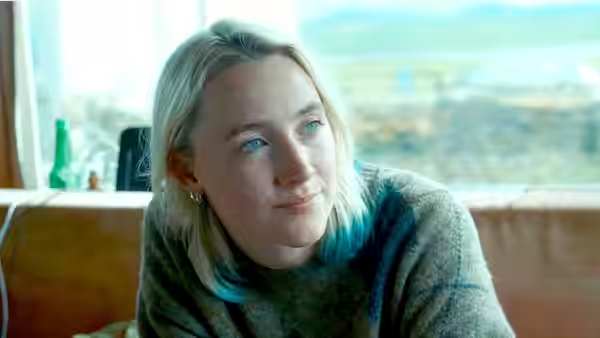
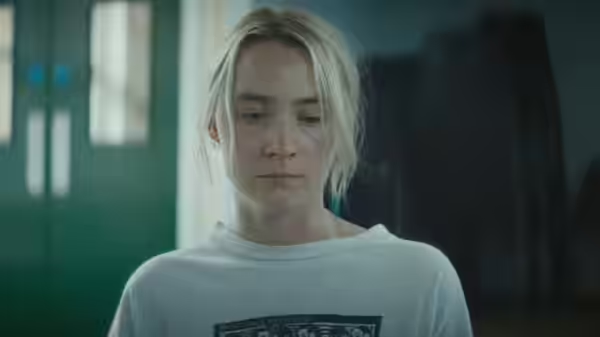
Ronan plays Rona with her whole body. Drunk, she is loose and loud and quick to turn; sober, she walks as if the ground might tilt, hands in pockets, shoulders up against a wind she has stopped noticing. Ronan also produced, with Jack Lowden and Dominic Norris, and the film is built around her. There is nobody else here to carry it and she does not put it down.

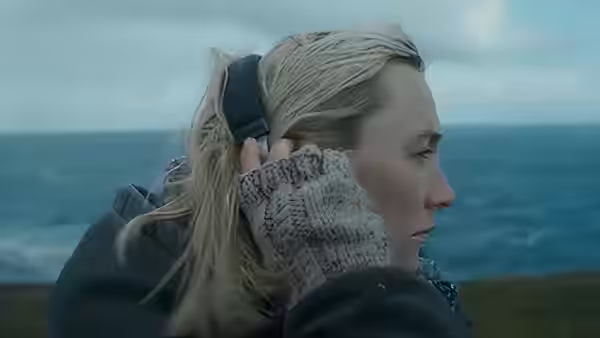
Two cinematographers are credited, Yunus Roy Imer and Raymond Besant, and the film looks like it. London is handheld, strobed and close: faces in club light, the grey of a morning after through a dirty window. Orkney is wide and level and mostly grey-green, with the sea taking a cliff apart at the edge of the frame and seals hauled out on the rocks, filmed by someone who plainly waited for them. Stephan Bechinger cuts between the two on a feeling rather than a date, and early on this is exactly how memory behaves when you are trying not to think about something. Andy Drummond gives the island a caravan fitted out by a man who has stopped caring and a cottage with almost nothing in it, and Grace Snell puts Rona in jumpers a size too large that she seems to be hiding inside.

Then the narration starts to get in the way. It is not the weather or the island lore that bothers us; it is the habit of saying aloud what the picture has just shown. By the last half hour the film has settled into a loop of field, shore, phone call, field, and we were bored, and then cross, because the images had been trusted for an hour and were now being second-guessed by the people who wrote them.

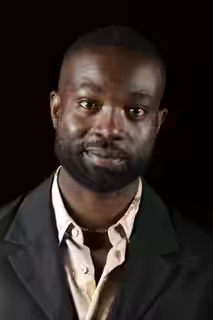
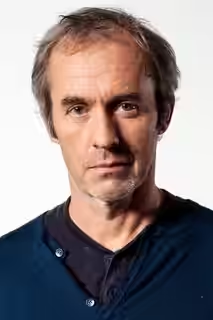
The people around Rona are thinner than she is. Stephen Dillane, as her father Andrew, swings between wild high spirits and a bed he cannot leave, and Dillane is good in both, but the film uses him as weather too. Saskia Reeves gives her mother Annie a steadiness the script treats with more patience than we expected. Paapa Essiedu, as Daynin in London, is warm and hurt and gone too soon; the film knows what he is for and does not much wonder who he is.

Here is what got us. Early on, Bechinger cuts from a London night, close and loud and going wrong, straight to a grey Orkney morning with the wind up and nothing in the frame but Rona and the sea. The two are not compared; they are simply put next to each other, and the gap between them is where the drinking went. John Gürtler and Jan Miserre’s score sits low under the wind and the birds and lets the cut do the work. We were moved more than we expected by a woman standing still, because we had just been shown what it cost her to get there.

Fingscheidt’s System Crasher (2019) had the same nervous cutting, and it was the better film because the child at its centre could not explain herself. Most films about drinking are about the fall; this one is about the long dull business of staying stopped, and it is honest about how little happens and how much that costs. See it in a cinema, for the sea and the sound. At home, in a quiet room, the voiceover gets louder. It runs 118 minutes and carries a 15.


Critical consensus AI synthesised

66
Positive
8
Mixed
4
Negative
1

The reviews agree on one thing and split on nearly everything else. Saoirse Ronan’s performance as Rona is praised almost without exception, described as raw, full-bodied and unshowy, and several critics say it holds the film together when the filmmaking does not. Orkney gets similar credit: the wind and the sea are singled out as often as the lead.

The disagreement is over Nora Fingscheidt’s fractured structure. Most critics find the time-jumping and montage an honest way of showing what addiction feels like from the inside; a sizeable minority find it undisciplined. The Los Angeles Times calls the result a meandering travelogue, The New Yorker finds the fragments too rushed to let the performance breathe, and The Times, the lone outright negative, objects to the structure and to Ronan’s accent. Even admirers note a baggy final third and narration that says what the images already show. The spread is wide, from warm four-star notices to two.

Little White Lies
26 September 2024 · 4/4/4 · Katherine McLaughlin
80

The critic highlights the sensationally directed and performed film, with Fingscheidt crafting a visceral experience of recovery and Ronan delivering a deeply affecting performance, balanced with humour and detail.

Read the full review →
The i Paper
27 September 2024 · Francesca Steele
80*

The vivid, pulsating film favours texture and experimentation over plot to convey what addiction feels like. Saoirse Ronan gives an astonishing full-body performance that could finally win her an Oscar.

Read the full review →
Time Out
22 February 2024 · ★★★★ · Stephen A Russell
80

The critic commends Saoirse Ronan's stunning, towering performance as Rona, noting the film's formal boldness and majestic depiction of Orkney, while handling traumas with care.

Read the full review →
Empire
26 September 2024 · Laura Venning
70*

The film offers a sensitive, non-judgemental portrayal of addiction and mental illness but is sometimes baggy and repetitive in its final third. It is anchored by Saoirse Ronan's typically transcendent performance.

Read the full review →
The Telegraph
26 September 2024
60*

The review praises Ronan's performance as grounding the film, but criticizes the flashy directorial style and the film's tendency to make recovery seem too easy, with a strained catharsis.

Read the full review →
Variety
31 January 2024 · festival review · Owen Gleiberman
50*

Acknowledges Saoirse Ronan's authentic performance in this recovery drama but finds the somber, fragmented style overwhelmingly drab and lacking fire. Criticizes the meditative, free-form adaptation for failing to ignite despite stylish elements.

Read the full review →

Straight answers AI written, from our review

Is The Outrun worth watching?
The Outrun is worth watching for anyone who wants a drama about the slow work of staying sober, built almost entirely on Saoirse Ronan, and we scored it 72. Ronan is better than the film around her; the voiceover explains what the pictures have already shown, and the last half hour repeats itself. See it in a cinema if you can, for the sea and the sound.
How long is The Outrun, and what is it rated?
The Outrun runs 1h 58m and is rated R by the MPA in the US. It is a drama film.
Where can I watch The Outrun in the US?
The Outrun is streaming on Netflix in the US, and it is also available to rent from Amazon Prime Video from $3.99. It leaves Netflix on 18 September. Availability is checked daily; the links above go straight to each service.
How violent or frightening is The Outrun, and is it suitable for children?
The Outrun is not a violent or frightening film, but its 15 certificate is earned by the drinking, the rehab ward and the London nights that go wrong. There is no bloodshed to speak of; the hard material is a woman coming apart and slowly putting herself back together. It is not for children, and younger teenagers would find it slow rather than upsetting.
What should I watch after The Outrun?
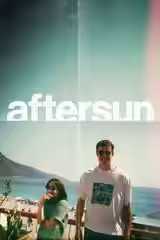
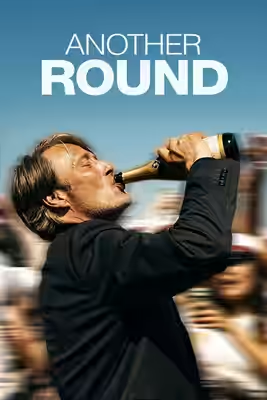
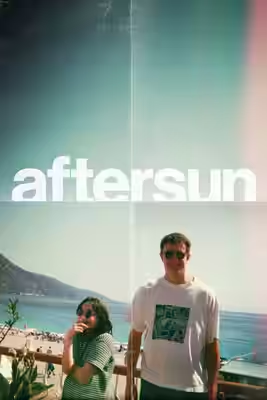
After The Outrun, try Another Round (2020, Fi1m 80): Four Danish teachers drink on purpose; funnier than this, and just as honest about the morning. Then Aftersun (2022, Fi1m 85): Memory cut out of order and trusted to make its own sense, without a narrator.

Cast

If you liked this, try…

  1. Another Round (2020, Fi1m 80)Four Danish teachers drink on purpose; funnier than this, and just as honest about the morning.

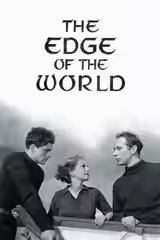
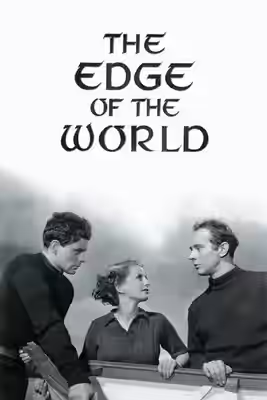
  2. The Edge of the World (1937) · not reviewed yetMichael Powell on a Scottish island being emptied by the sea; the same cliffs, fewer words.

  3. Krisha (2015) · not reviewed yetOne Thanksgiving, one relapse, one house; addiction as a family event, shot like a heist.

  4. Aftersun (2022, Fi1m 85)Memory cut out of order and trusted to make its own sense, without a narrator.

  5. Rams (2015) · not reviewed yetTwo Icelandic brothers, some sheep and a great deal of weather; stubbornness as a way of life.

Free account

Know what to watch tonight

Two lists that know where things are streaming, collections you can share, your own score beside ours, and Discover that remembers what you have seen.

  • Want to see, sorted by what is streaming now
  • Seen, with your score out of ten
  • No adverts, ever