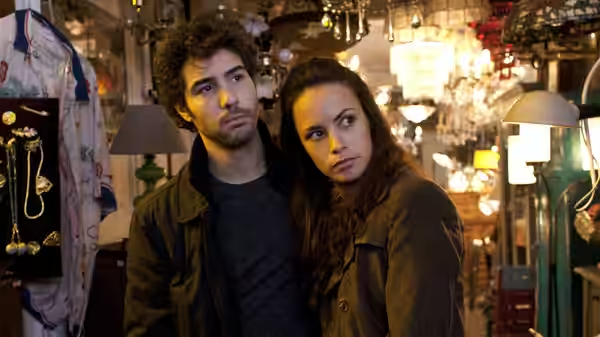
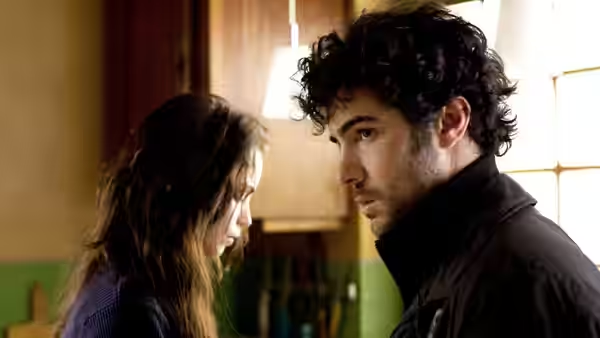
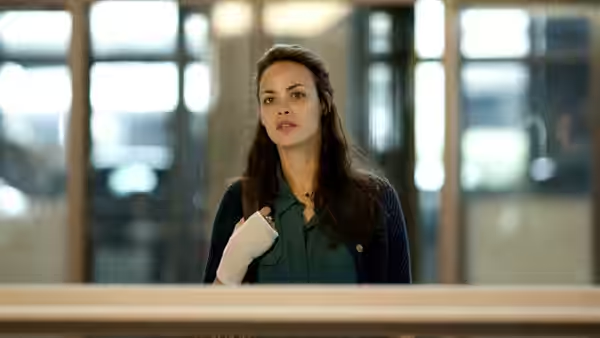
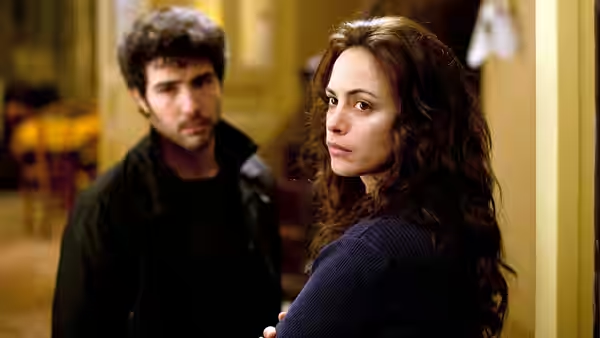
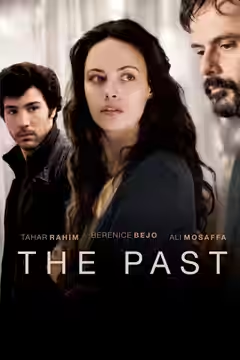
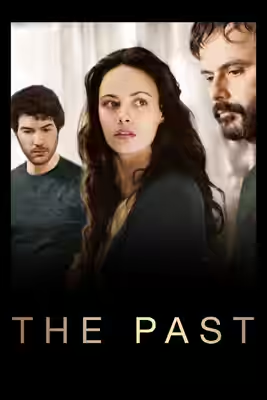
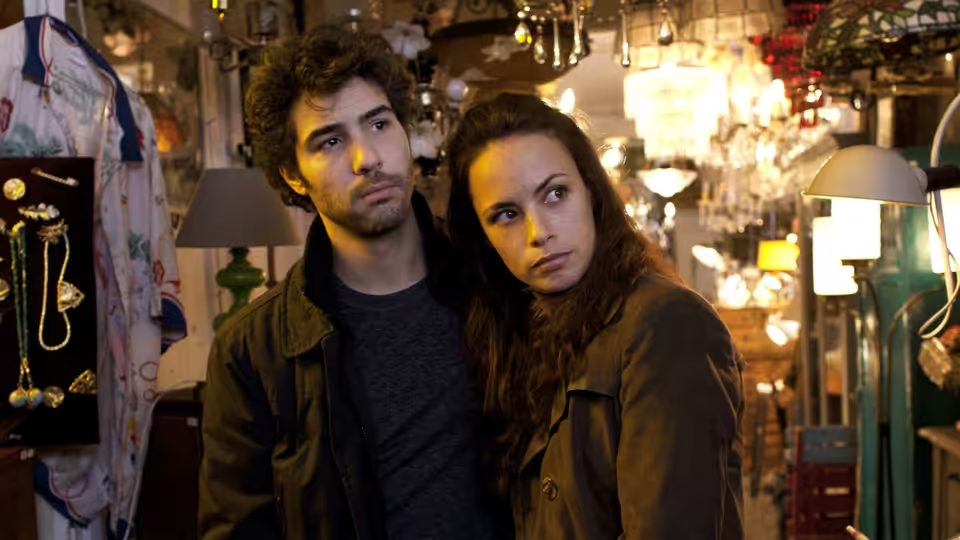
Ahmad (Ali Mosaffa) and Marie (Bérénice Bejo) standing together in a cluttered shop
Film review

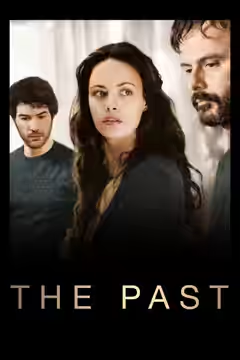
The Past

2013 · Directed by Asghar Farhadi · 2h 10m · MPA PG-13

In a sentenceNobody in this house is lying, exactly; they are simply taking turns with the truth

Ahmad (Ali Mosaffa) flies from Tehran to Paris to sign the papers that will end his marriage to Marie (Bérénice Bejo). She meets him at the airport but has not booked the hotel he asked for, so he stays in her half-painted house in the suburbs, alongside her two daughters, Lucie (Pauline Burlet) and Léa (Jeanne Jestin), and a small boy, Fouad (Elyes Aguis), who is not hers. Fouad belongs to Samir (Tahar Rahim), who runs a dry cleaner’s, whose wife lies in a coma, and whom Marie intends to marry. Lucie will not speak to Samir and stays out until the small hours. Marie wants Ahmad, whom the teenager still trusts, to find out why.

Fi1m review

Asghar Farhadi moves to Paris and brings his habit of letting every character be right. The acting is superb and the house is a marvel of clutter, but the last half hour keeps producing revelations until the drama becomes a deposition.

Asghar Farhadi’s first film made outside Iran, after A Separation (2011), begins with a man and a woman at an airport, talking through a glass partition, and we cannot hear a word. It is a fair warning. The Past is a film about people who have spent years half-hearing each other, and for its first ninety minutes it is as good as anything Farhadi has made. Then the plot starts to answer questions, one after another, and the film is a little less good with each answer. It is still worth your evening.

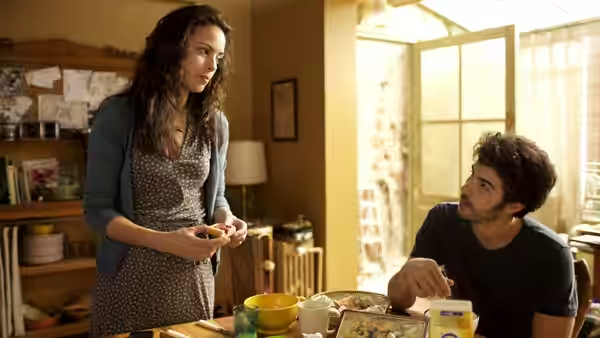
The house is the star. Claude Lenoir has built Marie’s place as a home that has never quite been finished: sheets over the furniture, one wall done and the next one not, a spare room that has quietly become a child’s, a kitchen where every conversation happens because it is the only room with chairs. Mahmoud Kalari shoots it close and handheld, in doorways and corridors, so that somebody is always in the way of somebody else. When he pulls back, it is to put a pane of glass between people: the airport, a windscreen in the rain, the steamed-up front of Samir’s shop. Nobody in this film ever gets a clear line of sight to anyone.

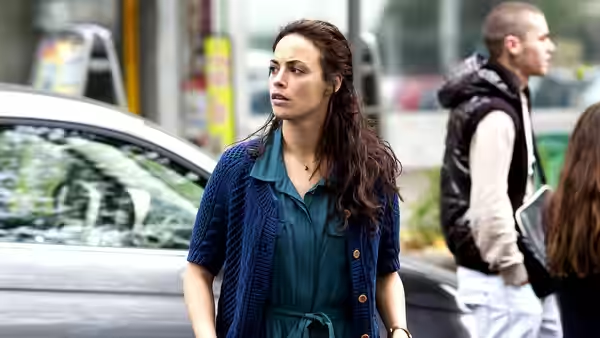
Bérénice Bejo plays Marie as a woman who snaps, apologises, and snaps again inside a single sentence. She smokes on the doorstep, she loses her temper with the wrong child, and she is, plainly, exhausted from being the only adult who stayed. It is a performance without vanity. Ali Mosaffa’s Ahmad has the calm of a man who knows he can leave on Sunday, and Mosaffa lets us see that the calm is a kind of luck rather than a virtue. Tahar Rahim, as Samir, says less than either of them and is watched by everyone; he has the stillness of a man waiting for a phone call from a hospital.

The children are the film’s best idea. Pauline Burlet’s Lucie is sullen in the way only a sixteen-year-old with a real grievance can be, and the scene in which Ahmad finally gets her talking, walking beside her rather than sitting opposite, is the most patient stretch of writing in the film. Elyes Aguis’s Fouad is small, furious and homesick for a house that no longer works, and the moment that got at us most was a simple one: the boy in the back of a car at night, howling to be taken home, while the two men in the front seats say nothing because there is nothing to say. We were more upset by that than by any of the adult confessions that follow.

Juliette Welfling cuts the arguments with a good ear for when to leave. She lets a kitchen row run long enough to hurt and then goes to the next room, where a child has heard all of it. Evgueni Galperine and Youli Galperine’s music is withheld almost entirely until the final minutes, which is the right decision; the film’s sound is doors, rain, a kettle and raised voices, and it does not need help.

The trouble is the mystery. Farhadi wants to know why Samir’s wife did what she did, and so does everyone in the house, and in the last forty minutes each of them produces a new piece of the story. A chain of confessions begins, each one shifting the blame a link along, and by the fourth we had stopped feeling anything and started keeping score. Marie’s reasons for wanting Ahmad under her roof at all never quite hold either, and the film’s habit of casting him as the reasonable man in the doorway while she shouts in the kitchen is a pattern it notices but does not entirely escape.

A Separation had one lie and let the consequences spread through a whole city. About Elly (2009) had one absence. The Past has three or four secrets and has to explain every one of them, and explaining is the thing Farhadi does least well. What he does best, the way a family talks over itself at dinner, the way a child hears more than anyone intends, is all here, and it is a pleasure to watch even while the plot is tidying up behind it.

See it with someone you have argued with. It runs 130 minutes and carries a 12A, and nothing in it will alarm a twelve-year-old except the sight of adults behaving like this.

Critical consensus AI synthesised

65
Positive
13
Mixed
3
Negative
4

Most critics come away admiring The Past, though few love it without reservation. The praise gathers around Farhadi’s handling of actors, and around Bérénice Bejo in particular, whose performance as a woman pulled at from every side is singled out again and again. Reviewers also credit the density of the family drama: the shared history, the secrets, the way the script sets out guilt and responsibility without taking sides.

The reservations are almost all about plot. Many find the late revelations contrived, the third act too eager to explain itself and the pacing slack in the second half. A Separation hangs over nearly every review, and most think this film the lesser of the two. The spread is wide. The AV Club regards it as a major achievement, while Sight and Sound and Time Out find it disappointing and heavy-handed, and Anthony Lane in The New Yorker finds its mix of chaos and gloom hard to endure.

The AV Club
17 May 2013 · A · Mike D'Angelo
95

Hails it as a magnificent achievement and painfully precise disquisition on human messiness, dense with shared history, though noting some bluntness and similarity to A Separation.

Read the full review →
Little White Lies
26 March 2014 · 4/4/4 · David Jenkins
80

The critic praises Farhadi as a great humanist who builds credible characters with complex motivations, highlighting the film's immaculate study of marital disharmony and emotional ripple effects.

Read the full review →
The Guardian
27 March 2014 · ★★★★ · Peter Bradshaw
80

Farhadi confirms his place among cinema's true grown-ups with a pressure cooker of a relationship drama that is a tragedy of good intentions and wrong decisions. The critic singles out the film's severity and cerebral force, along with its intricate analysis of the agony of splitting in a loss-of-love triangle.

Read the full review →
Screen Daily
17 May 2013 · festival review
75*

Delivers another gripping, densely plotted drama of ethics, love and loyalty; confirms Farhadi as superb director of actors, but less resonant than A Separation.

Read the full review →
Los Angeles Times
19 December 2013 · Kenneth Turan
70*

Farhadi has a passion for drama and a gift for realistic depiction of intense emotional situations, making “The Past” quite potent on its own terms as part family melodrama and part intricate interpersonal puzzle. A plot heavy with contrivances works due to the forceful direction and excellent cast, led by a convincing Bérénice Bejo.

Read the full review →
Slant Magazine
17 May 2013 · festival review · Jordan Cronk
70*

Notes the film's complex narrative and strong sense of interior space as a stirring, impressively acted piece that extends Farhadi’s streak, though it strains toward melodrama at times.

Read the full review →

Straight answers AI written, from our review

Is The Past worth watching?
The Past is worth watching for anyone who likes a family drama where every character is allowed to be right, and we scored it 72. The acting is superb and the cluttered half-painted house is the star, but the last forty minutes pile up revelations until the drama turns into a deposition. See it with someone you have argued with.
How long is The Past, and what is it rated?
The Past runs 2h 10m and is rated PG-13 by the MPA in the US. It is a drama and mystery film.
Where can I watch The Past in the US?
The Past is available to rent from Apple TV from $3.99. Availability is checked daily; the links above go straight to each service.
How violent or frightening is The Past, and is it suitable for children?
The Past carries a 12A in the UK and contains no violence to speak of; its frights are domestic. The film is made of kitchen rows, a sullen teenager, a small boy howling to be taken home and a wife in a coma discussed rather than shown, so nothing in it will alarm a twelve-year-old except the sight of adults behaving like this. Younger children will be bored rather than frightened.
How does The Past compare to A Separation?
The Past is Asghar Farhadi's first film made outside Iran, and it is the looser and less satisfying of the two. A Separation has one lie in one Tehran flat and lets the consequences spread; The Past has three or four secrets and has to explain every one of them, which is the thing Farhadi does least well. Start with the earlier film, then come to this one for the children and the house.
What should I watch after The Past?
After The Past, try A Separation (2011, Fi1m 93): Farhadi’s tighter film: one lie, one Tehran flat, and consequences that will not stop. Then Secrets & Lies (1996, Fi1m 88): Mike Leigh’s family secret comes out over a barbecue; nobody escapes the garden unchanged; and Force Majeure (2014, Fi1m 84): A husband runs the wrong way for two seconds and a marriage spends a week paying.

Cast

Awards

César Award for Best Actress, 2014

Nominated
César Award for Best Actress

International Submission to the Academy Awards, 2014

Nominated
International Submission to the Academy Awards

If you liked this, try…

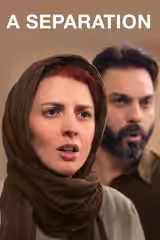
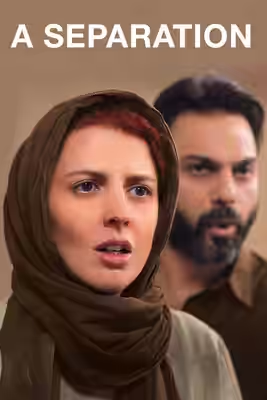
  1. A Separation (2011, Fi1m 93)Farhadi’s tighter film: one lie, one Tehran flat, and consequences that will not stop.

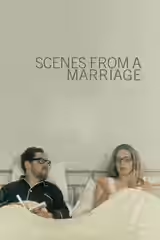
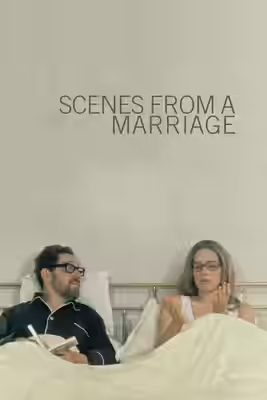
  2. Scenes from a Marriage (1973) · not reviewed yetBergman lets a couple talk for six hours and none of it is wasted.

  3. Secrets & Lies (1996, Fi1m 88)Mike Leigh’s family secret comes out over a barbecue; nobody escapes the garden unchanged.

  4. Still Walking (2008) · not reviewed yetKore-eda’s one day with a grieving family, all kitchens and things left unsaid.

  5. Force Majeure (2014, Fi1m 84)A husband runs the wrong way for two seconds and a marriage spends a week paying.

Free account

Know what to watch tonight

Two lists that know where things are streaming, collections you can share, your own score beside ours, and Discover that remembers what you have seen.

  • Want to see, sorted by what is streaming now
  • Seen, with your score out of ten
  • No adverts, ever