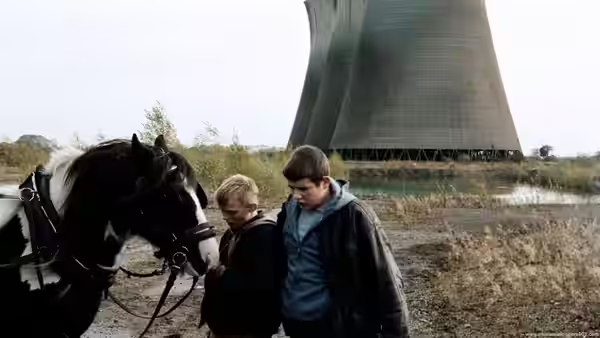
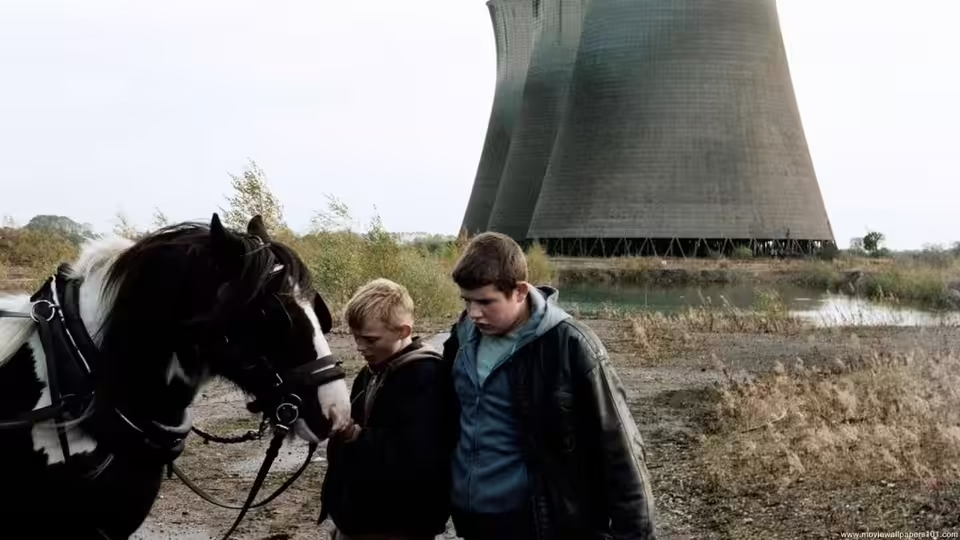
Two boys stand with a black and white horse before a cooling tower
Film review

The Selfish Giant

2013 · Directed by Clio Barnard · 1h 31m · MPA R

In a sentenceTwo boys go looking for scrap metal and find adults who ought to know better

In contemporary Bradford, Arbor (Conner Chapman) and Swifty (Shaun Thomas) scavenge scrap metal for cash. Arbor wants to earn money, and the boys’ search draws them towards Kitten (Sean Gilder) and an adult business that can use their energy. Around the estates are pylons, horses and metal with a resale value. Collecting it offers a way to get paid, but the work draws the boys into theft and exposes them to danger. Their friendship sustains them as they try to find a place in a trade where their need to earn makes them easy to exploit.

Plays from YouTube when you press play; nothing loads from them until then.

Fi1m review

Clio Barnard’s The Selfish Giant is a moving drama about two Bradford boys collecting scrap metal. The plotting sometimes feels too familiar, but Conner Chapman and Shaun Thomas make the friendship difficult to forget.

Clio Barnard’s The Selfish Giant is a film we recommend warmly, though its account of childhood poverty sometimes follows a familiar course. It asks what an enterprising boy can do when the work available to him is collecting other people’s discarded metal. Arbor and Swifty see scrap as a way to earn, and the film takes that ambition seriously without suggesting it will make them safe. Neither boy has been made conveniently sweet for our benefit.

Conner Chapman plays Arbor with an energy that can be wearing, which is one reason the performance works: poverty has not made this child obliging. He takes the prospect of getting money seriously, and his eagerness makes sense even when his judgement does not. Shaun Thomas gives Swifty a gentler presence, allowing the friendship some breathing space whenever Arbor threatens to exhaust it. We were moved by the warmth between them in the scrap-collecting scenes, because they still find pleasure in each other’s company when earning money takes up so much of their attention.

Sean Gilder makes Kitten intimidating without turning him into a grand villain. The scrap trade offers something the boys can understand immediately: metal has a price, and collecting it earns money. Clio Barnard’s screenplay understands the attraction, so their early involvement does not feel like a writer simply manoeuvring children into trouble. We can see why they want the work, and how readily adults can profit from their willingness to take it.

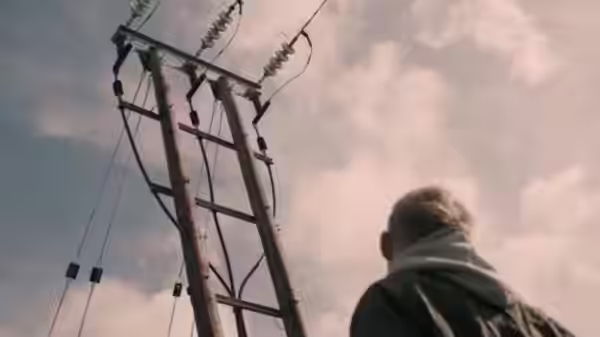
Mike Eley’s cinematography makes the Bradford estates and pylons worth looking at, even when we have plenty of reasons to want the boys elsewhere. The visual care never distracts from the hazards of the scrap collecting. Helen Scott’s production design makes this trade feel like work, with metal treated as something to collect and sell rather than picturesque rubbish. These surroundings help explain the boys’ choices: the possibility of earning is there in front of them, however little protection comes with it.

Nick Fenton’s editing is strongest when it gives the boys time together, letting their companionship count for as much as the next piece of trouble. At 91 minutes, the film has little room to drift, yet these passages do not feel hurried. Harry Escott’s restrained music leaves the young actors room to make us care without much prompting. That suits performances which already make plain how much the friendship matters.

The reservation is that we can sometimes recognise where this kind of social-realist story is heading before the boys can. When every opportunity looks liable to become another danger, the writing starts to feel too determined to prove how little chance these children have. That is a familiar weakness in dramas about poverty, and Clio Barnard does not always escape it. The boys’ humour and impatience do much to keep the film from settling into a succession of reasons to pity them.

Anyone wary of another drama that treats poor children as helpless will find more life here than that description suggests. These boys can be funny and difficult, and neither actor keeps asking us to approve of them. See it for their performances, but leave the lighter evening for another night.

Critical consensus AI synthesised

78
Positive
20
Mixed
0
Negative
1

Most critics respond warmly to The Selfish Giant, with praise concentrated on the young leads and Clio Barnard’s handling of their friendship amid poverty and scrap-metal dealing. The reviews repeatedly find tenderness, energy and humour in material that could have become relentlessly grim, crediting the performances with making the boys feel individual rather than merely representative of hardship. Barnard’s direction and the images of Bradford’s post-industrial landscape also draw strong approval, particularly for finding beauty without softening the surroundings.

Reservations concern familiar social-realist territory and the severity of the experience, rather than the acting or visual craft. The AV Club describes the drama as conventional but vivid enough to avoid miserabilism, while The Times acknowledges familiar genre elements yet stresses how strongly the film makes its characters matter. Enthusiasm ranges from measured admiration to emphatic praise; the written responses suggest broader agreement than the spread of scores might imply.

Financial Times
24 October 2013
90*

Clio Barnard finds poetry amid the pylons in a Yorkshire-set tale of two petty-thieving boys. The critic calls it one of the great modern British films, praising its moody, poetic quality and the dazzlingly honest central performance.

Read the full review →
Screen Daily
17 May 2013 · festival review
90*

Barnard's fiction debut is a powerful contemporary fable about friendship, greed and exploitation that recalls the compassionate drama of Ken Loach. It is highlighted for its memorable impact and confirmation of Barnard as a major talent.

Read the full review →
The Guardian
24 October 2013
90*

Barnard's reworking of Oscar Wilde's story is an outstanding contemporary social-realist film about two boys scavenging scrap on Bradford estates. The critic praises its passionate handling of the young leads, a hair-raising horse-and-trap drag race sequence, and its maturity as filmmaking in the tradition of Ken Loach.

Read the full review →
Empire
23 September 2013 · Damon Wise
85*

A terrific human drama about two boys about to be consigned to the scrapheap, with standout performances from its young leads; profoundly moving with lightness of touch despite realist elements.

Read the full review →
Vulture
20 December 2013 · Bilge Ebiri
85*

The critic describes it as a grim yet magical coming-of-age story with a vitality to its despair that keeps viewers engaged, singling out the remarkable young actors and Barnard's observant, poetic direction.

Read the full review →
The AV Club
19 December 2013 · B+ · Mike D'Angelo
83

It praises Barnard's skill with child actors and her vivid, vibrant depiction of an impoverished milieu in a conventional kitchen-sink drama, noting that the film avoids feeling like miserabilism.

Read the full review →

Straight answers AI written, from our review

Is The Selfish Giant worth watching?
The Selfish Giant is worth watching for anyone who can take a hard drama about childhood poverty, and we scored it 88. Conner Chapman and Shaun Thomas make the friendship between two Bradford scrap collectors difficult to forget, even when the plotting heads somewhere familiar. It is not a film for a light evening.
How long is The Selfish Giant, and what is it rated?
The Selfish Giant runs 1h 31m and is rated R by the MPA in the US. It is a drama film.
Where can I watch The Selfish Giant in the US?
The Selfish Giant is streaming on AMC+, The Roku Channel, Tubi, Apple TV and Amazon Prime Video in the US, and it is also available to rent from Amazon Prime Video and Apple TV from $3.99. Availability is checked daily; the links above go straight to each service.
How violent or frightening is The Selfish Giant, and is it suitable for children?
The Selfish Giant is a 15 certificate, so it is not suitable for children, and its account of two boys drawn into theft and danger through the scrap trade is bruising rather than frightening in a horror sense. Expect exploitation by adults and real hazard rather than gore. Older teenagers who can sit with a sad film will cope; anyone wanting comfort should look elsewhere.
How does The Selfish Giant compare to Kes?
The Selfish Giant and Kes are both British dramas about boys let down by adults, and Kes is the lighter and funnier of the two. Clio Barnard's film is bleaker and its plot more predictable, though the friendship between its two boys gives it a warmth Kes finds instead in a boy and his kestrel. Newcomers to social realism should start with Loach.
What should I watch after The Selfish Giant?
After The Selfish Giant, try Kes (1969, Fi1m 88): A child’s care for a bird offers relief from adults who disappoint him. Then Ratcatcher (1999, Fi1m 88): Childhood friendship and poverty observed with a sharper eye than easy pity allows; and Nobody Knows (2004, Fi1m 87): Children make daily routines out of circumstances no adult should have left them.

Cast

Awards

Lux Prize, 2013

Nominated
Lux Prize

If you liked this, try…

  1. Kes (1969, Fi1m 88)A child’s care for a bird offers relief from adults who disappoint him.

  2. The Kid with a Bike (2011) · not reviewed yetAnother headstrong boy whose need for affection makes kindness difficult to accept.

  3. Where Is the Friend's House? (1987) · not reviewed yetA child’s practical loyalty receives the patient attention adults rarely give it.

  4. Ratcatcher (1999, Fi1m 88)Childhood friendship and poverty observed with a sharper eye than easy pity allows.

  5. Nobody Knows (2004, Fi1m 87)Children make daily routines out of circumstances no adult should have left them.

Free account

Know what to watch tonight

Two lists that know where things are streaming, collections you can share, your own score beside ours, and Discover that remembers what you have seen.

  • Want to see, sorted by what is streaming now
  • Seen, with your score out of ten
  • No adverts, ever