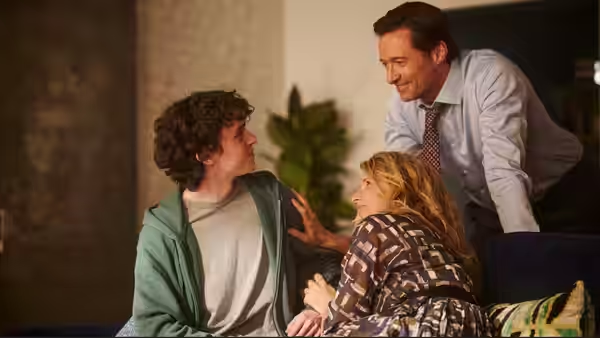
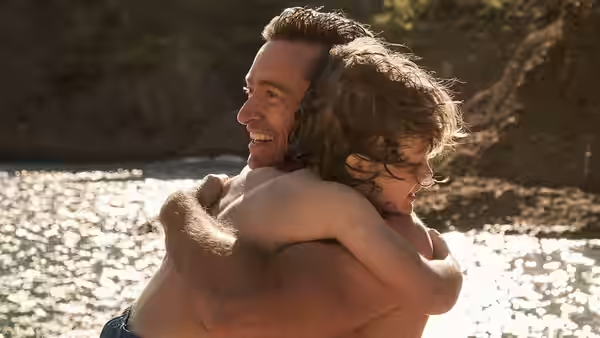
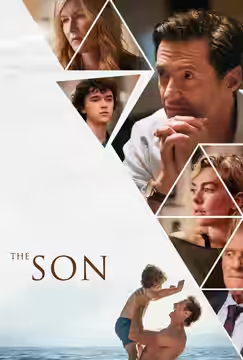
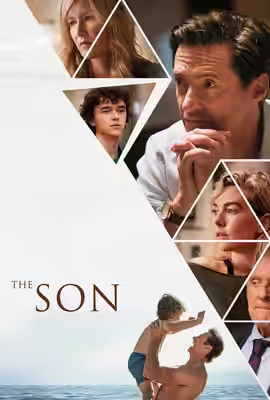
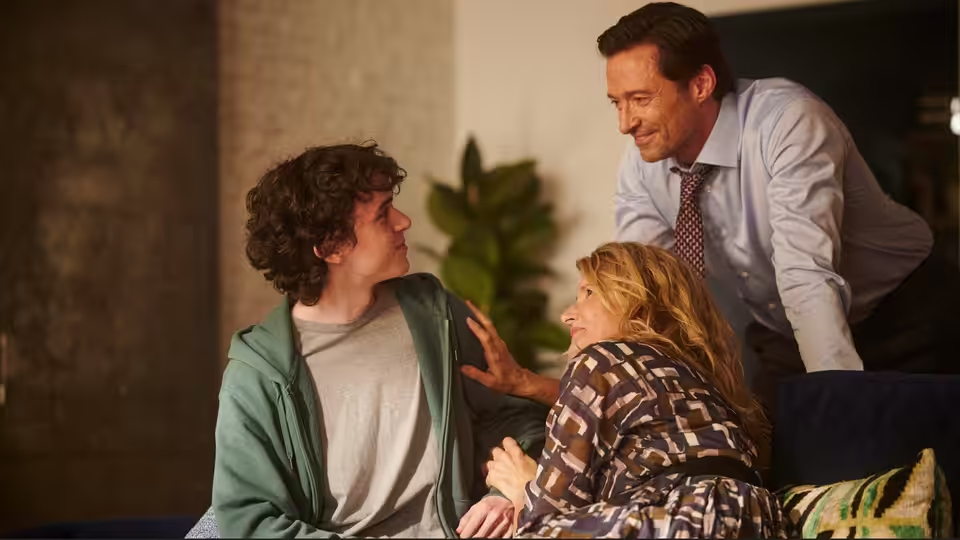
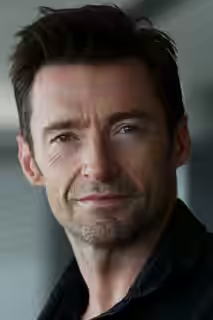
Peter (Hugh Jackman) with Nicholas (Zen McGrath) and Kate (Laura Dern) indoors on a couch
Film review

The Son

2022 · Directed by Florian Zeller · 2h 03m · MPA PG-13

In a sentenceHugh Jackman works hard enough for an entire family, but somebody still needs to rewrite their conversations

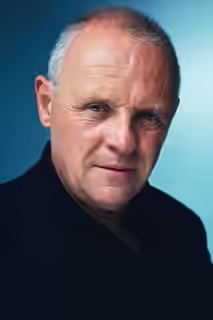
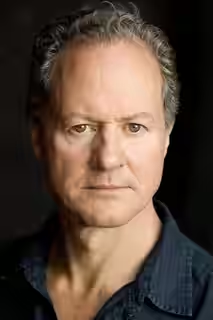
Peter (Hugh Jackman), a high-achieving lawyer, struggles to respond when his teenage son Nicholas (Zen McGrath) suffers from depression. Their family has been affected by divorce, and Peter’s attempts to help raise questions about what he understands of his son and of being a parent. The crisis involves several generations, with guilt and old family wounds complicating the search for a way forward. Florian Zeller directs, with Laura Dern as Kate, Vanessa Kirby as Beth and Anthony Hopkins as Anthony, in a drama about the limits of parental love.

Plays from YouTube when you press play; nothing loads from them until then.

Fi1m review

Florian Zeller’s family drama is disappointingly shallow about teenage depression. Hugh Jackman finds moments of painful parental uncertainty, but the script gives the adults’ guilt more attention than the boy they are trying to help.

Florian Zeller’s The Son is a poor family drama built around a serious and worthwhile subject: a parent trying to help a teenager with depression. Peter, played by Hugh Jackman, is a high-achieving lawyer whose confidence is of limited use when dealing with his son Nicholas, played by Zen McGrath. There is plenty to explore in that failure of understanding. At 123 minutes, though, the film spends too long expressing the adults’ distress without bringing us much closer to the boy.

Zeller and co-writer Christopher Hampton have a sound starting point in Peter’s guilt and his wish to be a good father. Those are credible concerns, and the film is right not to offer a neat explanation for Nicholas’s illness. But the dialogue keeps explaining feelings that the actors have already made clear. The adults repeatedly articulate their anguish, while Nicholas remains so thinly written that his pain becomes something for the others to respond to.

Jackman gives Peter enough uncertainty to make that imbalance frustrating. We were moved by his effort to keep the guilt from showing, because the strain makes Peter’s wish to be a capable father painfully clear. His composure seems to require work, and Jackman lets that effort show without making Peter entirely aware of it. When the performance becomes more openly anguished, it is less persuasive; the writing asks for an intensity that the relationships have not earned.

McGrath has the harder assignment, and blaming him for Nicholas’s remoteness would let the screenplay off too easily. He gives the teenager’s distress credibility, but there is too little of a person beyond it for him to play. Laura Dern as Kate and Vanessa Kirby as Beth make some stiff lines sound briefly human, though their parts do not sustain that relief. Anthony Hopkins brings an unpleasant coldness to Anthony, adding some force to the film’s interest in what one generation passes to another.

Ben Smithard’s cinematography and Simon Bowles’s production design give the everyday rooms a degree of menace, an effective choice for a story in which family life has become frightening. The polished look can also make the distress feel sanitised. Yorgos Lamprinos’s editing does little to relieve the script’s repetitive emphasis on parental worry. Hans Zimmer’s music adds to the pressure to feel something that the dialogue has not earned, making already heavy scenes harder to sit through.

The comparison with Zeller’s earlier The Father is hard to avoid, although this film does not need elaborate storytelling to justify itself. A straightforward family drama can be exact about the small differences between what people say and what they understand. Here, the lack of access to Nicholas leaves the adults’ bewilderment doing most of the dramatic work. Zeller’s simpler approach needed a fuller account of Nicholas as a person, including something that might help us imagine him outside these conversations.

There is a place for films about parents who cannot understand what their children are experiencing, and they need not provide solutions. They do need to give the child a life beyond the crisis, particularly when that crisis is the reason everyone else has a part. Jackman’s admirers will find passages worth their attention here. For an evening spent with a family who feel like people beyond their suffering, we would choose something else.
Critical consensus AI synthesised

53
Positive
7
Mixed
5
Negative
8

The consensus on The Son is mixed, with a wide split over whether its treatment of depression is compassionate or manipulative. Praise clusters around Hugh Jackman, whose portrayal of parental guilt earns approval even from critics dissatisfied with the film. Time Out finds his performance full of empathy and the domestic crisis tough but rewarding.

Reservations centre on the writing and direction: thin characters, stagey dialogue and straightforward storytelling that repeatedly invites unfavourable comparisons with The Father. Several critics argue that the father’s anguish receives attention at the expense of the son’s experience; Vulture sees that emphasis as a fundamental failure of empathy. Supporters instead find emotional force in the family’s distress and value the film’s seriousness about mental illness. Jackman is not universally admired, either: The Times finds his performance histrionic. The sharpest disagreement concerns whether the film helps audiences understand depression or merely subjects them to suffering.

Time Out
8 September 2022 · ★★★★ · Phil de Semlyen
80

Zeller delivers another hard-hitting portrait of domestic crisis that is tough but rewarding. Jackman gives a career-best performance full of empathy and compassion in this story of parental failure.

Read the full review →
Variety
7 September 2022 · Peter Debruge
75*

Zeller adapts his most personal play into a tense, important film about mental health that succeeds in getting audiences thinking. Hugh Jackman delivers a layered performance as a man caught up in his own kind of performance as an ideal patriarch.

Read the full review →
Screen Daily
8 September 2022 · festival review
70*

The film is undeniably powerful but a more straightforward and conventional piece of storytelling than The Father. It is compassionate and acutely observed with a wrenching Jackman performance.

Read the full review →
Radio Times
★★★ · Emma Simmonds
60

The film features credible work from McGrath but lacks insight into his character and often feels stiff and sanitised. Jackman captures guilt behind a facade but struggles in more anguished scenes.

Read the full review →
IndieWire
7 September 2022 · C · David Ehrlich
57

The critic calls the film a stiff and straightforward family portrait that makes the prior film seem far better by comparison, lacking puzzle-box magic and emphasizing the senselessness of depression through simplicity.

Read the full review →
Little White Lies
14 February 2023 · 4/2/2 · Hannah Strong
40

Zeller’s follow-up fails to match the emotional impact of The Father and offers a reductive take on teen depression. The film is relentlessly miserable with stagey dialogue and thinly realised characters despite its starry cast.

Read the full review →

Straight answers AI written, from our review

Is The Son worth watching?
The Son is not worth watching for most people, and we scored it 43. Hugh Jackman gives a careful, strained performance as a father out of his depth, but the script keeps the adults' guilt in the foreground and leaves the depressed teenager thinly written. Jackman's admirers will find passages worth their time; anyone wanting a family drama about people rather than anguish should look elsewhere.
How long is The Son, and what is it rated?
The Son runs 2h 03m and is rated PG-13 by the MPA in the US. It is a drama film.
Where can I watch The Son in the US?
The Son is streaming on Disney+ in the US, and it is also available to rent from Amazon Prime Video from $3.99. Availability is checked daily; the links above go straight to each service.
How violent or frightening is The Son, and is it suitable for children?
The Son carries a UK 15 certificate and is not suitable for children. There is no action violence, but the subject is a teenager's depression, and the film dwells on distress within a household that has become frightening to live in. Older teenagers may manage it, though the heavy tone and the Hans Zimmer score make already painful scenes harder to sit through.
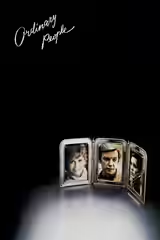
How does The Son compare to Ordinary People?
The Son is the weaker of the two, and Ordinary People is the film we would choose for a family drama about grief and guilt. Both screenplays explain more than they need to, but Redford's film gives its troubled mother and son lives beyond the crisis, where Zeller's leaves the boy little to play. Viewers drawn only by Hugh Jackman may still prefer the later film.
What should I watch after The Son?
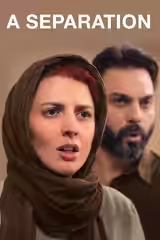
After The Son, try Ordinary People (1980, Fi1m 81): A family drama that gives grief, anger and uneasy silences their due. Then The Father (2020, Fi1m 89): Zeller’s earlier film brings us closer to the person experiencing the illness; and A Separation (2011, Fi1m 93): Parents and a child face conflicting loyalties without being reduced to case studies.

Cast

If you liked this, try…

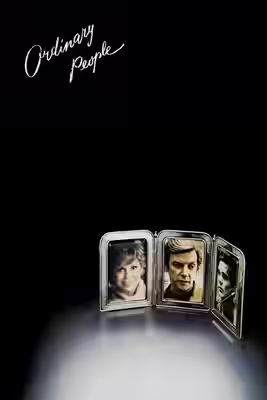
  1. Ordinary People (1980, Fi1m 81)A family drama that gives grief, anger and uneasy silences their due.

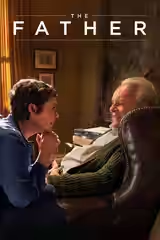
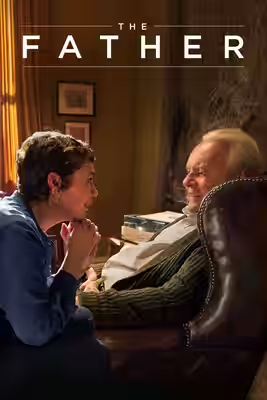
  2. The Father (2020, Fi1m 89)Zeller’s earlier film brings us closer to the person experiencing the illness.

  3. Still Walking (2008) · not reviewed yetOld family resentments emerge through conversation, with patience and attention to ordinary behaviour.

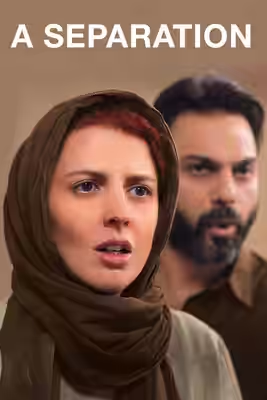
  4. A Separation (2011, Fi1m 93)Parents and a child face conflicting loyalties without being reduced to case studies.

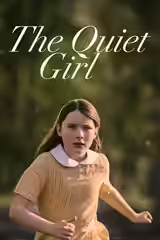
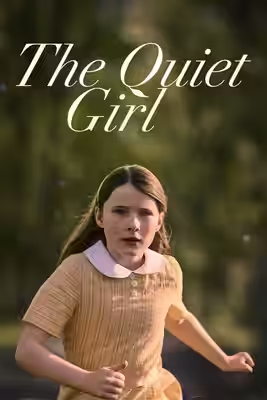
  5. The Quiet Girl (2022, Fi1m 84)A withdrawn child’s experience receives the patient attention missing here.

Free account

Know what to watch tonight

Two lists that know where things are streaming, collections you can share, your own score beside ours, and Discover that remembers what you have seen.

  • Want to see, sorted by what is streaming now
  • Seen, with your score out of ten
  • No adverts, ever