David O. Russell makes a funny, angry war film whose soldiers are most convincing when they are being selfish. We recommend it for the performances and the political bite, with reservations about its eagerness to forgive.
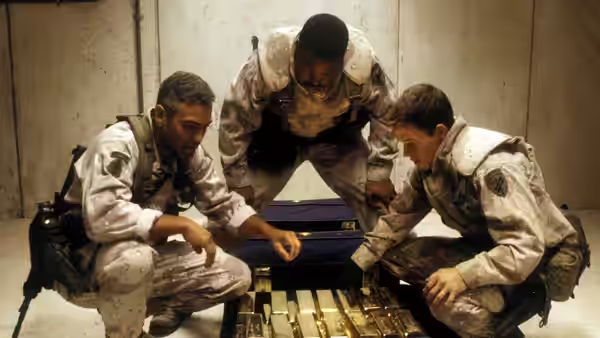
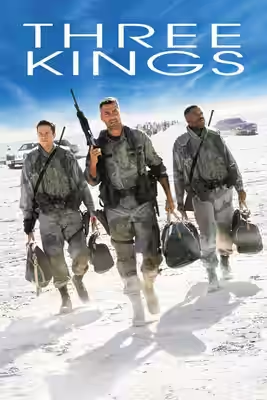
Three Kings wants us to enjoy an American military adventure while noticing who gets hurt when Americans treat war as an adventure. David O. Russell makes that uncomfortable arrangement work often enough for us to recommend the film, though his affection for the soldiers sometimes gets in the way. The Gulf War is ending, and these men are thinking about what they can get out of it. Self-interest gives the comedy something solid to work with. The early disagreements establish just how little these soldiers need an enemy to cause trouble.
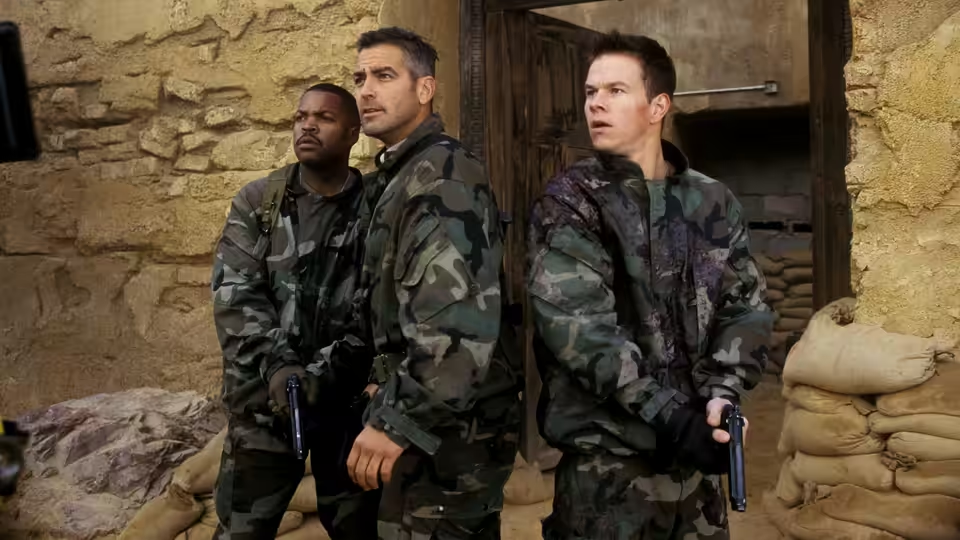
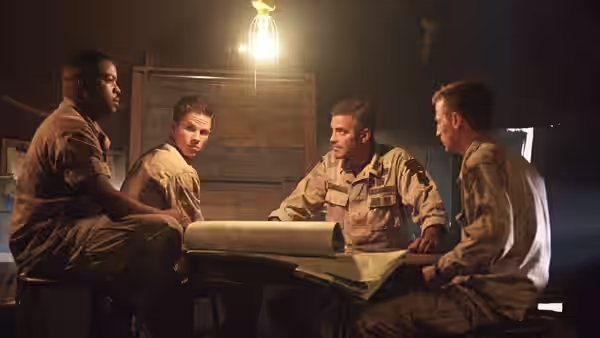
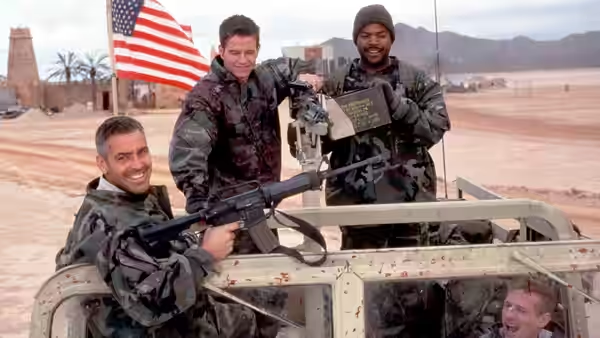
George Clooney’s Archie Gates gives the group an authority that never quite excuses what it is doing. Clooney understands how useful charm can be to a man whose motives do not deserve close inspection, and Russell gets considerable mileage from that. Mark Wahlberg, Ice Cube and Spike Jonze keep the friction within the group lively without making the soldiers seem interchangeable. We enjoyed their company more than we approved of their priorities. Their bickering gives the comedy a personal nastiness that the performances keep from becoming tiresome.
Newton Thomas Sigel’s cinematography gives the military set-pieces enough force to make the fighting exciting. That complicates a film which wants us to question the soldiers’ conduct, and usefully so. Robert K. Lambert’s editing keeps the competing personalities involved in the action, which matters more here than making the military hardware look impressive. The switches between comedy and violence are not always comfortable. We do not need every change of mood smoothed over, although Russell occasionally seems to rush towards the next one.
Catherine Hardwicke’s production design has an important job here. The setting has to feel like somewhere people live, even while the soldiers treat it as somewhere to help themselves, and it does. Carter Burwell’s music faces the same problem as the cutting, serving comedy and danger without pretending they are comfortably matched. The score is more persuasive when it supports the tension than when the film asks for sympathy. Russell already has actors capable of earning that.
The sharpest political point is also the simplest: an American soldier and an Iraqi civilian can have different ideas about what the end of a war means. We felt uneasy when the soldiers’ chances to profit were set against the civilians’ predicament. Their selfishness became considerably less funny beside people living with the war’s consequences. Russell’s screenplay, developed from John Ridley’s story, makes that connection without abandoning the pleasures of an action film. Its anger at US policy is clear without requiring every character to explain it.
The difficulty comes when Russell starts pressing us to see the soldiers generously. The performances have already allowed for decency alongside greed, but the writing sometimes pushes the decent side harder than it needs to. We can care about these men without being asked to feel better about them, and the insistence weakens the satire. That matters in a film so alert to self-serving explanations. Those passages also give the actors less interesting work.
A war comedy ought to be able to question the men doing the fighting as well as the people giving the orders. Three Kings makes a serious attempt at both, even when Russell is too keen to reassure us about his Americans. At 114 minutes, it has room for quarrels, action and political anger without becoming a lecture. It is worth an evening, provided nobody is expecting the jokes to make the violence easier to take.