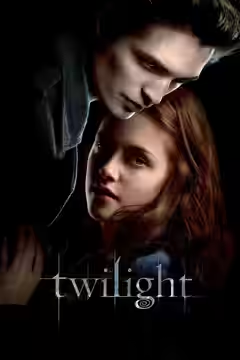
Catherine Hardwicke takes young people's feelings seriously, even when they arrive with vampires attached. We value her attention to young women, while Twilight shows how much more convincing she can be about longing than danger.
Fi1m perspective
A school crush gets taken seriously in Catherine Hardwicke's Twilight (2008). Wanting someone is allowed to occupy the film, and the director does not interrupt to reassure adults that she knows better. We rate her for that respect: she makes a good teenage romance out of material whose vampire threat is much harder to believe.
That interest was there in her directorial debut, Thirteen (2003), co-written with Nikki Reed. Working with a teenage co-writer put a young person's experience close to the writing, rather than leaving it entirely to adult recollection. Lords of Dogtown (2005), about the 1970s Venice Beach skate scene, continued her attention to youth subcultures. By Twilight, she was bringing that intimate approach to fantasy, where a recognisable feeling could hold together a less convincing piece of genre filmmaking.
Kristen Stewart makes Twilight's romance feel human, and Hardwicke is right to let it carry so much of the film. We were touched by the longing, because she allows a school crush to matter without inviting us to laugh at it. The dialogue can still be clumsy; taking teenagers seriously does not make every line they are given convincing. The uncertain effects are harder to excuse when the film needs danger. Hardwicke gets us interested in the attraction, but cannot make the vampires equally persuasive.
The later path takes her through the fantasy of Red Riding Hood (2011) and the comedy-drama of Mafia Mamma (2023), with female-led, personal storytelling remaining a recurring interest. Those changes of genre make it unhelpful to treat teenage drama as the whole of her work. But Twilight is a useful place to start with what we value in her direction: she takes the young people seriously, even when the dialogue needs another pass. Go for the romance; expect rather less from the threat.
Biography
Catherine Hardwicke is an American film director and production designer. She began her career in production design, working on features including Tombstone (1993), Tank Girl (1995) and Three Kings (1999).
Hardwicke made her directorial debut with Thirteen (2003), which she co-wrote with Nikki Reed. Subsequent films include Lords of Dogtown (2005), The Nativity Story (2006), Twilight (2008) and Red Riding Hood (2011). She has also directed episodes of series such as This Is Us and an instalment of Guillermo del Toro's Cabinet of Curiosities (2022).
Hardwicke studied architecture at the University of Texas at Austin before attending UCLA film school. Twilight achieved the largest opening weekend for a film directed by a woman at the time of its release.