Ron Underwood’s desert creature feature gets its laughs from people worth worrying about. Kevin Bacon and Fred Ward make agreeable company, with enough suspense to forgive the occasional unconvincing puppet.
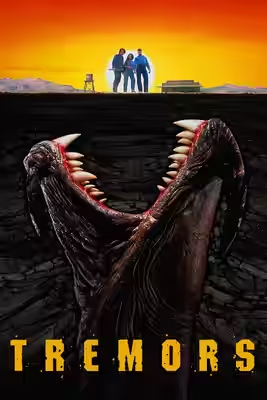
Ron Underwood’s Tremors is a funny, resourceful creature feature with unusually good company at its centre. It sets handymen against something beneath the desert and lets the practical difficulties produce much of the comedy. The people have a problem to solve, and the film takes their efforts seriously enough for us to worry about them. We recommend it warmly, allowing for a few conspicuous puppets and a final stretch that is less nimble than the rest.
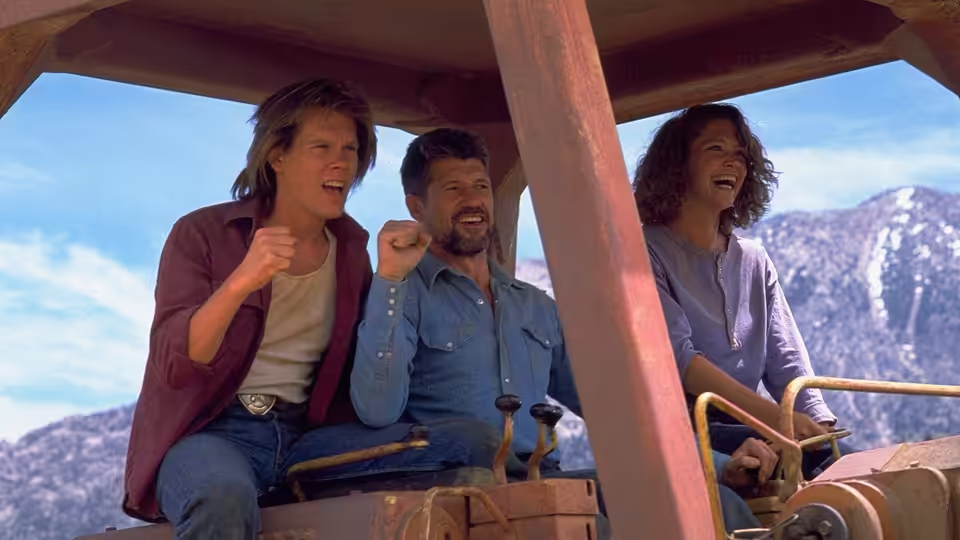
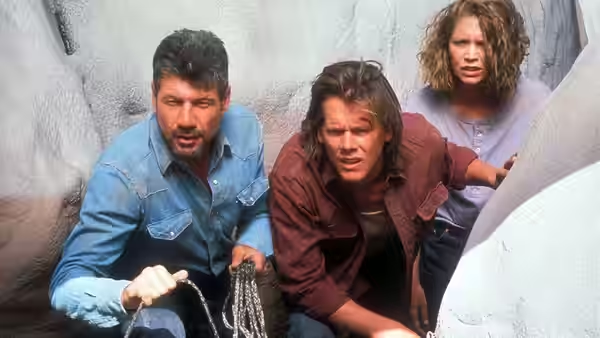
Kevin Bacon and Fred Ward give Valentine McKee and Earl Bassett the easy rhythm of men accustomed to working together. Their exchanges sound casual, which takes some doing in a film that keeps finding extraordinary things for them to discuss. Neither actor seems impatient to get to his own joke; the pleasure comes from listening to them react to each other. They make the handymen convincing company before the creatures have to do much work.
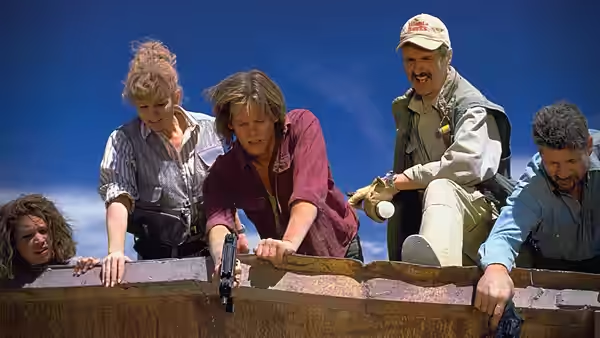
S.S. Wilson and Brent Maddock’s screenplay extends that generosity to the neighbours. Finn Carter’s Rhonda LeBeck is allowed intelligence, and the townspeople’s willingness to help one another gives the scares something to work with. We were surprised by how much we worried about them. Watching these people make themselves useful to somebody else, despite having plenty to fear themselves, earns our affection without a great deal of fuss.
Alexander Gruszynski’s daylight desert photography is especially useful to the suspense. The open ground ought to make danger easier to spot, so a threat coming from underneath it is immediately unsettling. Ivo Cristante’s production design gives the small town enough ordinariness to keep the joke credible. The surroundings look like a place where people have things to get on with, which makes the interruption by burrowing monsters all the more disagreeable.
O. Nicholas Brown’s editing keeps the developing predicaments readable, giving us time to understand a difficulty before moving to the next. That clarity is a substantial part of the fun: we can think along with the people on screen. Ernest Troost’s music supports the amiable mood without making the threat feel entirely harmless. At 96 minutes the film is mostly economical, although the later action takes a little longer than it needs to make its points.
The practical effects give the creatures a pleasing weight. They belong in the dirt, even when the puppetry is not entirely persuasive. A few effects invite inspection when they should be causing alarm, and the broad comic tone cannot cover every awkward movement. Still, the film gives us enough reason to worry about its people that a less convincing monster does not end the suspense.
The debt to 1950s monster films is clear, but there is no need to know those films to enjoy this one. Ron Underwood understands the pleasure of watching ordinary people work out an extraordinary problem together, and keeps the jokes close to that task. Put it on when the company wants a creature feature and would rather spend the evening liking the people in it.