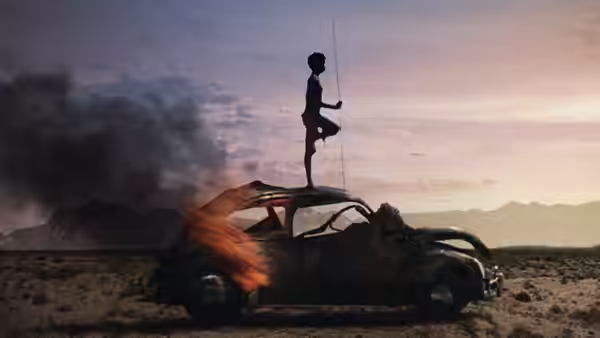
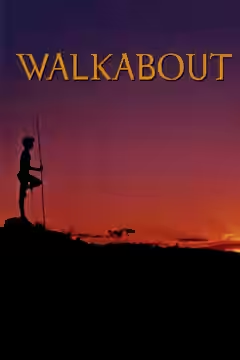
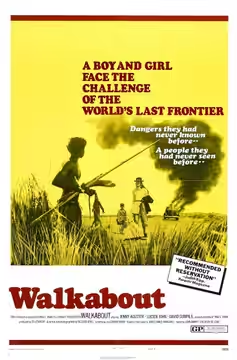
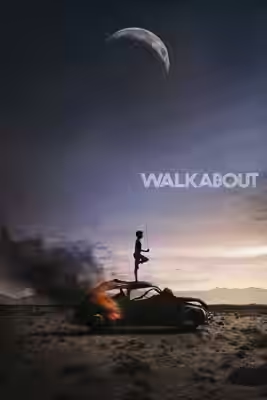
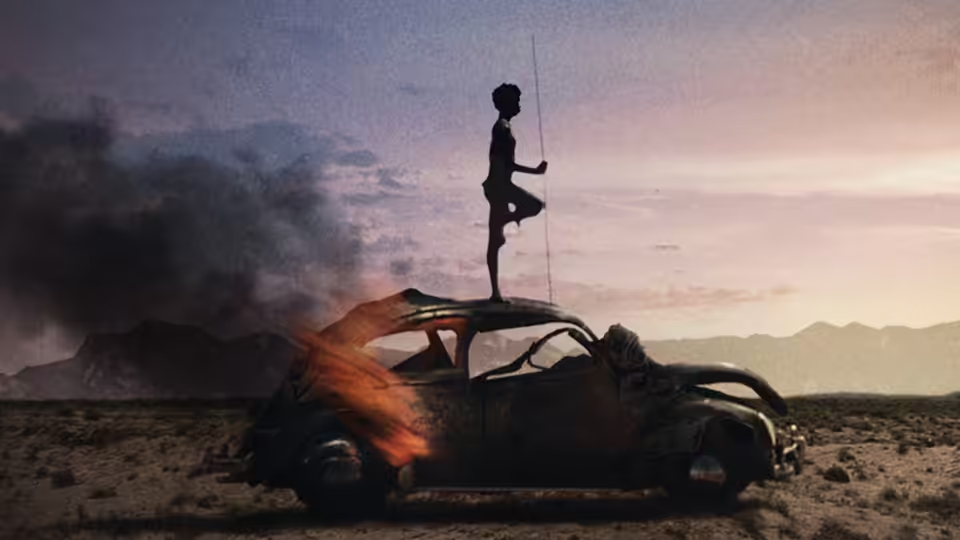
a figure standing on the roof of a burning car in the desert
Film review

Walkabout

1971 · Directed by Nicolas Roeg · 1h 35m · MPA PG

In a sentenceEven the insects seem better prepared for this journey than the children

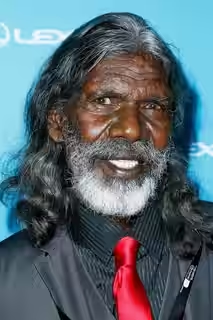
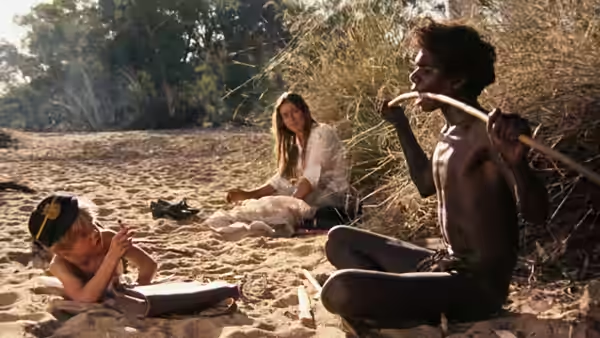
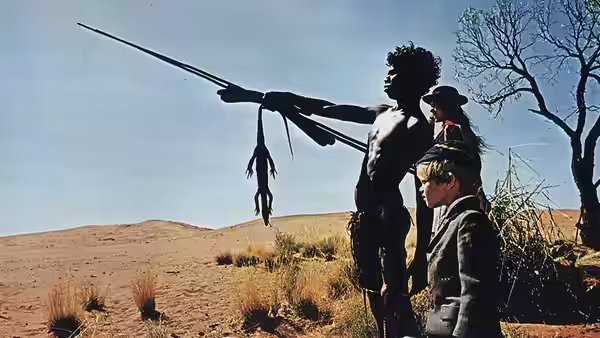
In the Australian outback, the Girl (Jenny Agutter) and her brother, the White Boy (Luc Roeg), are lost and need help finding their way. An Aboriginal youth, the Black Boy (David Gulpilil), befriends the siblings and becomes their guide through the wilderness. Around them, insects, reptiles and wild animals occupy country far removed from the routines the children know. The three travel together, but finding a way to understand one another presents difficulties of its own. The siblings must depend on someone whose knowledge of this place they do not share.

Plays from YouTube when you press play; nothing loads from them until then.

Fi1m review

Nicolas Roeg’s outback drama is moving, disquieting and worth giving your full attention. Its young cast and desert images hold us, though the contrast between wilderness and civilisation sometimes makes the people too simple.

Nicolas Roeg directs and photographs Walkabout, and gives the landscape as much attention as the children trying to cross it. A girl and her brother wander the Australian outback, where an Aboriginal boy becomes their guide. We recommend it warmly for the young actors and the patient attention to a place that never becomes mere scenery. Its weakness is the temptation to make these children represent entire cultures, when their uncertain dealings with one another are already enough.

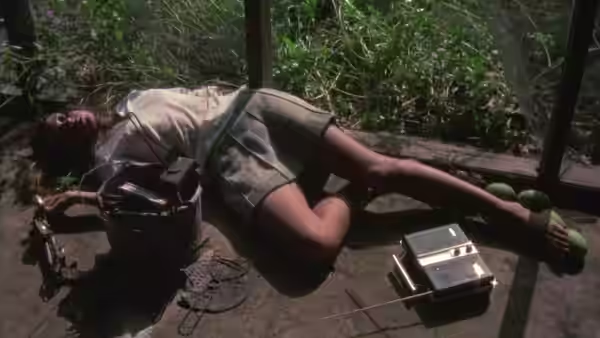
The desert views give us time to look, but the inserts of insects and reptiles keep disturbing any comfortable appreciation of the scenery. Nicolas Roeg gives those small creatures an importance that a more conventional survival story would reserve for its human travellers. We were unsettled by those interruptions: the children are in trouble, and life carries on around them without taking notice. The landscape remains full of activity even when human speech falls away.

Jenny Agutter gives the Girl an intelligence that keeps us watching without making her easy to understand. Her reserve matters in a film where people so often struggle to make themselves understood. David Gulpilil brings warmth to the Aboriginal boy, a quality the film needs whenever its larger ideas threaten to take over. Luc Roeg’s White Boy helps keep the company recognisably young, and the three performances make their difficulties communicating feel awkward and immediate.

Editors Antony Gibbs and Alan Pattillo make the changes between human routine, open country and animal life do much of the storytelling. Their cutting asks us to compare what people do in different surroundings, rather than simply follow the travellers from one danger to the next. The repeated returns to wildlife can seem excessive, but they also prevent the journey from settling into a reassuring rhythm. We stay alert to what the next image might show, even when little is being said.

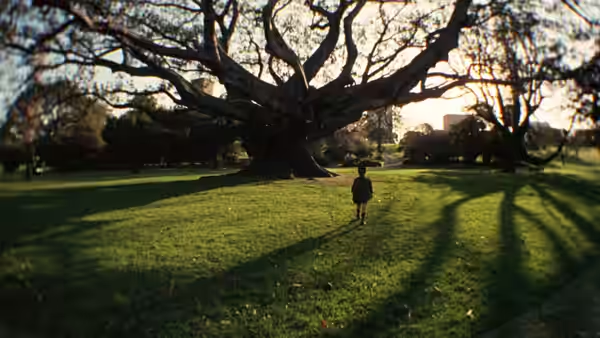
Brian Eatwell’s production design makes the scenes of civilised routine feel confined beside the open country. That restraint is useful: the film makes the comparison forcefully enough through its cutting. John Barry’s music gives the journey a sadness that the sparse conversations cannot express. We find its tenderness persuasive because the actors leave so much unsaid, especially in the exchanges between the Girl and the Aboriginal boy.

The reservation concerns what Nicolas Roeg wants all these comparisons to prove. Edward Bond’s spare writing leaves welcome space for uncertainty between the children, but the opposition between wilderness and civilisation can become too neat. The Aboriginal boy is most affecting as a person trying to communicate, and least convincing when we are encouraged to see him as an answer to everything wrong with modern life. David Gulpilil’s warmth keeps complicating that reading, and we are grateful for it.

At 95 minutes, Walkabout asks for patience without making a trial of it. It is an unusual adventure film, willing to spend time on a failed exchange or an animal that has no part in the children’s immediate predicament. We value that willingness to linger, especially when the young cast can make silence so uncomfortable. Watch it when the pictures can have your full attention; the quiet passages are worth staying with.

Critical consensus AI synthesised

82
Positive
15
Mixed
0
Negative
1

Most critics respond warmly to Walkabout, with praise centred on Nicolas Roeg’s images of the Australian outback and his use of editing to connect landscape, memory and cultural unease. The reviews repeatedly describe a dreamlike journey whose sparse dialogue allows the images and performances to carry its emotional weight. Jenny Agutter’s intelligence and complexity draw attention, as does David Gulpilil’s warmth. Critics also find substance in the film’s treatment of lost innocence, failed communication and the distance between industrial society and life in the wilderness.

The disagreement concerns how well that visual approach serves the story. The New York Times admires the images and direct performances but finds the elaborate techniques at odds with the simple message. Variety is the lone negative voice, arguing that the wildlife inserts impede an already fragile, forced adaptation. The spread is wide, then, but the reservations sit within a strongly positive consensus.

Time Out
17 May 2010 · ★★★★★ · Joshua Rothkopf
100

The review calls Walkabout a 1971 stunner and atmospheric adventure that remains feverish and intimate, a radical film of its decade. It singles out Jenny Agutter’s complex, intelligent performance and the film as Roeg’s emotional arrival.

Read the full review →
The AV Club
19 May 2010 · A · Keith Phipps
95

The critic praises Roeg's use of images and editing to create a hypnotic journey contrasting innocence and civilization, highlighting the film's dream-like quality and inevitable loss of innocence.

Read the full review →
RogerEbert.com
18 September 2023 · Walter Chaw
90*

The critic hails the film as a masterful, totemic work of profound spiritual and existential power that has lost none of its force. He singles out its raw, awe-inspiring imagery of the outback and its exploration of human nature, innocence, and civilization's corruption.

Read the full review →
Sight and Sound
· James Bell
90*

The critic praises Roeg’s debut solo feature as vividly capturing the Australian outback as an ancient, timeless setting for fable and allegory. It highlights the film’s pure cinema qualities through mesmerising landscape images, subjective viewpoints and editing, plus its coming-of-age and cultural themes.

Read the full review →
The Guardian
11 July 2014
90*

The critic praises Nicolas Roeg’s 1971 film as a seminal work of the Australian New Wave for its striking atmospheric contrasts between beauty and menace in the outback. They single out David Gulpilil’s warm, affecting performance as the Indigenous man who befriends the lost siblings.

Read the full review →
The Times
17 July 2003 · Will Self
90*

The critic recalls first seeing the film as a child and finds it even better on rewatch for its considered lyricism, long sweeping shots of the desert, and passages without dialogue. They single out its embodiment of pure film language in contrast to modern fast-cut editing.

Read the full review →

Straight answers AI written, from our review

Is Walkabout worth watching?
Walkabout is worth watching for anyone with the patience for a quiet, unsettling adventure film, and we scored it 85. Nicolas Roeg gives the Australian outback and its insects as much attention as the lost children crossing it, and the young cast make every failed exchange feel awkward and immediate. Give the pictures your full attention; it rewards it.
How long is Walkabout, and what is it rated?
Walkabout runs 1h 35m and is rated PG by the MPA in the US. It is an adventure and drama film.
Where can I watch Walkabout in the US?
Walkabout is streaming on HBO Max, Amazon Prime Video, Hulu and The Roku Channel in the US, and it is also available to rent from Amazon Prime Video from $2.99. Availability is checked daily; the links above go straight to each service.
How violent or frightening is Walkabout, and is it suitable for children?
Walkabout is a 12A, and its disquiet comes less from violence than from the way the film watches lost children while the desert carries on around them. The repeated close-ups of insects and reptiles unsettled us, and the mood is sad rather than reassuring. Older children and teenagers should cope; younger or squeamish viewers may find the animal inserts and the general unease hard going.
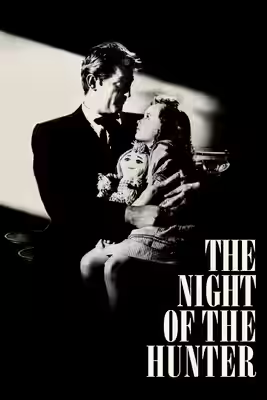
How does Walkabout compare to The Night of the Hunter?
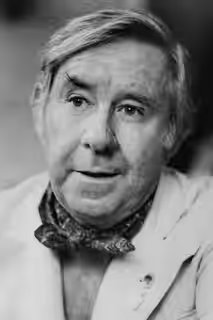
Walkabout and The Night of the Hunter both put children in beautiful country that offers them no protection, but they are different in kind. Charles Laughton's film is a black-and-white Depression fairy tale with a preacher we are still afraid of; Roeg's is a quiet outback drama with little speech and much looking. The earlier film is the stranger and more complete of the two.
Is Walkabout based on a true story or a book?
Walkabout is adapted from the novel by James Vance Marshall, not from a true story. Edward Bond's spare screenplay leaves a good deal unsaid between the three children, and the film relies on its images and John Barry's music rather than on plot. Knowing the book is not necessary to follow or to feel what the film is doing.
What should I watch after Walkabout?
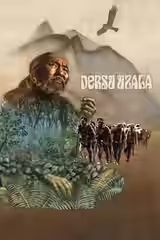
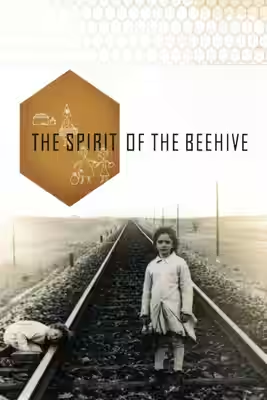
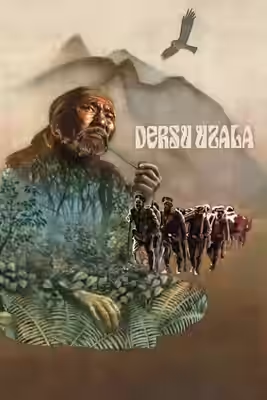
After Walkabout, try The Night of the Hunter (1955, Fi1m 91): Children face adult violence in landscapes whose beauty offers little protection. Then The Spirit of the Beehive (1973, Fi1m 87): A child’s curiosity meets adult silence, with fear gathering in ordinary rooms; and Dersu Uzala (1975, Fi1m 82): Another encounter between urban certainty and wilderness knowledge, with more room for friendship.

Cast

If you liked this, try…

  1. The Night of the Hunter (1955, Fi1m 91)Children face adult violence in landscapes whose beauty offers little protection.

  2. The Spirit of the Beehive (1973, Fi1m 87)A child’s curiosity meets adult silence, with fear gathering in ordinary rooms.

  3. Dersu Uzala (1975, Fi1m 82)Another encounter between urban certainty and wilderness knowledge, with more room for friendship.

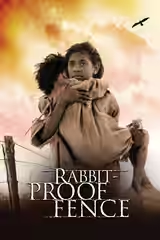
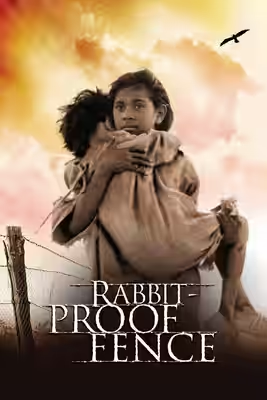
  4. Rabbit-Proof Fence (2002, Fi1m 80)Children cross Australia, with Aboriginal experience given the attention it deserves.

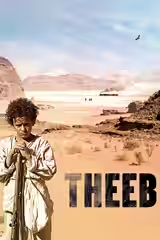
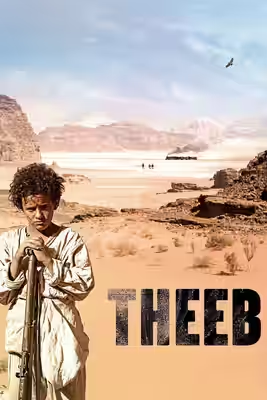
  5. Theeb (2014, Fi1m 80)A desert journey measured by a boy’s understanding of danger and obligation.

Free account

Know what to watch tonight

Two lists that know where things are streaming, collections you can share, your own score beside ours, and Discover that remembers what you have seen.

  • Want to see, sorted by what is streaming now
  • Seen, with your score out of ten
  • No adverts, ever