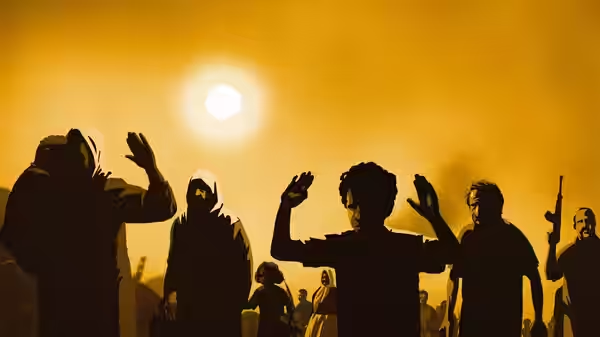
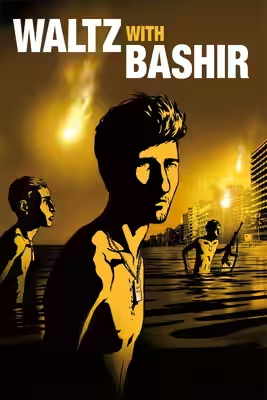
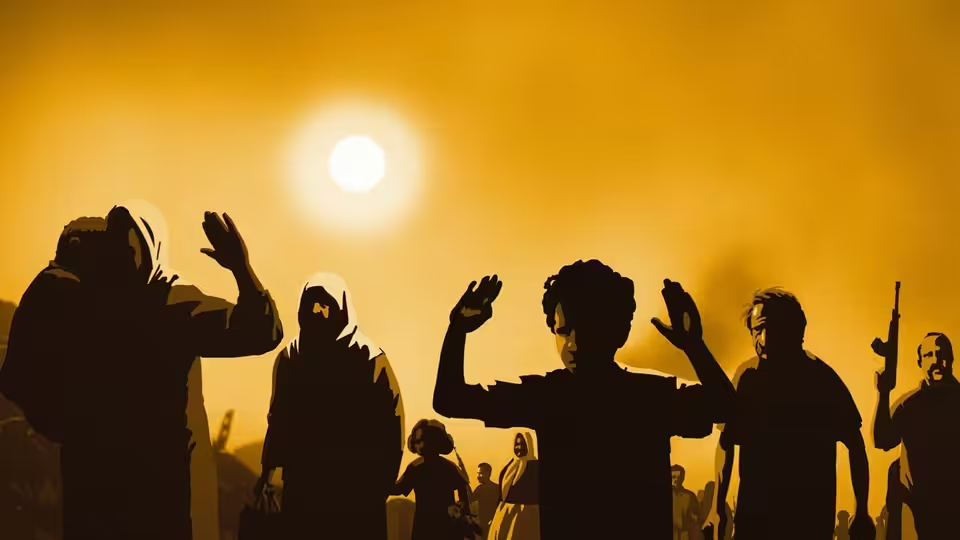
Silhouettes of men with arms raised and one holding a rifle under a blazing sun
Film review

Waltz with Bashir

2008 · Directed by Ari Folman · 1h 30m · MPA R

In a sentenceThe drawings make war easier to look at, and that is an uncomfortable thing to discover

Ari Folman cannot fully recall his service in the 1982 Lebanon War and sets out to recover the missing memories. He interviews others and uses animation to recreate their recollections, bringing dreams and accounts of combat into the same film. The search raises questions about trauma, guilt and what the mind allows a person to remember. Folman directs and voices himself, with Ori Sivan, Ronny Dayag and Shmuel Frenkel also voicing themselves. Mickey Leon voices Boaz Rein-Buskila, while Yehezkel Lazarov supplies the voice of Carmi Cna’an.

Fi1m review

Ari Folman’s animated documentary is a powerful account of trying to remember a war. Some interviews repeat what we already understand, but the drawn recollections make the search absorbing and deeply uncomfortable.

Waltz with Bashir is a war documentary built around a troubling admission: Ari Folman cannot fully remember his own service. His search takes him through interviews and animated recreations of the 1982 Lebanon War, with dreams entering the account alongside recollections. We recommend it warmly, though its explanations sometimes continue after we have understood them. Folman, who writes and directs, makes the uncertainty worth attending to. We have to consider how much confidence to place in an image when the person recalling it cannot be certain either.

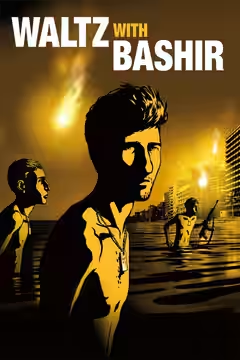
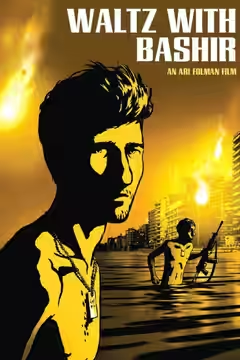
The animation’s vivid yellows and greens give combat a look far removed from ordinary life. Conversations can open into dreams, and Folman lets us see how recollection changes an experience as it tries to recover it. We were disturbed by how easily we found ourselves admiring those coloured images of battle. Their beauty keeps us looking at experiences the people speaking struggle to recall. Folman uses that attraction well, keeping the combat frightening even when its colours invite our attention.

Nili Feller’s editing has the difficult job of keeping a search moving when its subject is uncertain memory. The passage between interviews and imagined or remembered events is generally persuasive; we can follow the enquiry without expecting each image to count as proof. At 90 minutes, though, the film still has stretches where another conversation seems to establish a point already made. Once we understand that recollection can protect, distort and omit, further explanation does less for us than the animated scenes.

Richter’s music gives the recollections an appropriate sadness, and does not have to supply all the feeling. Much of that comes from listening to people try to account for what they remember. Folman voices himself, with participants including Ori Sivan and Ronny Dayag also providing their own voices. The interview animation is sometimes stiff enough to distract from them, but keeping these conversations in the film makes us aware of the speakers behind the pictures.

Folman’s involvement also puts a useful limit on his authority. He is asking others to help him remember, so the film cannot easily pretend to offer a complete account of the war. Its concern with guilt is persuasive because remembering becomes an uncomfortable task for the person making it. There is a danger that such close attention to a soldier’s damaged memory could crowd out larger questions of responsibility, but we think the film gives us reason to keep asking those questions.

War films often put confused experiences into an order we can follow, explaining who went where and why. Folman gives us less certainty, and the animation allows him to show the confusion without suggesting that a camera was there to record it. That makes the film especially rewarding for anyone interested in how documentary can represent experiences its subjects cannot fully explain. Give it an evening when there is no need to be sociable immediately afterwards.
Critical consensus AI synthesised

75
Positive
5
Mixed
0
Negative
1

Most critics respond warmly to Waltz with Bashir, with praise centred on its animation and its treatment of memory, trauma and guilt. The reviews describe dreamlike images that turn interviews and recollections of the 1982 Lebanon War into something more unsettling than straightforward testimony. Many find that the personal search for clarity gives the film moral force, while the blending of combat, dreams and remembered experience makes its documentary approach persuasive.

The spread of opinion is wide, however, particularly over whether the stylisation brings the experiences closer or keeps them at a distance. The AV Club admires the subjective intensity but finds the approach less convincing as direct journalism. Slant Magazine offers the sharpest dissent, arguing that the film establishes its point early and then repeats it to wearying effect. The Hollywood Reporter also questions the narrative momentum and finds the animated interviews uneven.

Screen Daily
15 May 2008 · festival review
90*

The critic calls it one of the most powerful statements at Cannes, a potent anti-war movie and moral indictment of Israeli conduct during the 1982 Lebanon War and Sabra and Shatila massacre. The unique animated style and personal perspective deliver a strong impact.

Read the full review →
The AV Club
25 December 2008 · B · Tasha Robinson
77

The film expands dialogues into dreamy animated visions that comment on the elusive nature of memory and consciousness, with striking subjective intensity in its depictions of combat chaos. Its extreme stylization can feel distancing and lacks the realism of live footage, resulting in an impressionistic portrait rather than a direct journalistic inquiry.

Read the full review →
Slant Magazine
21 September 2008 · Nick Schager
40*

The director understands how the psyche denies and embellishes trauma, and the animation lends a striking surreal beauty while serving as a thematic distancing device. The film makes its point early and restates it repeatedly in a drearily redundant way, creating an enervating sense of remoteness that is structurally logical but ultimately schematic.

Read the full review →
Empire
23 October 2008 · Dan Jolin

The critic praises the film's innovative animated approach to exploring the director's repressed memories of the 1982 Lebanon War and its personal and political impact. The stark animation effectively blends recollection, dreams, and experience, culminating in a powerful use of real footage.

Read the full review →
The Guardian
23 November 2008 · Peter Bradshaw

The critic praises the film's hypnotic animation style and its powerful exploration of memory, guilt and the 1982 Sabra and Shatila massacres. The shift to real newsreel footage at the end is singled out as devastating.

Read the full review →
The Hollywood Reporter
14 May 2008 · festival review

The critic finds mixed results in this self-styled animated documentary about a director recovering repressed memories of his service in the 1982 Lebanon War through interviews and recreations. Some scenes have visceral poetic power, but the monochromatic palette, choppy animation of interviews, lack of narrative thrust, and delayed mention of key events like the Sabra and Shatila massacres limit its impact.

Read the full review →

Straight answers AI written, from our review

Is Waltz with Bashir worth watching?
Waltz with Bashir is worth watching for anyone interested in how a documentary can show what its subjects cannot fully remember, and we scored it 83. Ari Folman’s animated search for his own missing memories of the 1982 Lebanon War is absorbing and uncomfortable. Some interviews restate points already made, and it suits an evening with no need to be sociable afterwards.
How long is Waltz with Bashir, and what is it rated?
Waltz with Bashir runs 1h 30m and is rated R by the MPA in the US. It is an animation and documentary film.
Where can I watch Waltz with Bashir in the US?
Waltz with Bashir is available to rent from Amazon Prime Video from $3.99. Availability is checked daily; the links above go straight to each service.
How violent or frightening is Waltz with Bashir, and is it suitable for children?
Waltz with Bashir carries an 18 certificate in the UK and is not suitable for children. It is an animated documentary about the 1982 Lebanon War, and the combat stays frightening even when the vivid yellows and greens make it easy to look at. The subject matter, trauma and guilt in a soldier’s memory, is adult throughout; older teenagers with a serious interest in war and how it is remembered are the youngest audience we would suggest.
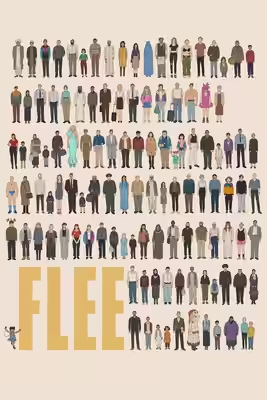
How does Waltz with Bashir compare to Flee?
Waltz with Bashir is the harder and more troubling of the two, while Flee is warmer, funnier and more intimate. Both use animation to draw memories nobody filmed, but Folman is a soldier interrogating his own guilt and Rasmussen is a friend listening to a refugee describe where home is. We recommend both; choose Folman for an enquiry into war and Rasmussen for a single life told patiently.
What should I watch after Waltz with Bashir?
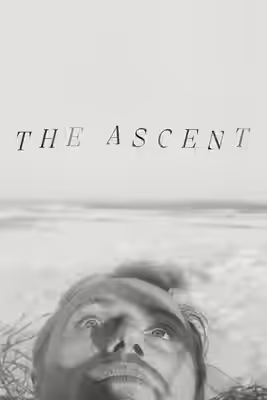
After Waltz with Bashir, try Flee (2021, Fi1m 83): Animation makes a refugee’s account intimate without pretending memory is straightforward. Then Hiroshima mon amour (1959, Fi1m 87): War and private grief intrude upon a romance through fractured recollection; and The Ascent (1977, Fi1m 88): A harsher wartime ordeal, with equal concern for conscience and responsibility.

Cast

Awards

Academy Awards, 2009

Nominated
Best International Feature Film

International Submission to the Academy Awards, 2009

Nominated
International Submission to the Academy Awards

Annie Award for Best Animated Feature, 2008

Nominated
Annie Award for Best Animated Feature

Critics' Choice Awards, 2008

Nominated
Best Animated Feature

European Film Award for Best Composer, 2008

Won
European Film Award for Best Composer

European Film Award for Best Director, 2008

Nominated
European Film Award for Best Director

European Film Award for Best Film, 2008

Nominated
European Film Award for Best Film

European Film Award for Best Screenwriter, 2008

Nominated
European Film Award for Best Screenwriter

If you liked this, try…

  1. Flee (2021, Fi1m 83)Animation makes a refugee’s account intimate without pretending memory is straightforward.

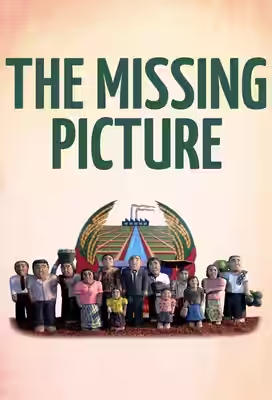
  2. The Missing Picture (2013) · not reviewed yetAnother personal history that uses crafted images to approach unbearable events.

  3. Hiroshima mon amour (1959, Fi1m 87)War and private grief intrude upon a romance through fractured recollection.

  4. The Ascent (1977, Fi1m 88)A harsher wartime ordeal, with equal concern for conscience and responsibility.

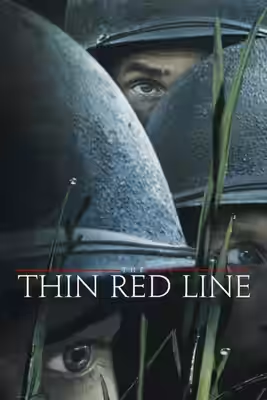
  5. The Thin Red Line (1998, Fi1m 84)For another war film that refuses to keep thought separate from combat.

Free account

Know what to watch tonight

Two lists that know where things are streaming, collections you can share, your own score beside ours, and Discover that remembers what you have seen.

  • Want to see, sorted by what is streaming now
  • Seen, with your score out of ten
  • No adverts, ever