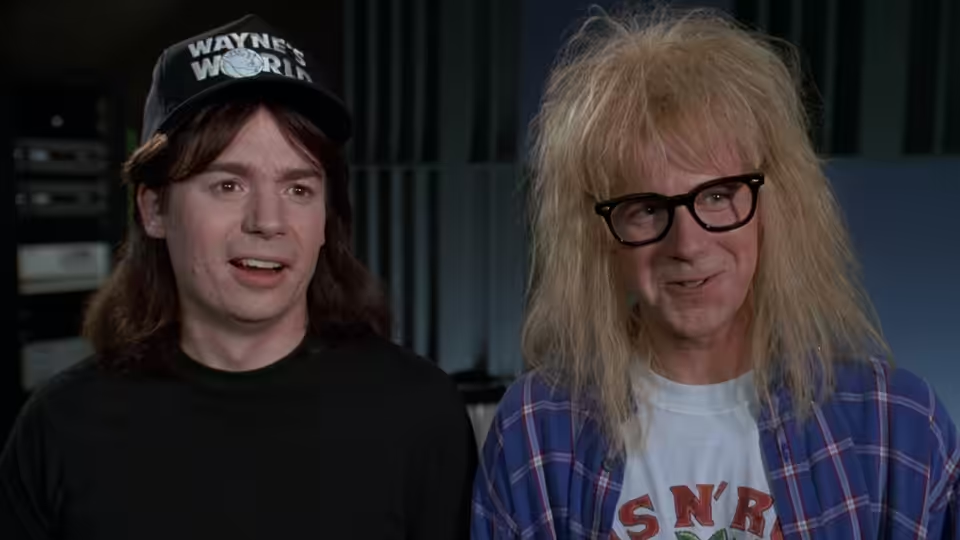
Penelope Spheeris turns a thin sketch premise into an amiable, brisk comedy, helped by Mike Myers and Dana Carvey. Some jokes are lazy, especially about women, but enough of the nonsense works to make its 94 minutes worthwhile.
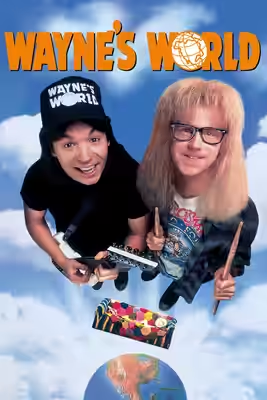
Wayne’s World is a good evening’s daftness, with enough dead patches to make us grateful for its 94-minute running time. Penelope Spheeris understands that this sort of sketch comedy needs to keep moving, particularly when the characters have less to do than to say. The television jokes and abrupt digressions give it a liveliness that the thin story cannot consistently supply. Mike Myers shares the screenplay credit with Bonnie Turner and Terry Turner.
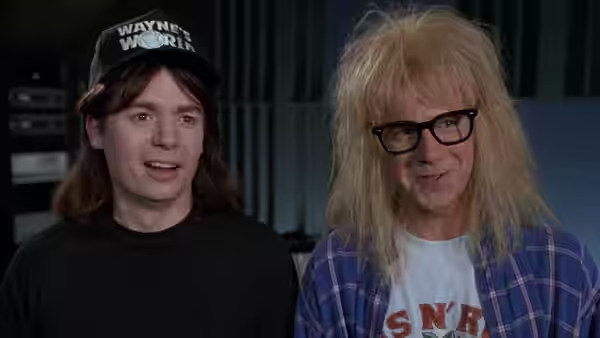
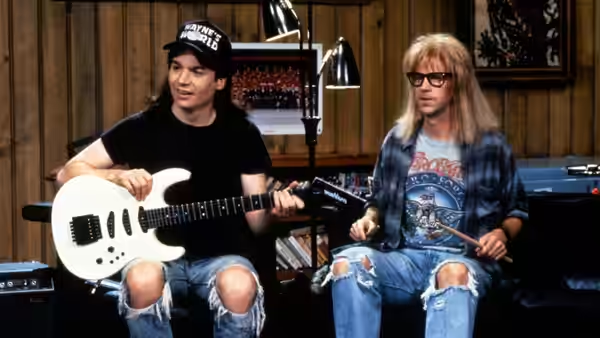
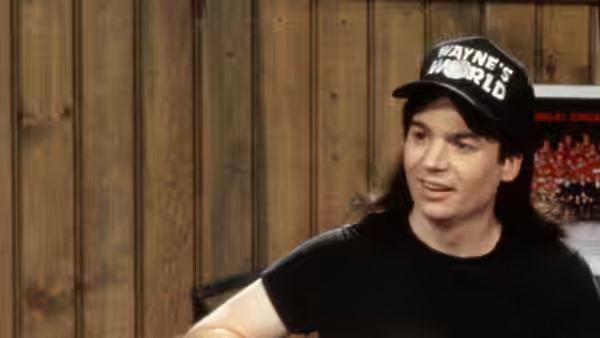
Wayne Campbell and Dana Carvey’s Garth Algar are agreeable company because the performances commit to the stupidity without making every exchange feel like an appeal for applause. Their dialogue can be juvenile, and sometimes the juvenile bit is the entire joke. We laughed at the abrupt ‘not’ reversals because the bluntness is funny: a statement is made, then immediately knocked down. Repetition wears that pleasure away, but the pair remain more engaging than their vocabulary ought to allow.
Spheeris deserves much of the credit for making the interruptions feel welcome. Her direction keeps the sight gags brisk and allows the supporting performers to alter the rhythm before the central double act becomes exhausting. Tia Carrere gives Cassandra enough presence to hold our attention alongside Myers and Carvey; she does not disappear into their routine. Rob Lowe, as Benjamin Kane, also helps vary the company. The supporting cast includes Lara Flynn Boyle as Stacy and Alice Cooper as himself.
The film is plainly shot and briskly cut. Theo van de Sande’s cinematography keeps the sight gags easy to read, while Gregg Fonseca’s production design seldom distracts from the performers. Wayne Campbell’s editing handles the jumps between routines briskly, although it cannot disguise the passages where the script has run short of ideas. J. Peter Robinson’s music is less memorable than the dialogue, though it does not crowd out the jokes. The actors remain the main attraction, which is a sensible decision when their delivery supplies so much of the humour.
The weaker jokes are not difficult to identify. The script’s treatment of women is too often lazy, settling for an adolescent response when it might have found a comic character. Carrere’s performance makes that limitation more irritating, because she gives us reason to want better material for Cassandra. There are also stretches where the film seems to wait for its next sketch, and the attempts to sustain a story expose how little there is between routines. At 94 minutes, those lapses are manageable.
Most critics disagree with us, finding the leads tiresome and the sketch material too slight to sustain a film. We think that underestimates Spheeris’s handling of the detours and the simple pleasure of Myers and Carvey being ridiculous together. Against the standards of sketch comedy, enough of these routines work to justify the loose storytelling. Enjoy it with some tolerance for repetition and some reservations about the jokes at women’s expense. If the opening exchanges irritate, there is little reason to persevere.