Abbas Kiarostami makes a request for help difficult to dismiss, giving the person asked as much attention as the person asking. We value his curiosity about both, even when his conversations last longer than they need to.
Fi1m perspective
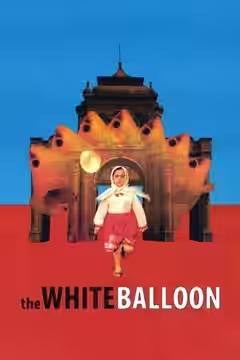
A child wants a goldfish, and the people around her have other things to do. In Jafar Panahi’s The White Balloon (1995), Abbas Kiarostami’s screenplay makes that difference funny without making the child’s urgency ridiculous. He writes people whose needs cannot be set aside simply because somebody else has arrived with a problem. We rate him highly because he takes both sides of these encounters seriously. His patience is usually repaid, though he sometimes keeps a conversation going after we have understood everybody in it.
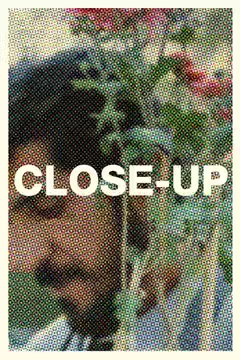
A child’s search also drives Where Is the Friend’s House? (1987), the film that brought him international attention. With Close-Up (1990), the question becomes how much sympathy to give a man who has impersonated someone else. Kiarostami writes, directs and edits, combining a real fraud trial with reconstructions performed by those involved. His editing preserves the discomfort of watching the accused perform again, and the wish to matter makes this our strongest recommendation. We would still welcome more attention to the harm of the deception, rather than quite so much encouragement to understand the man responsible.
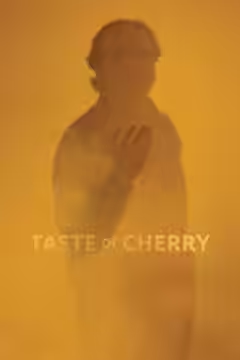
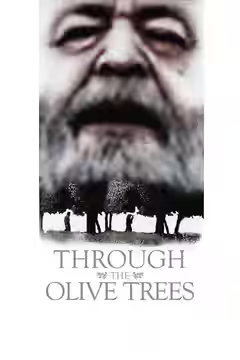
The rural lives and filmmaking in Through the Olive Trees (1994) are less consistently absorbing: the slight action sometimes gives us too little to watch. In Taste of Cherry (1997), Mr Badii’s search for someone to bury him after his planned suicide gives every conversation an immediate difficulty. Homayoun Ershadi makes him worth staying with, while cinematographer Homayun Payvar keeps the surrounding work and changing scenery in view. We were moved by the activity in the industrial desert, which made Badii’s isolation harder to bear. Kiarostami’s writing also gives the people asked to help a problem of their own: sending him away is difficult too.
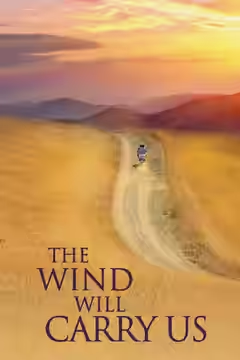
In The Wind Will Carry Us (1999), the villagers have interests beyond accommodating their visitors, and the awkward encounters are often funny. Kiarostami also leaves people and events outside the frame, asking us to listen without supplying a view that settles everything. Sometimes another delay adds little, and his editing makes us wait after the purpose of waiting has become clear. We need the next encounter to deepen our interest in someone, not merely postpone an answer.
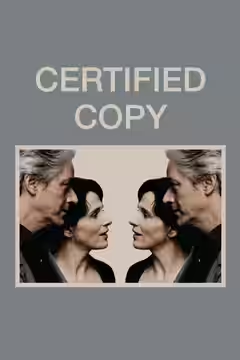
Later came the experiments of Five (2003) and Shirin (2008), then Certified Copy (2010), shot in Italy. There, Kiarostami turns arguments about originals and copies into a moving romance, with Juliette Binoche giving the talk its urgency. Editor Bahman Kiarostami holds faces long enough for listening to become as interesting as speaking, although the weaker dialogue gets the same generous treatment. Start with Close-Up; leave the longer arguments for an evening when nobody is watching the clock.
Biography
Abbas Kiarostami was an Iranian film director, screenwriter, editor and producer. He was born in Tehran on 22 June 1940 and died in Paris on 4 July 2016. He studied painting and graphic arts at the University of Tehran and began his career designing film titles and working in advertising before joining the Institute for the Intellectual Development of Children and Young Adults in 1969, where he established its film division and directed his first shorts.
Kiarostami directed, wrote, edited and produced Taste of Cherry (1997), which shared the Palme d'Or at the Cannes Film Festival. He also directed, wrote and edited Close-Up (1990). His other notable films include the Koker trilogy comprising Where Is the Friend's House? (1987), Life, and Nothing More… (1992) and Through the Olive Trees (1995), as well as The Wind Will Carry Us (1999), Ten (2002), Certified Copy (2010) and Like Someone in Love (2012). He worked extensively as a screenwriter, editor and producer throughout his career.