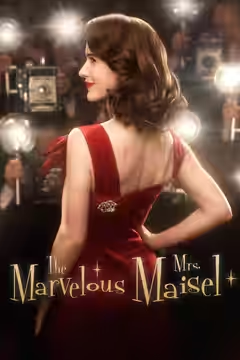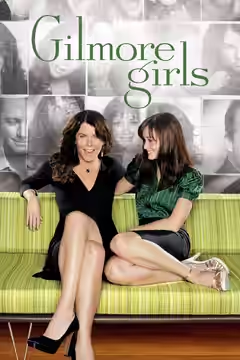
Amy Sherman-Palladino writes television in which everyone talks at twice the normal speed and means it, with a woman at the centre. In Gilmore Girls that was a gift. In The Marvelous Mrs. Maisel the speed became the whole show.
Fi1m perspective
A Sherman-Palladino scene is easy to spot. Two people, usually a woman and someone she loves or is arguing with, walk down a corridor or across a town square, and the camera walks with them, and they talk. There is a joke in every line, a film or a band or an old television programme dropped in without explanation, and no pauses. She has been writing this scene since Gilmore Girls (2000), for a mother and daughter, a stand-up comic and everyone around her, a shop girl and a policeman. Whether it works depends on whether the people in it were ever meant to sound different from one another.
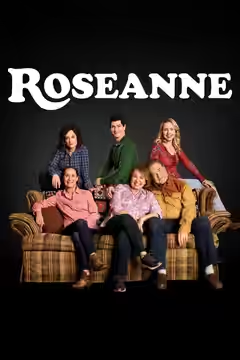
She began as a staff writer on Roseanne, joining in 1990 and leaving after the sixth season in 1994, and something of that programme's insistence that money and unhappiness belong in a comedy stayed with her. Gilmore Girls came from a pitch she made on the spot; she created it, wrote much of it and directed it for six seasons, then left in 2006. The final season was made without her, and it sounds like her without thinking like her. Bunheads (2012–2013), about ballet and a small town, drew on her own training as a dancer and was short-lived. She returned to Gilmore Girls for a four-episode revival in 2016, made The Marvelous Mrs. Maisel from 2017 to 2023, and in 2025 turned to ballet again with Étoile, written with Daniel Palladino, the co-writer, director and producer on nearly everything she has made.
What works is the rhythm. A 44-minute episode of Gilmore Girls carries what a rival would spread across an hour, and its first three seasons are as good as network comedy-drama gets, because Lorelai and Rory talk the same way and the programme is about what that closeness costs. Maisel has the same speed, more money and handsome period rooms, and it is not better. Midge talks like a comic, which is the point, but so do her parents, the shop girl and the policeman, and that flattens a world that was meant to be resisting her. Somewhere in the third season we noticed we had stopped laughing at the jokes and started admiring the speed, and the reason was plain enough: every line from every mouth landed on the same beat, and there was nothing left for a joke to be quicker than. The show also cannot bear to let her lose for long.
Her direction holds up better than her scripts. The long choreographed takes, actors walking and talking with the camera moving alongside, give the programmes a physical energy that survives even when the writing has gone slack, and it suits dancers, which may be why she keeps going back to them. Start with the first three seasons of Gilmore Girls, in autumn. If by then the rhythm has you, Maisel will do; if it has started to wear, nothing she has made since will change your mind.
Biography
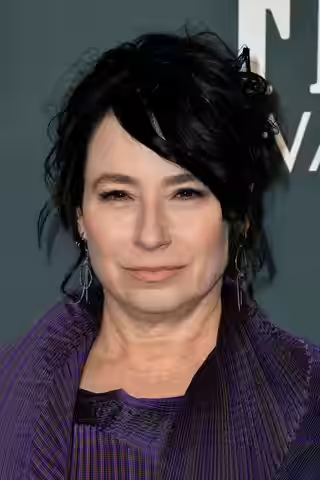
Amy Sherman-Palladino is an American television writer, director and producer. Born on 17 January 1966 in Los Angeles, she began her career as a dancer before joining the writing staff of the series Roseanne in 1990, where she remained until 1994.
She created the series Gilmore Girls (2000–2007), on which she also served as writer and director for much of its run, and later created Bunheads (2012–2013) and The Marvelous Mrs. Maisel (2017–2023). She has received six Primetime Emmy Awards, including for Outstanding Comedy Series, Outstanding Directing for a Comedy Series and Outstanding Writing for a Comedy Series, all for The Marvelous Mrs. Maisel. She was the first woman to win in the comedy writing and directing categories in the same year.