Daniel Palladino writes talk, with Amy Sherman-Palladino: two people, a torrent of words, a joke in every line and no pauses. In the early Gilmore Girls it is as good as network comedy-drama gets. The catch is that everyone sounds the same.
Fi1m perspective
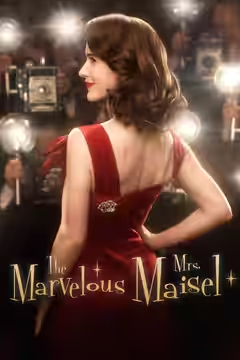
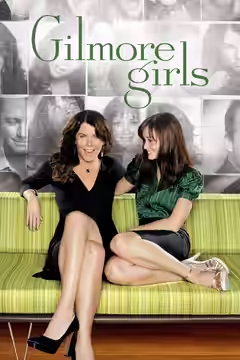
A Palladino scene begins with two people already talking and ends before either has drawn breath. Lorelai and Rory Gilmore do it across a kitchen table; Midge Maisel does it standing up in front of a microphone, then does it again sitting down with her manager. The words come at nearly twice the pace of anything around them, stuffed with references to films, bands and old television that nobody stops to explain, and a 44-minute episode carries what a rival would spread across an hour. He has said that he and his wife "write very rhythmically and musically", and he has a background as a musician, which explains the sound as well as anything does.
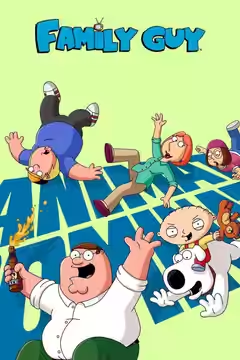
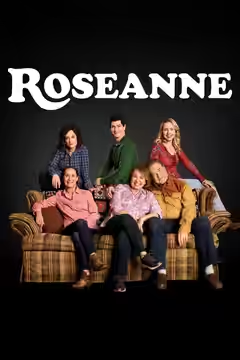
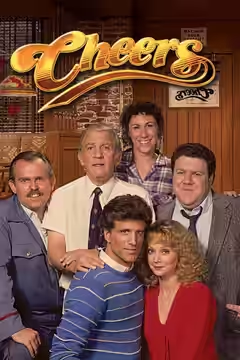
The career before that sound was a working television writer's. He came up through the late 1980s and 1990s on Who's the Boss?, Roseanne (1988) and Cheers (1982), rooms where the joke had to land on the beat and the actor had to be trusted to land it. In 2000 he joined Gilmore Girls, where he wrote 44 episodes and directed six across six seasons, while also running the early seasons of Family Guy, a programme with a different idea of how a scene should work: there the cutaway gag rescues every dull moment and stops any scene from building. Bunheads, the 2016 Gilmore Girls revival and The Marvelous Mrs. Maisel (2017) followed, all with Sherman-Palladino, and on Maisel he wrote twenty episodes and directed fourteen.
What works is the first three seasons of Gilmore Girls. The talk is fast because a mother and daughter who are closer to each other than to anyone else have too much to say, and the directors, Lesli Linka Glatter and Jamie Babbit among them, keep out of the way and let the actors walk the inn's corridors and speak. What does not work is what happens when that manner becomes the only one. On Maisel Midge talks in torrents, and so do Susie, Abe, Rose, the shop girl and the policeman. Everyone is a comic, which makes Midge's act hard to judge, since it sounds like the rest of the dialogue delivered standing up, and it flattens a world that was supposed to be resisting her. Somewhere in the third season we noticed we had stopped laughing and started admiring the speed, and we were faintly annoyed with ourselves for how long it had taken us to notice.
Which sentences are his and which are hers is not a question the credits can answer, and after a quarter of a century of shared credits it may not be one worth asking. What can be said is that the partnership has one gear, and it is a good one. Étoile is next, in 2025. We would like to hear somebody in it pause.
Biography
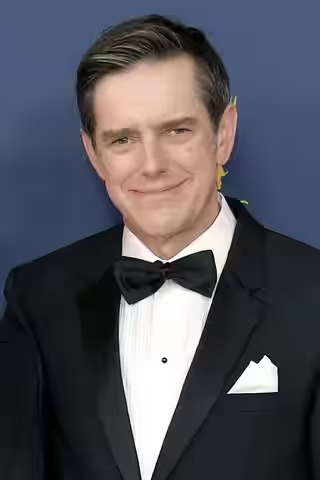
Daniel Palladino is an American television writer, producer and director. Born on 2 February 1960 in Los Angeles, California, he began working in series television in the late 1980s and early 1990s. His early credits include writing for Cheers (1982) and Roseanne (1988), where he also served as co-executive producer and executive producer.
Palladino joined the writing staff of Gilmore Girls (2000) in 2000, contributing as a writer of 44 episodes and director of six episodes. He frequently collaborates with his wife, series creator Amy Sherman-Palladino. He later worked on Family Guy (1999), Bunheads (2012) and The Marvelous Mrs. Maisel (2017), serving as writer, director and executive producer on the latter. He has received four Primetime Emmy Awards, two PGA Awards and a WGA Award.