Andrew Davis is at his best when capable people have difficult work to do under pressure. We rate his attention to actors and the practical business of pursuit, though bigger escapes can weaken his suspense.
Fi1m perspective
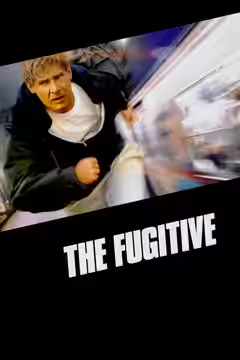
In The Fugitive (1993), Tommy Lee Jones's Samuel Gerard has a job to do and little patience for anyone who makes it harder. Andrew Davis lets that impatience be funny without allowing the danger to become a joke. We rate him most highly here, making the pursuit absorbing by keeping both pursuer and fugitive intelligent. Harrison Ford's Richard Kimble has to think while he runs. Davis understands that watching him think is part of the entertainment.
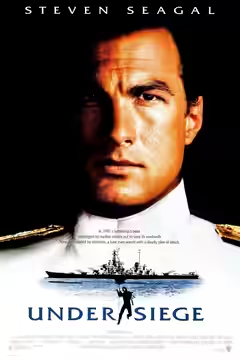
That interest in people doing things runs back to Stony Island (1978), his debut about Chicago musicians. He returned to the city for Code of Silence (1985), the Chuck Norris film that established him in action cinema. His recurring use of Chicago's neighbourhoods helps make the action feel as though it is happening somewhere real. A collaboration with Steven Seagal began with Above the Law (1988), while Under Siege (1992) led directly to the job on The Fugitive.
The actors get room to make the pursuit work. David Twohy and Jeb Stuart's screenplay gives Kimble and Gerard enough intelligence to sustain the contest, and Davis allows their different temperaments to set its pace. We were relieved when Gerard's dry humour broke the tension, because Jones made it sound like a busy man's irritation rather than a prepared joke. Ford supplies the worry without making Kimble helpless. It matters that we can enjoy Gerard's competence while hoping he fails to catch his man.
Davis is less reliable when the action grows larger than the characters need. In The Fugitive, Kimble's escapes become harder to believe even after Ford and Jones have done enough to keep us watching. The film does not need to keep proving how much its hero can survive. We would happily have traded some of that spectacle for more of the procedural work Davis makes so lively.
The later thrillers could be more conventional, as in Collateral Damage (2002), while Holes (2003) took him into family filmmaking. The latter makes good use of his visual storytelling and pacing beyond the action genre. Begin with The Fugitive, and give Jones's working methods as much attention as Ford's escapes.
Biography
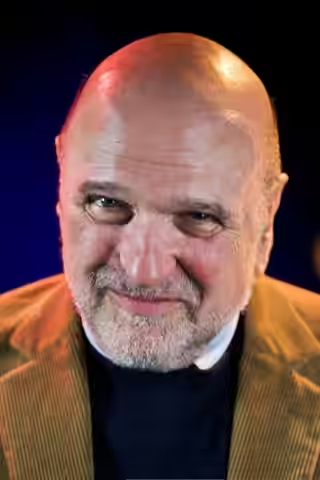
Andrew Davis is an American film director, producer, screenwriter and cinematographer. Born on 21 November 1946 in Chicago, Illinois, he studied journalism at the University of Illinois at Urbana-Champaign and began his career as a cameraman on documentaries and blaxploitation films in the 1970s, mentored by cinematographer Haskell Wexler.
Davis made his directorial debut with the independent musical Stony Island (1978). He is best known for action and thriller films including Above the Law (1988), Under Siege (1992), The Fugitive (1993), Chain Reaction (1996), A Perfect Murder (1998), Collateral Damage (2002) and Holes (2003). The Fugitive earned him Golden Globe and Directors Guild of America nominations. Many of his films feature Chicago locations.