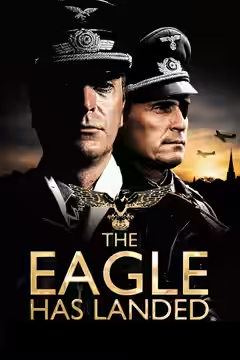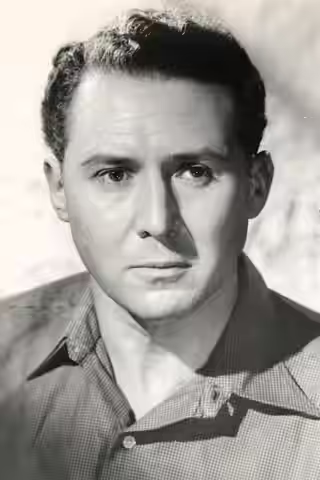
Anthony Quayle spent his film career in uniform, playing the decent officer who has to be sensible while somebody else is being brilliant. He was better at it than the parts deserved, and the best of them let us see he was not sure of himself.
Fi1m perspective
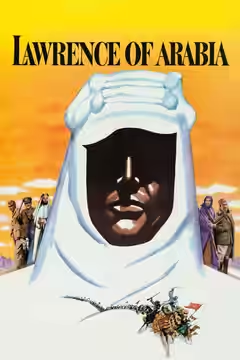
Watch Anthony Quayle in Lawrence of Arabia (1962) and you will see a man losing an argument he is right about. His Colonel Brighton is the regular officer at Peter O'Toole's elbow, and O'Toole is so strange and so unsettling from his first scene that Brighton's good sense looks like a failure of imagination. Quayle and David Lean disagreed about him. Lean thought Brighton honourable; Quayle thought him an idiot, played him that way, and called the film a difficult experience. Both men are visible in the performance, which is why it repays a second look.
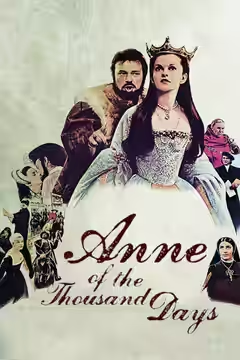
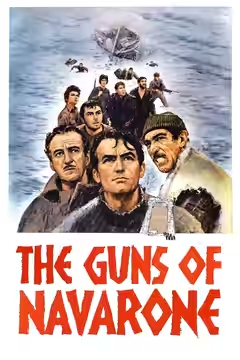
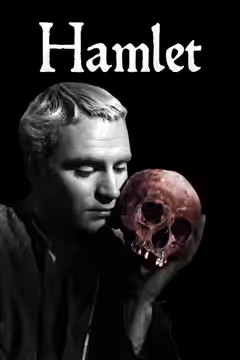
He came to films late and by the side door. The stage came first: the Old Vic from 1932, then eight years running and acting at the Shakespeare Memorial Theatre in Stratford from 1948 to 1956, doing the groundwork for what became the RSC. In between he served as a major in the Royal Artillery, which is where the officers came from. His first film part of note was Marcellus in Laurence Olivier's Hamlet (1948); the one that made producers look up was Captain van der Poel in Ice Cold in Alex (1958), an ambiguous man in a desert. J. Lee Thompson directed him five times, including The Guns of Navarone (1961). Then the epics of the 1960s, and Cardinal Wolsey in Anne of the Thousand Days (1969). "I wasn't asked to be a handsome young man in films because I wasn't a handsome young man," he said, and the parts bear him out.
The type was the decent British officer, and what he did with it was let the decency crack. The usual line is that his officers carry a hint of weakness under the authority. We would put it differently. Quayle's officers are not weak; they are men who know the rules will not be enough and have no other rules to offer. In The Guns of Navarone his Major Franklin is the dependable one on a raid full of stars, in a film whose script keeps stopping to argue about war, and Quayle at least gives the arguments somebody worth having them with. Brighton moved us more than we expected, because Quayle plays every objection as if he already knows nobody will listen, and says it anyway, in full.
He was frank that much of his film work was dreary, and some of it was. The big pictures of the 1960s used him as scenery in uniform, and he never got the lead on screen, nor seems to have expected it; the theatre had that side of him. Start with Lawrence of Arabia, and keep an eye on the man at the edge of the frame who is not enjoying himself. That is where Quayle did his best film work, while the camera was looking at somebody else.
Biography
Sir Anthony Quayle (1913–1989) was a British actor and theatre director. Born in Ainsdale, Southport, Lancashire, he studied at Rugby School and briefly at RADA before making his stage debut in 1931. He joined the Old Vic in 1932 and later served as a major in the Royal Artillery during the Second World War.
Quayle directed the Shakespeare Memorial Theatre at Stratford-upon-Avon from 1948 to 1956. His film roles included Colonel Brighton in Lawrence of Arabia (1962), Major Roy Franklin in The Guns of Navarone (1961) and Cardinal Wolsey in Anne of the Thousand Days (1969), for which he received an Academy Award nomination for Best Supporting Actor. He was appointed CBE in 1952 and knighted in 1985.