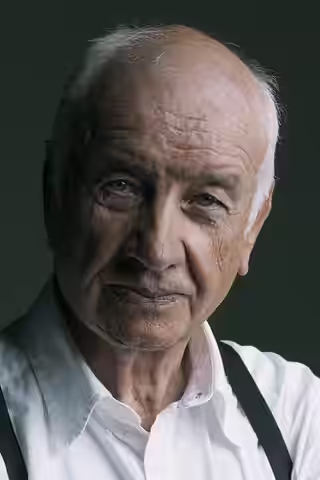
Armin Mueller-Stahl makes authority unsettling by allowing the man exercising it to seem sincere. We value his restraint: in Shine, a father's visible unhappiness makes his demands more frightening, without excusing what he asks of his son.
Fi1m perspective
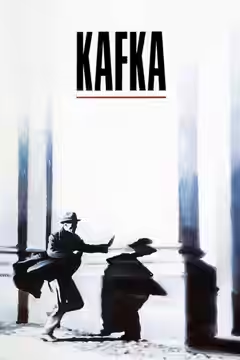
In Kafka (1991), Inspector Grubach listens as though the report has already told him everything he needs to know. Mueller-Stahl gives the policeman no need to hurry; the other person can do the talking. We enjoy how little he needs to do to make that authority felt. Steven Soderbergh's mystery is well cast and finely lit, but its pulp plotting never earns the dread it seeks. Mueller-Stahl remains one of its pleasures, though his performance cannot make the whole film as troubling as his patient listening.
His work with Rainer Werner Fassbinder on Lola (1981) and Veronika Voss (1982) preceded his US debut in Music Box (1989). His subsequent English-language career made frequent use of him as a family elder or a man in authority. Barry Levinson's Avalon (1990) allows the immigrant patriarch warmth and a pleasure in storytelling. These were parts suited to an actor who could suggest intense feeling with few gestures.
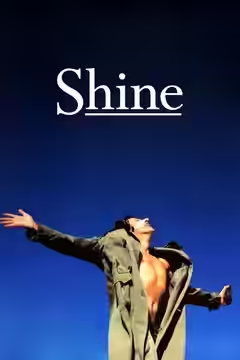
Scott Hicks gets more from that restraint in Shine (1996). As Peter, David Helfgott's father, Mueller-Stahl makes the demands sound sincere enough for us to understand why Peter believes in them. We found him frightening because his concern repeatedly becomes a reason his son must obey. His unhappiness stays visible, and Sardi's writing is strongest when it lets care and control remain difficult to separate. He gives the family scenes weight without reducing them to a contest between a gifted son and an uncomprehending parent.
Shine takes storytelling shortcuts, but its performances earn the warmth, and Mueller-Stahl deserves a substantial share of the credit. His willingness to let a scene work without dominating it is particularly valuable in a story that belongs to the son. Geoffrey Rush and Noah Taylor make David worth caring about; Peter makes caring about him an uncomfortable business. Start with Shine, and resist treating the family scenes as the wait before the music.
Biography
Armin Mueller-Stahl is a German actor. He was born on 17 December 1930 in Tilsit (now Sovetsk), East Prussia. He studied violin and musicology before turning to acting, making his stage debut in the early 1950s and working for many years with the Volksbühne in East Berlin. He appeared in numerous East German films and television productions from the mid-1950s.
After leaving the GDR in 1980, Mueller-Stahl worked with Rainer Werner Fassbinder in West Germany before moving into English-language cinema. His roles include appearances in Music Box (1989), Avalon (1990), Night on Earth (1991), Kafka (1991), Shine (1996) and Eastern Promises (2007). He received an Academy Award nomination for Best Supporting Actor for Shine and was awarded the Honorary Golden Bear at the Berlin International Film Festival in 2011.