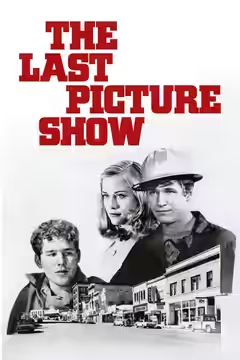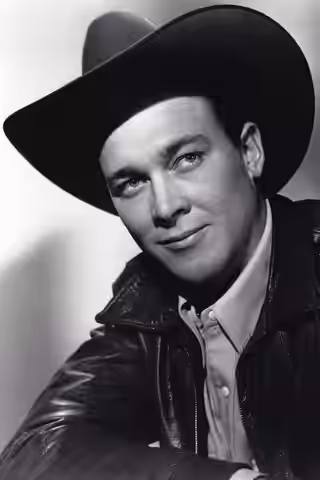
Ben Johnson could ride, and for twenty years Hollywood hired him mostly to do that, in John Ford's cavalry pictures. Then Peter Bogdanovich gave him a pool hall to run, and The Last Picture Show (1971) showed what all that calm had been for.
Fi1m perspective
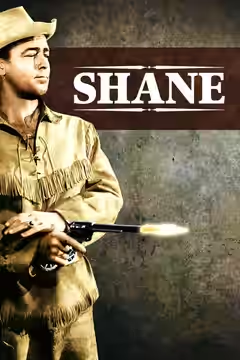
In Shane (1953) Ben Johnson is the ranch hand who throws a whisky over Alan Ladd and jeers him out of the saloon. It is a bully's scene and he plays it without relish. Chris Calloway is testing a stranger because the other men are watching, and Johnson lets you see that he would rather they were not. That is what he did for forty years: a man doing a plain thing, and the face telling you what it costs him.
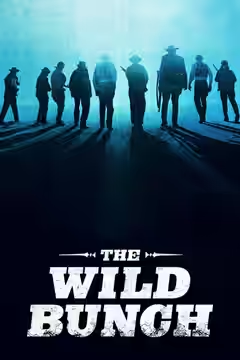
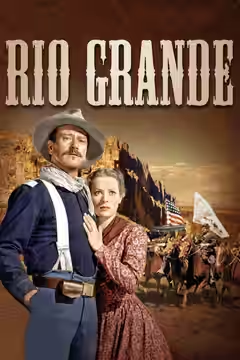
He came to films with the horses, delivering them to Hollywood in the late 1930s, then as a wrangler and stuntman. John Ford spotted him on Fort Apache (1948) and put him under contract, and for a while he was the man on the horse in Ford's cavalry films, Sergeant Tyree in She Wore a Yellow Ribbon (1949), riding again in Rio Grande (1950). Seven films with Ford in all, six alongside John Wayne. Through the fifties and sixties he worked steadily in supporting Western parts, and when Sam Peckinpah started taking the genre apart he was there too, as Tector Gorch in The Wild Bunch (1969). He sat a horse the way most actors sit a chair, and directors who wanted the West to look lived in kept sending for him.
Then Peter Bogdanovich cast him as Sam the Lion, who owns the pool hall in The Last Picture Show (1971), and gave him the part of his life. Nothing in it is raised. The authority is quiet, and what makes it hold is that Johnson never lets the steadiness look like a man who cannot be let down. We were moved by him more than by anyone else in Anarene, and we think it is because he never once asks us to be. He says what he thinks about the boys and the town and lets the silence afterwards do the rest. It is the saloon scene turned inside out.
The limit is real and he knew it. He turned parts down and rewrote lines to get round strong language, on The Last Picture Show among others, and in 1972 he told a reporter he had stuck with doing things he knew how to do because he was afraid of failing. He seldom strayed far from the West or from men who might have ridden out of it; Jack Beynon in The Getaway (1972) is a crime boss, and he still holds himself like a cattleman. "If Mr. Ford says I'm an actor, I reckon I am. But Lord help me if they ever ask me to do anything except be myself." They mostly did not ask.
He kept working until he died in 1996. Start with Shane, for what he could do with two scenes and a bar, then go to The Last Picture Show for what he could do with a room and time. Being himself was the whole act, and he made it look like a skill.
Biography
Ben Johnson (Francis Benjamin Johnson Jr.) was an American actor, stuntman and rodeo cowboy. Born on 13 June 1918 in Foraker, Oklahoma, he began his film career in the 1940s after delivering horses to a Hollywood production. He worked as a stuntman and horse wrangler before John Ford cast him in Westerns such as She Wore a Yellow Ribbon (1949) and Wagon Master (1950).
Johnson appeared in numerous Westerns over five decades, including Shane (1953), The Wild Bunch (1969) and Chisum (1970). His performance as Sam the Lion in Peter Bogdanovich’s The Last Picture Show (1971) earned him the Academy Award, BAFTA Award and Golden Globe Award for Best Supporting Actor. He continued acting until his death on 8 April 1996.