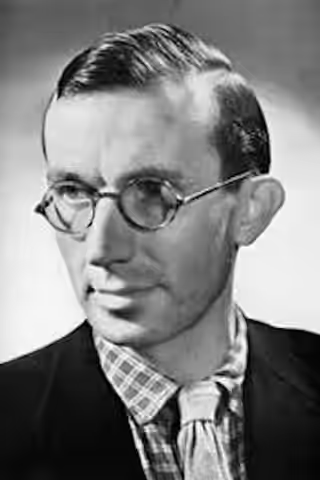
Bernard Miles played countrymen and working men with a rolling bass-baritone and a direct sincerity that let pain show under the stoicism. He was at his best in David Lean's two films with him and seldom given as much to do anywhere else.
Fi1m perspective
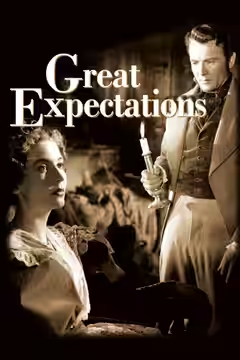
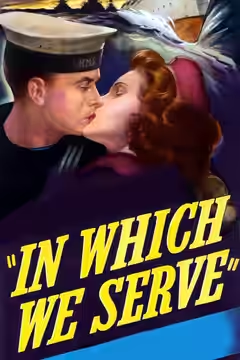
Watch Bernard Miles in a David Lean film and notice how little he does. He does not reach for a line or wait for the laugh. He says the thing, in a rolling bass-baritone with the flat country vowels of Hertfordshire and Buckinghamshire, and then he stops. In In Which We Serve (1942) his Chief Petty Officer Hardy has a slow, contented decency the film otherwise struggles to find below decks. In Great Expectations (1946) his Joe Gargery has a directness that holds its own beside Alec Guinness and Francis L. Sullivan, both of whom are doing a great deal more.
Joe is the one to start with. He is the kindly blacksmith, and there is nothing in the part a lesser actor could not make sentimental inside a minute. Miles refuses. He plays a man who is not clever, knows it, and has decided that this need not stop him being good, and we believed him completely, which surprised us in a film so crowded with grotesques that we had expected the plain man to vanish. He does not. It is his best work on screen, and the general view of his career is that few of his other parts came near it.
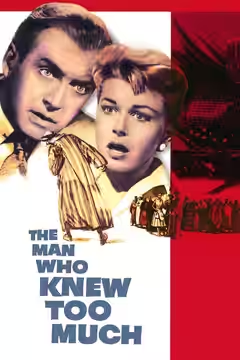
The career itself was busier than that suggests. He went into repertory in 1930 as actor, designer and stage manager, started in films in the mid-1930s, and became a familiar face in the patriotic pictures of the early 1940s, working three times each with Michael Powell and the Boulting brothers. He directed twice: Tawny Pipit (1944), a rural comedy about people getting along, and Chance of a Lifetime (1950), a drama about a factory and its workers. Both are modest fables of harmony, which tells you something about the man. Hitchcock cast him against type as Edward Drayton in The Man Who Knew Too Much (1956), and the stillness that made Joe trustworthy turns out to work just as well for menace.
Off screen he wrote and performed comic monologues in the speech of his grandfather, an act which, in his own words, "carried me around England in the music halls" and paid for the Mermaid Theatre, which he founded with Josephine Wilson and opened in 1959. The voice in the monologues and the voice at the forge are the same voice. He was not putting the countryman on. He was letting him out.
The caveat is the one his admirers already know. Two fine parts in two Lean films, then a long run of smaller ones in which he is reliable and rarely stretched. Start with Joe, move on to Hardy, and do not expect the rest of the filmography to explain why those two are so good. The explanation is Lean, and Miles seems to have known it.
Biography
Bernard James Miles, Baron Miles, CBE (27 September 1907 – 14 June 1991) was an English character actor, writer and director. He was born in Uxbridge, Middlesex, and educated at Pembroke College, Oxford. He entered the theatre in the 1930s and soon began appearing in films.
Miles is known for roles including Joe Gargery in Great Expectations (1946), Chief Petty Officer Hardy in In Which We Serve (1942), Edward Drayton in The Man Who Knew Too Much (1956), and The Manxman in Moby Dick (1956). He founded the Mermaid Theatre in London in 1959, the first new theatre opened in the City of London since the 17th century. He was made a CBE in 1953, knighted in 1969 and created a life peer in 1979.