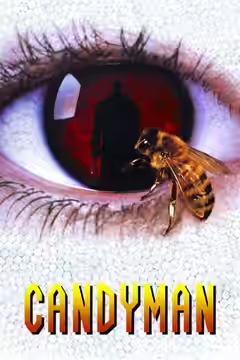
Bernard Rose treats urban legends and classic literature as stories worth testing in the present. We value the unsettling curiosity of Candyman and his work with actors, while finding its plotting less reliable than its atmosphere.
Fi1m perspective
In Candyman (1992), Virginia Madsen’s Helen Lyle treats a frightening rumour as material for her doctorate. Bernard Rose lets us enjoy her investigation. He also makes us notice the advantage she has over the people whose fear she is studying: she does not have to live there. This is thoughtful, frightening horror, even when Rose’s writing asks Madsen to make shaky plotting seem inevitable.
Paperhouse (1988) introduced him as a director of dark fantasy. After Candyman brought international recognition, he made the period films Immortal Beloved (1994) and Anna Karenina (1997). From the late 1990s, he pursued digital filmmaking, often handling the writing, cinematography and editing himself. Ivans Xtc. (2000), a Hollywood satire, began a series of Tolstoy updates with Danny Huston. The digital films offered a more intimate way to examine those old stories.
In Candyman, Tony Todd’s hook-handed figure is persuasive enough to make his attention seem welcome. We were unnerved by the attraction, because Todd makes the threat seductive without making it safe. Rose allows romantic feeling into these scenes without easing their menace. Madsen’s credible curiosity matters just as much: she keeps us concerned for Helen when the investigation begins to strain belief.
The surroundings carry a risk Rose does not entirely resolve. Jane Ann Stewart’s production design makes the neglect of Chicago’s Cabrini-Green oppressive, while Anthony B. Richmond’s cinematography makes the estate frightening before any supernatural explanation is required. Philip Glass’s music deepens the unease. The effect works as horror, but those threatening images can make it harder to distinguish the residents’ circumstances from what Rose has done to frighten us.
He has not left horror behind: Frankenstein (2015) gives the novel a contemporary setting. The recurring question is what an old story can expose when its people live closer to us. Begin with Candyman, but allow for a script that cannot always match Todd’s conviction.
Biography
Bernard Rose is an English film director and screenwriter born in London in 1960. He began making amateur films as a child, won a BBC competition in 1975, worked with Jim Henson on The Muppet Show and The Dark Crystal, and graduated from the National Film and Television School in 1982. He directed music videos for artists including UB40 and Frankie Goes to Hollywood before moving to television and features.
Rose directed Paperhouse (1988) and gained international attention with Candyman (1992), which he also wrote. Subsequent films include the historical dramas Immortal Beloved (1994) and Anna Karenina (1997). His 2000 independent drama Ivans xtc. received Independent Spirit Award nominations for Best Director and the John Cassavetes Award. He has frequently cast Danny Huston and is considered a pioneer of digital filmmaking.