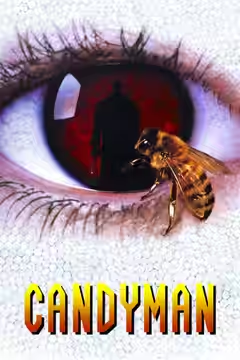
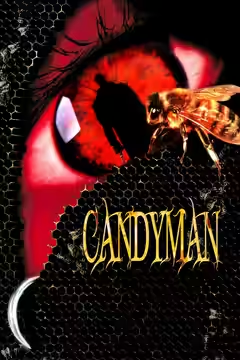
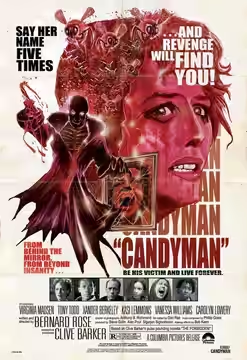
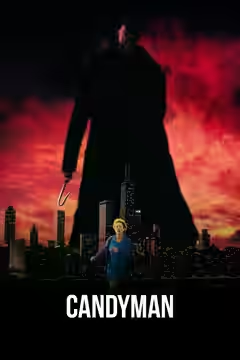
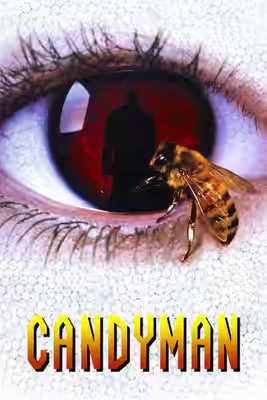
Bernard Rose makes urban folklore frightening and difficult to dismiss, with Tony Todd’s seductive monster and Philip Glass’s music doing much of the work. The plotting is less assured, but we recommend it to anyone who likes horror with something troubling behind it.
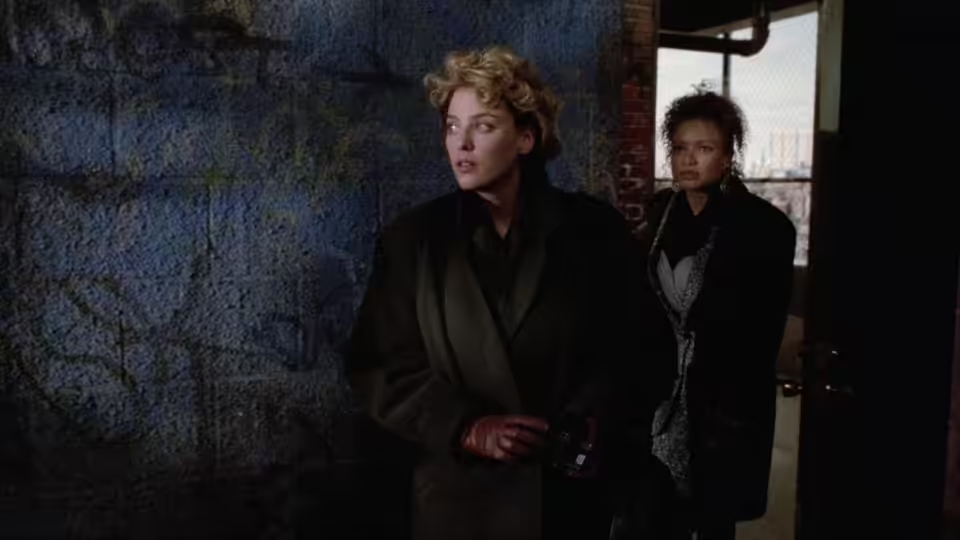
Bernard Rose’s Candyman is a frightening, unusually thoughtful horror film, even when its plotting asks for more patience than it earns. Its subject is the urban legend: who tells it, who believes it and who gets to treat somebody else’s fear as research. Helen Lyle, played by Virginia Madsen, approaches the stories as a doctoral student. Rose gives that academic curiosity an uncomfortable edge. We can enjoy the investigation while recognising how much easier it is to study a place when we do not have to live there.
Adapted from a story by Clive Barker, the film takes its investigation to Chicago’s Cabrini-Green housing project. The setting gives Rose a way to consider race and class through the familiar business of following a frightening rumour. Jane Ann Stewart’s production design makes the housing project’s neglect oppressive, and Anthony B. Richmond’s cinematography makes it frightening even before we consider what might be supernatural. It is effective, although there is a cost. The more threatening the estate looks, the harder it becomes to separate the residents’ circumstances from the film’s appetite for a scare.
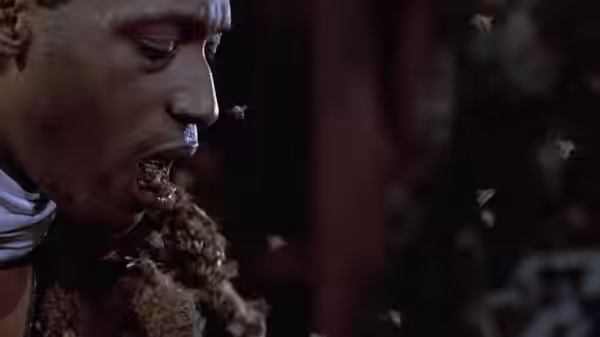
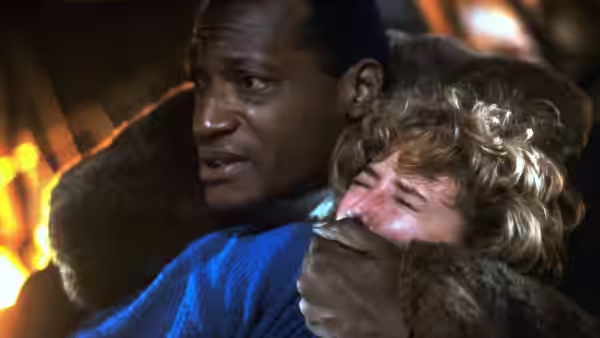
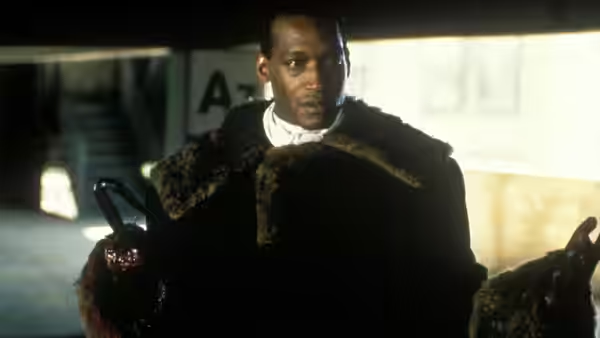
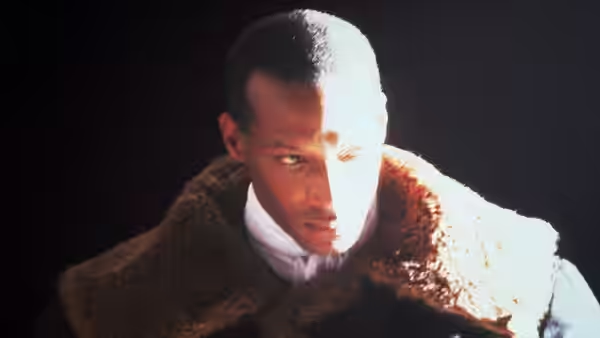
Tony Todd gives Candyman the confidence of someone certain that he will be heard. As the hook-handed figure, he makes the threat seductive, with none of the reassurance that usually accompanies charm. We were unnerved by that attraction: Todd makes being noticed by this figure seem desirable when it plainly ought to be terrifying. The performance gives Rose room for romantic feeling without softening the horror. A less persuasive presence would leave the film’s larger ambitions looking rather exposed.
Virginia Madsen has the less immediately striking role, and does valuable work with it. Helen’s curiosity remains credible even when the story begins to strain belief. Madsen keeps us concerned about what this investigation is doing to her, so the film need not rely on our interest in the legend alone. Rose’s writing does occasionally ask her to make shaky plotting look inevitable. The performance holds our attention through those less convincing stretches.
Philip Glass’s music helps make the film’s romanticism credible. It gives the threat a mournful quality, allowing fear and attraction to occupy the same scene without Rose having to explain the connection. The music stays troubling even when the plotting becomes busy, and we would lose a good deal of the film’s force without it. Dan Rae’s editing is less secure, with stretches that lose urgency despite the effectiveness of the individual shocks.
The more substantial reservation concerns Rose’s handling of race. The film asks us to think about the people who live in the housing project, then keeps returning to the visiting researcher’s ordeal. That imbalance is not erased by taking prejudice seriously. Rose deserves credit for making the question part of the horror, but we wanted the residents to matter more as people in their own right.
Candyman has more to offer than the familiar slasher pleasure of waiting for a recognisable monster to appear. Across 100 minutes, Rose makes room for dread, sexual unease and questions about whose suffering becomes entertainment. The violence is forceful, and anyone drawn by the intelligence of the premise should know that the film is quite prepared to be a gory shocker. Watch it for Todd and Madsen, but do not mistake the thoughtful passages for an offer of a comfortable evening.