Bertolucci the writer builds men who want to be told what to do, then explains them a little too well. The Conformist is the case for him; The Last Emperor shows both the scale he could reach and the distance it cost him.
Fi1m perspective
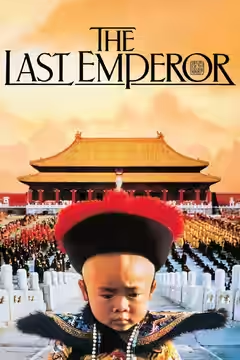
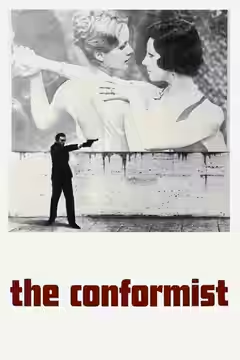
Marcello Clerici in The Conformist (1971) wants one thing, to be accepted by respectable people, and fascism obliges because it tells him how. Pu Yi in The Last Emperor (1987) is a small boy in a courtyard full of adults who kneel to him, and he has less say in his life than any of them. That is the Bertolucci character: a man defined by what the room around him expects of him. He wrote these men as well as filmed them, and the writing is where his habits show. He likes a man he can explain.
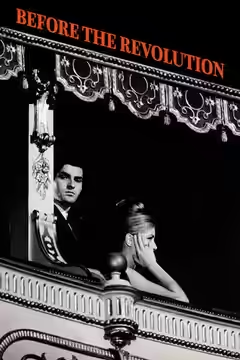
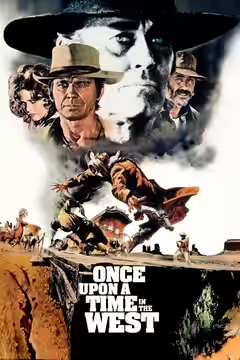
He began as assistant director to Pier Paolo Pasolini on Accattone (1961) and made his own first film, La commare secca (1962), at twenty-one. Before that he had studied literature and written poetry, and he never stopped treating cinema as a branch of it: the films that matter most are taken from novels, and The Conformist comes from Alberto Moravia. In 1968 he supplied story for Sergio Leone's Once Upon a Time in the West, which we rate higher than anything he directed, though it is Leone's film and we cannot say how much of its dread began on his page. The 1970s brought Last Tango in Paris (1972) and the long class epic 1900 (1976); after that came The Last Emperor, The Sheltering Sky (1990) and Little Buddha (1993), and with them the complaint, which we think fair, that the pictures grew while the people inside them shrank.
What works is the wanting. He understands how pleasant it is to follow rules and be approved of, and in The Conformist he makes that ordinary appetite frightening without asking us to admire the man who acts on it. What does not work is the diagnosis. Marcello's politics are traced to sexual repression so insistently that he starts to look like a case study, and we believe his cowardice more readily than the account of where it came from. The same hand is visible in The Last Emperor, written with Mark Peploe, his screenwriter on three films: history moves faster than Pu Yi can respond to it, and a stretch of explanation arrives just as a relationship has begun to interest us. Vittorio Storaro, who shot eight of his films, gives all of this a seductive surface, and the surface sometimes does the persuading the script has not.
We felt unexpectedly protective of the boy emperor when the ceremony around him made him look so small, and that is the writing as much as the staging: Bertolucci knows exactly how little the child has chosen. He once said he liked films that go out of control, where "it's like the cinema itself is taking over". His own rarely do. They are controlled to the last line, which is why the men in them are so easy to read and so seldom surprising. Start with The Conformist, then give The Last Emperor an unhurried evening and do not expect its emperor to become easy company.
Biography
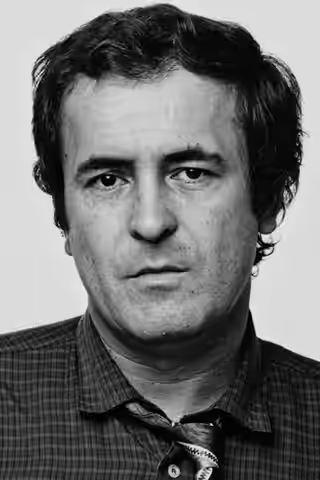
Bernardo Bertolucci was an Italian film director and screenwriter. Born in Parma on 16 March 1941, he died on 26 November 2018. A protégé of Pier Paolo Pasolini, he made his directorial debut at the age of 22.
Bertolucci directed and co-wrote the screenplay for The Last Emperor (1987), becoming the first Italian filmmaker to win the Academy Award for Best Director. The film also won the Academy Award for Best Picture. He contributed to the story of Once Upon a Time in the West (1968) and is known for other films including The Conformist (1971), Last Tango in Paris (1972) and 1900 (1976).