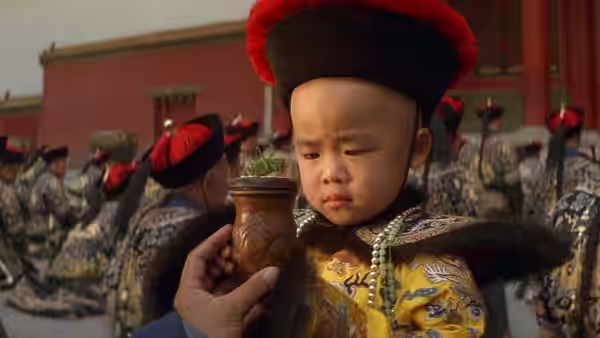
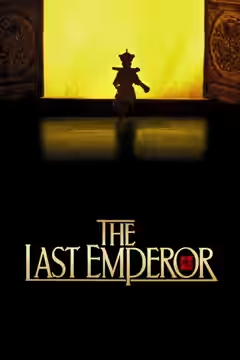
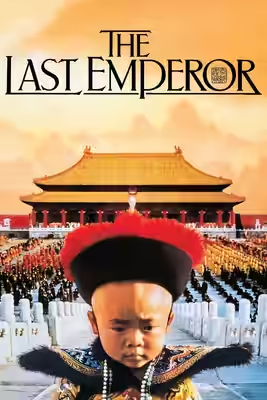
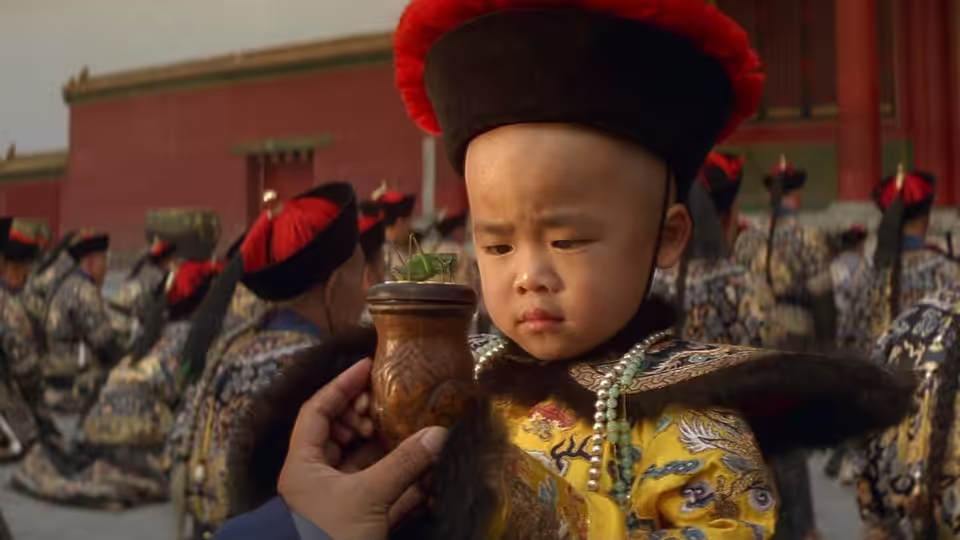
Young boy in yellow imperial robe examines a small plant in a vase held before him
Film review

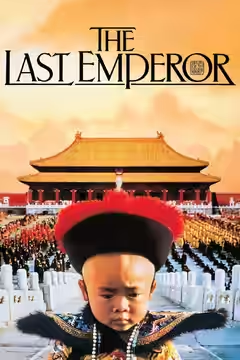
The Last Emperor

1987 · Directed by Bernardo Bertolucci · 2h 43m · MPA PG-13

In a sentenceAll those servants, and nobody seems able to arrange a childhood

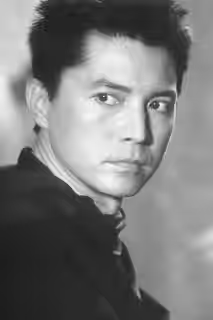
Pu Yi grows up as an emperor, surrounded by servants and royal subjects but short of companionship. His life unfolds amid political upheaval in China, with his position shaping his relationships and his understanding of the world beyond his household. The story follows him from childhood into adulthood, moving between public ceremony and private isolation. John Lone plays the adult Pu Yi, with Joan Chen as Wan Jung, Peter O’Toole as Reginald Johnston and Vivian Wu as Wen Hsiu. Bernardo Bertolucci directs, from a screenplay co-written with Mark Peploe.

Plays from YouTube when you press play; nothing loads from them until then.

Fi1m review

Bernardo Bertolucci’s The Last Emperor makes imperial ceremony both fascinating and painfully lonely. It is a richly made, absorbing historical drama, though its adult protagonist can remain frustratingly remote.

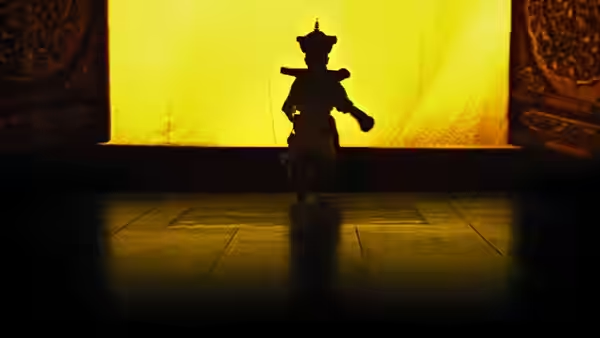
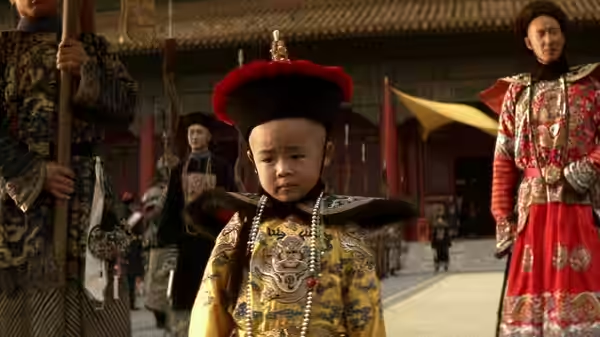
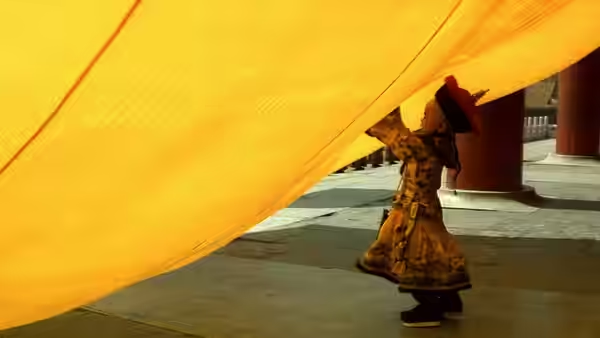
The Last Emperor is worth its 163 minutes, provided we accept that its central figure will not always explain himself to us. Bernardo Bertolucci considers what happens to a child brought up to expect obedience from almost everyone he meets. The ceremonial scale matters because the boy has so little choice about his place within it. We felt unexpectedly protective of him when the ceremony around him made him look so small.

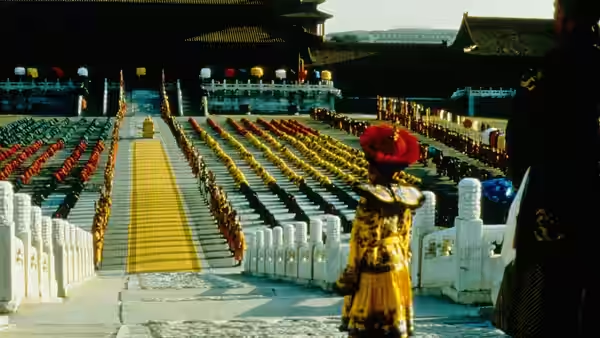
Vittorio Storaro’s cinematography makes the Forbidden City sequences worth lingering over, even when the drama seems reluctant to proceed. The grandeur has a useful dramatic effect: the palace commands our attention before any person in it does. Production designers Ferdinando Scarfiotti and Bruno Cesari give these surroundings a formality that helps explain why privilege might offer so little comfort. We can enjoy looking at the palace and still understand why growing up there might be miserable.

James Acheson’s costumes reinforce the household’s formality; looking properly dressed seems to be another obligation. As the adult Pu Yi, John Lone gives the film a reserve that is persuasive but sometimes difficult to get past. His performance suits someone accustomed to being watched, and we do not need him to become suddenly confessional. There are nevertheless stretches when we want a clearer sense of what he wants from another person, beyond the respect his position has taught him to expect.

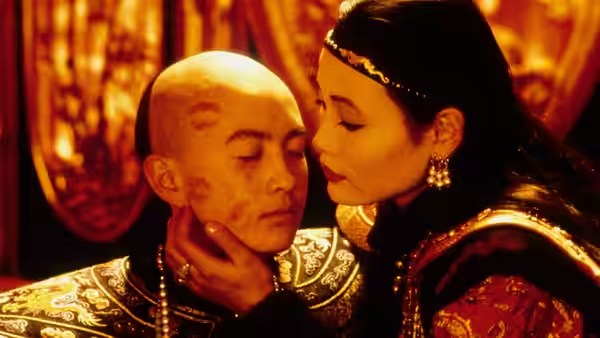
Joan Chen, as Wan Jung, helps make that emotional distance matter, suggesting private unhappiness without asking the film to stop and explain it. We could use more time in her company, especially when the scale of the story starts to make individual relationships feel hurried. Peter O’Toole’s Reginald Johnston supplies a welcome lightness of manner. His presence allows the film to relax a little, although the contrast also exposes how stiff some of the surrounding exchanges can be.

The screenplay by Mark Peploe and Bertolucci is less assured when it has to carry the weight of historical change. We understand the broad pressure on Pu Yi, but some transitions leave too little time for his responses to become convincing. Gabriella Cristiani’s editing keeps the long account manageable, though it cannot always make the movement from one stage of the life to another feel natural. A stretch of explanation can arrive just when a relationship has begun to interest us.

The score by Su Cong, Ryuichi Sakamoto and David Byrne is an important source of warmth. It gives the ceremony feeling without requiring Lone to make every thought visible, and its emotional directness is welcome. There is pleasure in the film’s patience, too, when it lets us spend time with these surroundings instead of hurrying to the next historical development. Those passages give us time to consider how thoroughly the imperial household determines what Pu Yi expects from other people.

A royal biography need not make its subject likeable, but it does need to make the time spent with him rewarding. Bertolucci achieves that often enough through the childhood and through his attention to the places that shape Pu Yi’s expectations. The reserve becomes tiring at times, and anyone hoping for a more intimate portrait will have reasonable cause to complain. Give it an unhurried evening, and do not expect the emperor to become easy company.
Critical consensus AI synthesised

67
Positive
8
Mixed
0
Negative
2

Most critics admire The Last Emperor, and the praise gathers almost entirely in one place: the look of it. The Forbidden City sequences, Vittorio Storaro’s photography, the production design and the thousands of extras are singled out again and again, and several reviews treat the film as a useful, handsome introduction to twentieth-century Chinese history. The reviews written for its later re-releases, with an extra hour restored, are noticeably warmer than those from its first run.

The reservations gather in one place too. Pu Yi is a passive figure, and many critics find the film cool and distant as a result, with spectacle standing in for sympathy. The spread is wide. The two dissenters are both from 1987: Pauline Kael in The New Yorker calls it a pageant without a protagonist, and Vincent Canby in The New York Times finds it arthritic and awkwardly built. Slant adds a further worry about an outsider’s gaze on China.

Empire
1 January 2000 · Natasha Aitken
90*

Bertolucci's masterpiece receives a re-release with an extra hour of footage that deepens the story of Pu Yi. The film is praised as a remarkable cinematic achievement and eye-opening history lesson, with breathtaking colours, sets, costumes and extras in the Forbidden City.

Read the full review →
The AV Club
27 February 2008 · A- · Scott Tobias
90

The Criterion edition makes a strong case for The Last Emperor as a truly great epic that captures the political turmoil of 20th-century China through the story of an individual swept up in history. The passive nature of the protagonist makes for a difficult epic, though rich ironies abound.

Read the full review →
Los Angeles Times
20 November 1987 · Sheila Benson
70*

The review praises the film as a coolly lavish epic and intoxicating visual rush thanks to its director, production designer and cinematographer. Its core remains cool and distant in telling the story of a man ill-fitted for either end of history's lens.

Read the full review →
Slant Magazine
27 February 2008
70*

The critic views the film as a visually magnificent but deeply flawed epic that foregrounds old-fashioned movie magic and marks a breakthrough for Chinese images in Western cinema. They single out the collaboration between Bertolucci, cinematographer Vittorio Storaro, and the production design team for lavish, awe-inspiring imagery while noting issues with characterization, perspective, and an outsider's gaze.

Read the full review →
The Guardian
12 March 2004 · Peter Bradshaw
70*

Bertolucci's director's cut of the epic is a David Lean-esque spectacle with spectacular richness and heartfelt storytelling. It gives clearer emphasis to Pu Yi's time as a puppet emperor in Manchuria, though some elements now appear ersatz compared to newer Chinese cinema.

Read the full review →
The Times
17 February 2023 · ★★★★☆ · Kevin Maher
70*

The sumptuous Bertolucci epic triumphs in production design and location shooting with its use of thousands of extras, though it also conveys great sadness in tracking Puyi's lifelong imprisonment from gilded cage to Red Army capture.

Read the full review →

Straight answers AI written, from our review

Is The Last Emperor worth watching?
The Last Emperor is worth watching for anyone with an unhurried evening and a taste for large-scale historical drama, and we scored it 80. Bertolucci and cinematographer Vittorio Storaro make the Forbidden City both fascinating and lonely, and the childhood passages are the strongest. Expect John Lone’s adult Pu Yi to remain reserved; viewers wanting an intimate portrait may find him hard to reach.
How long is The Last Emperor, and what is it rated?
The Last Emperor runs 2h 43m and is rated PG-13 by the MPA in the US. It is a drama and history film.
Where can I watch The Last Emperor in the US?
The Last Emperor is streaming on HBO Max, The Roku Channel, Hulu, Amazon Prime Video and Apple TV in the US, and it is also available to rent from Apple TV and Amazon Prime Video from $3.99. It leaves The Roku Channel on 30 September. Availability is checked daily; the links above go straight to each service.
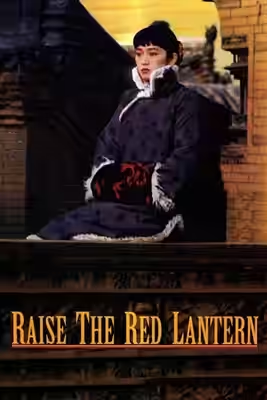
How does The Last Emperor compare to Raise the Red Lantern?
The Last Emperor and Raise the Red Lantern both show how household rank and ceremony turn private unhappiness into everyone’s business, but they differ in scale and intensity. Bertolucci’s film is the larger and more patient, following one life across decades; Zhang Yimou’s is the tighter and more upsetting, kept close to four wives and Gong Li’s painful performance. Choose Bertolucci for scope, Zhang for concentrated feeling.
What should I watch after The Last Emperor?
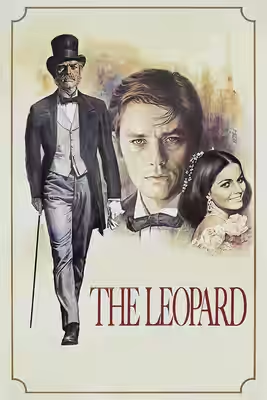
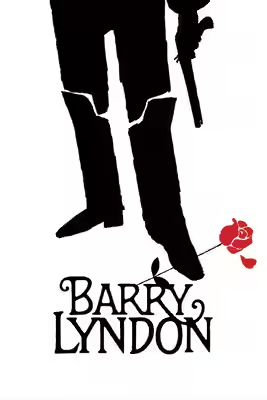
After The Last Emperor, try The Leopard (1963, Fi1m 88): An ageing aristocrat watches political change with more understanding than influence. Then Raise the Red Lantern (1991, Fi1m 91): Ceremony and household rank make private unhappiness everyone’s business; and Barry Lyndon (1975, Fi1m 85): Beautiful rooms offer scant protection against vanity, ambition and terrible judgement.

Cast

Awards

Academy Awards, 1988

Won
Best Cinematography
Won
Best Costume Design
Won
Best Director
Won
Best Film Editing
Won
Best Original Score
Won
Best Picture
Won
Best Production Design
Won
Best Sound
Won
Best Writing, Adapted Screenplay

European Film Academy Special Jury Award, 1988

Won
European Film Academy Special Jury Award

If you liked this, try…

  1. The Leopard (1963, Fi1m 88)An ageing aristocrat watches political change with more understanding than influence.

  2. Raise the Red Lantern (1991, Fi1m 91)Ceremony and household rank make private unhappiness everyone’s business.

  3. Barry Lyndon (1975, Fi1m 85)Beautiful rooms offer scant protection against vanity, ambition and terrible judgement.

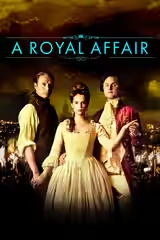
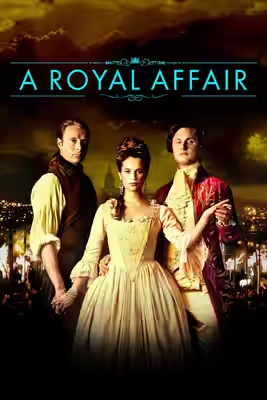
  4. A Royal Affair (2012, Fi1m 70)Court etiquette leaves little room for either political reform or private desire.

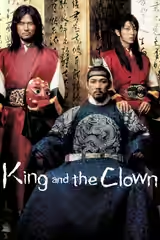
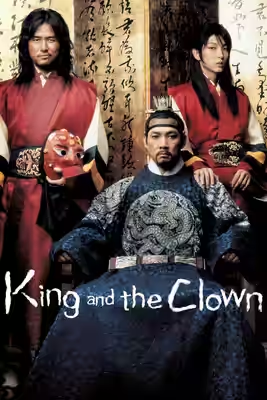
  5. The King and the Clown (2005) · not reviewed yetCourt entertainers discover how dangerous a ruler’s need for affection can become.

Free account

Know what to watch tonight

Two lists that know where things are streaming, collections you can share, your own score beside ours, and Discover that remembers what you have seen.

  • Want to see, sorted by what is streaming now
  • Seen, with your score out of ten
  • No adverts, ever