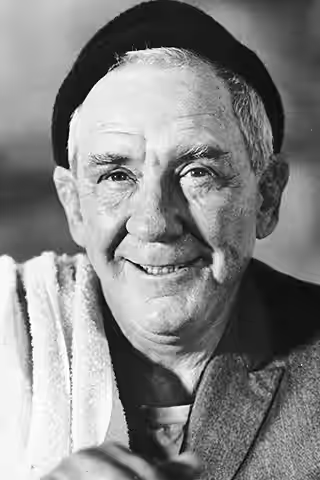
Burgess Meredith spent sixty years playing gruff, worn-down men, and the rasp did most of the work. It made him a fine trainer in Rocky and an unexpectedly happy bird in Batman, and he is good company in both.
Fi1m perspective
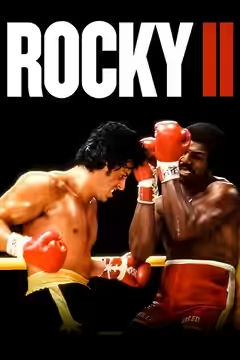
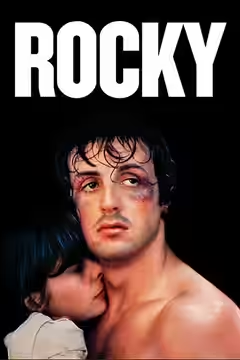
Listen to Burgess Meredith before you look at him. The voice is a rasp with the bottom scraped out of it, and it did his work for him for sixty years: the gruff trainer, the irascible boss, the world-weary man who has seen your sort before and was not impressed the first time. In Rocky (1976) Mickey Goldmill runs a gym he has grown tired of and barks at a fighter he has already written off, and the film picks up a little whenever he is in it. The script does not give him much room. He does not waste an inch of what it gives him.
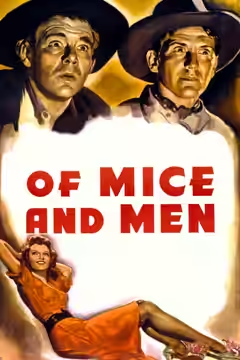
He had been at it a long time by then. A Broadway debut in Romeo and Juliet in 1930, a success in Winterset in 1935 and its film in 1936, George Milton in Of Mice and Men (1939), the war correspondent Ernie Pyle in The Story of G.I. Joe (1945): the young Meredith was a serious stage actor who took to the camera by making his performances smaller. Then television found him. Four episodes of The Twilight Zone between 1959 and 1963, among them Henry Bemis in Time Enough at Last, and six films for Otto Preminger along the way. And then, in 1966, a cigarette, a waddle and a quack.
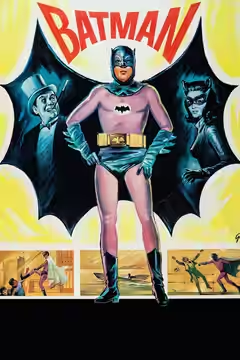
The Penguin is the part he worried might cost him his standing as a dramatic actor, and it is the part most people can still do an impression of. Twenty-one episodes of Batman between 1966 and 1968, plus the film that year, in which he quacks and waddles and plainly enjoys himself. The quack started as a cough: the character's cigarette smoke got to him, and he kept the noise. That is the man in miniature. Handed something ridiculous, he found the one true thing in it and built the performance out of that.
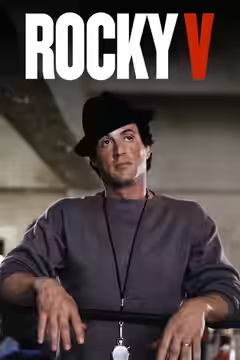
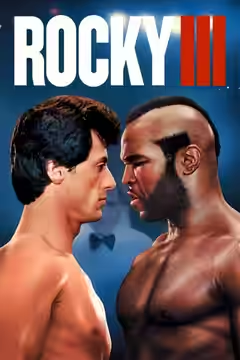
What got to us in Rocky was not the boxing but a moment in the gym where Mickey talks to a man he has given up on, contempt and something close to grief in the same breath, the second only audible if you listen for it. Meredith called Mickey one of his favourite characters: "I’ve seen a lot of men like him in my time—beaten people who have been worn down by life." The performance is exactly that. He played the trainer again through Rocky III (1982), with a brief return in Rocky V (1990).
The limit is in the casting, not the actor. Directors heard the rasp and hired the rasp, and the quieter work, the broken-down vaudevillian Harry Greener in The Day of the Locust (1975) for one, is less often mentioned than the gym and the quack. Watch Rocky first and Batman after it, and see if you can convince yourself it is the same voice. It is.
Biography
Burgess Meredith was an American actor whose career spanned more than six decades across stage, film, television and radio. He trained with Eva Le Gallienne's Civic Repertory Company in New York from 1929 and appeared on Broadway in the 1930s, including in Maxwell Anderson's Winterset.
He is known for his portrayal of boxing trainer Mickey Goldmill in the first three Rocky films (1976, 1979 and 1982), The Penguin in the 1960s television series Batman, and Grandpa Gustafson in Grumpy Old Men (1993). Other notable roles include appearances in The Twilight Zone and Clash of the Titans (1981).
Meredith received Academy Award nominations for Best Supporting Actor for The Day of the Locust (1975) and Rocky (1976). He won a Primetime Emmy Award in 1977 and was the first male actor to win the Saturn Award for Best Supporting Actor twice. He also received a Special Tony Award in 1960 for directing A Thurber Carnival.