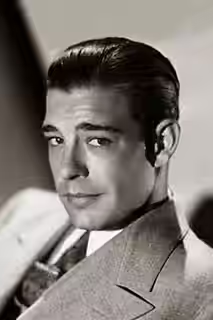
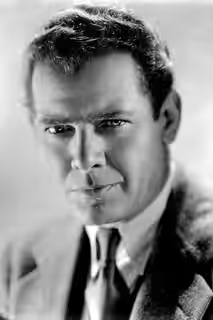
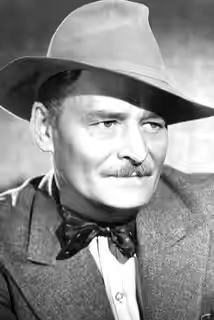
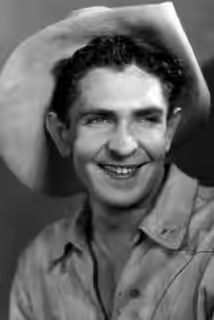
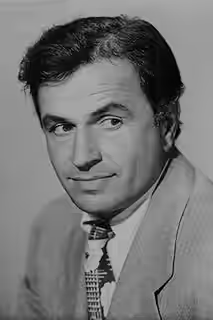
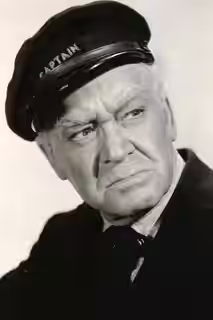
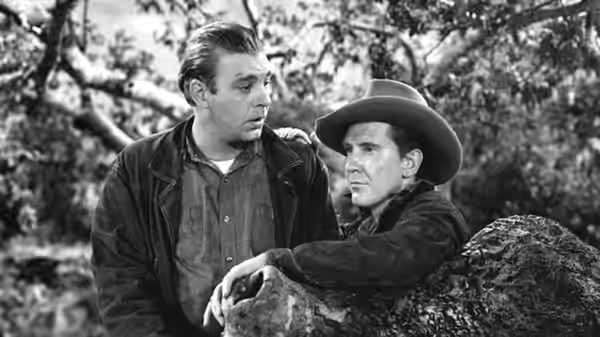
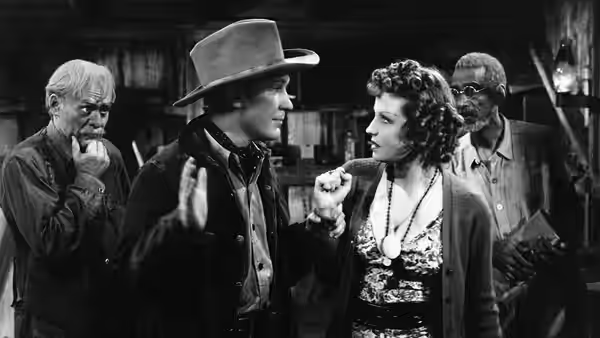
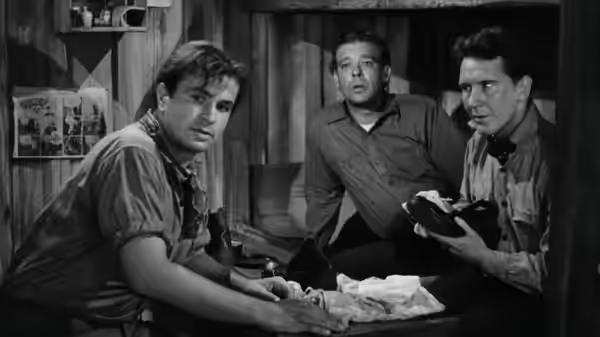
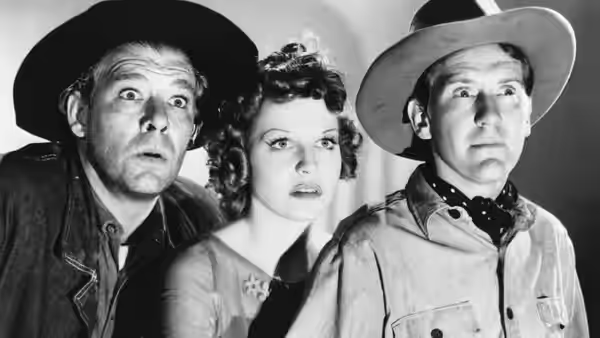
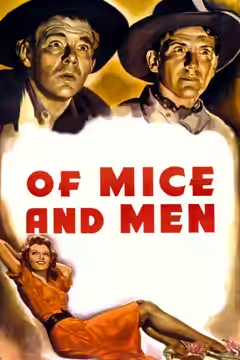
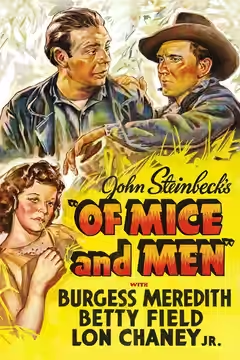
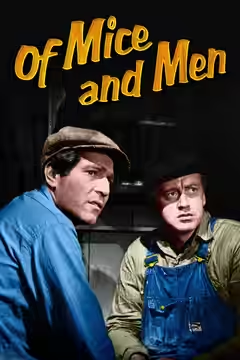
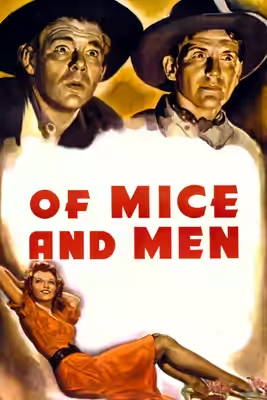
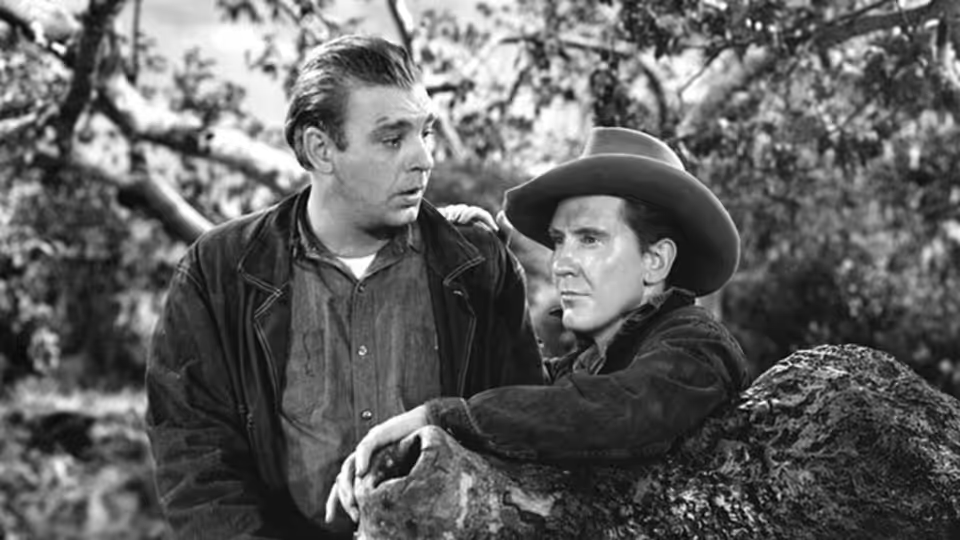
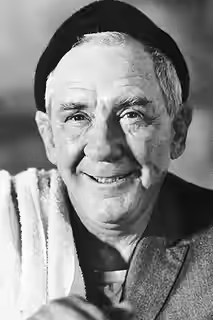
George Milton (Burgess Meredith) with arm around Lennie Small (Lon Chaney Jr.) outdoors
Film review

Of Mice and Men

1939 · Directed by Lewis Milestone · 1h 46m · MPA PG

In a sentenceA farm nobody has seen, described so often the words have worn smooth

California, in the Depression. George Milton (Burgess Meredith) and Lennie Small (Lon Chaney Jr.) are ranch hands on the run from trouble in the last town, jumping a freight with a bindle each and nothing else. George is small and quick and does the talking. Lennie is enormous, slow and gentle, and cannot keep his hands off anything soft, which is how the trouble started. They sign on at a barley ranch run by Jackson (Oscar O’Shea), whose son Curley (Bob Steele) picks fights with big men, and whose new wife Mae (Betty Field) wanders into the bunkhouse looking for someone to talk to. Candy (Roman Bohnen), the old swamper with the old dog, listens while George tells Lennie yet again about the little place they will have one day, with rabbits for Lennie to tend.

Fi1m review

Lewis Milestone films Steinbeck’s novel without fuss, in daylight, with a score by Aaron Copland that knows when to stop. Burgess Meredith and Lon Chaney Jr. are the reason to watch; the scenes added for Betty Field’s Mae are the reason it is not quite perfect.

John Steinbeck published Of Mice and Men in 1937 and it was on Broadway the same year. Lewis Milestone, who had made All Quiet on the Western Front in 1930 and knew how to photograph men waiting for something bad, filmed it two years later from a screenplay by Eugene Solow. Two migrant workers, one clever and one not, want a farm of their own. That is the whole story, and the film knows it, and it does not pad. We think it is one of the best American films of its decade about poor people, and we say that as people who came to it braced for a school-set text and left wrung out.

Burgess Meredith plays George as a man who has spent so long thinking for two that he has forgotten how to relax. He is sharp with Lennie, and sorry about it a moment later, and sharp again. Meredith does the sorry part with his shoulders rather than his face. Lon Chaney Jr. has the harder job, because Lennie is the sort of part that invites an actor to gurn, and Chaney mostly does not. He plays Lennie’s slowness as concentration: the huge man is always trying to remember something, and you can see the effort cost him.

The scene that got us is the one everybody knows. Lennie asks George to tell about the place they will have, and George, tired, tells it, and Lennie mouths the words along with him because he has heard it so many times. We have read it and seen it acted before and it still moved us more than we expected, and the reason is Roman Bohnen. Milestone keeps Candy in the shot, an old man with one hand and a dying dog, listening to two strangers describe a future, and Bohnen’s face does the arithmetic of whether there might be room in it for him. Nobody underlines it. The scene ends and the men go to bed.

Norbert Brodine shoots the ranch in hard daylight, with the bunkhouse lit from its one window so the men move in and out of a slab of light. He does not soften the fields. The threshing sequence, teams of horses hauling barley wagons while Copland’s score comes in over them in wide, open chords, is the one place the film allows itself to be handsome, and it earns it by showing us how the work is actually done. Copland’s music arrives late, sits under scenes rather than on top of them, and is absent from the bunkhouse almost entirely. Bert Jordan cuts the talk scenes slowly, holding on whoever is listening, which is the right instinct for a story where the important thing is usually what a man does not say.

The ranch is well populated. Charles Bickford’s Slim is the one man there with any authority, and Bickford plays it as quietness rather than size. Bob Steele’s Curley is small, mean and frightened of it, and Leigh Whipper’s Crooks, the black stable hand kept out of the bunkhouse and in the harness room, is given real dignity in the scenes he gets. Granville Bates’s Carlson has an old dog to complain about and complains about it, and we will say nothing further about the dog.

The weak strand is Mae. In the book she has no name and not many scenes. Solow gives her both, and adds a domestic life with Curley that the film keeps returning to as though it were the story. Betty Field is good, tense and lonely and wearing the wrong shoes for a farm, but every minute spent in her kitchen is a minute away from the two men, and the film sags a little each time. The tagline sold the picture as hers, which tells you what the studio thought it had. It was wrong. Chaney, too, overdoes it once or twice, mouth open and arms dangling, and the film’s view of what these men need, a bit of land and to be left alone, is simpler than the men are.

The second half goes where the book goes, and we will not describe it, except to say that Milestone does not flinch and does not linger either. At 106 minutes it is over before you have quite got comfortable, which is as it should be. Watch it with someone who has only read it. They will spend the first hour waiting for the film to fail the book, and they will stop waiting somewhere around the rabbits.
Critical consensus AI synthesised

82
Positive
4
Mixed
0
Negative
0
The New Yorker
10 February 1940 · John C. Mosher
90*

The review highlights how Milestone improved upon the stage production with a swift pace and direct force, and praises the casting, especially Burgess Meredith's portrayal of George that conveys the theme without words.

Read the full review →
Variety
31 December 1938 · Variety Staff
90*

The critic praises the skillful direction by Lewis Milestone that retains the drama of the story, and commends the excellent casting, particularly Burgess Meredith as George and Lon Chaney Jr. as Lennie.

Read the full review →
The Times
7 October 2006 · festival review · Burhan Wazir
80*

The critic highlights Milestone's 1939 adaptation as one of the director's key works that elevated him in Hollywood, praising its sympathetic handling of Steinbeck's story, strong lead performances by Lon Chaney Jr. and Burgess Meredith, and its elegant simplicity with the first film score by Aaron Copland.

Read the full review →
Time Out
10 September 2012 · TM
70*

The critic praises this as an impressive adaptation of Steinbeck's novel that matches the harsh lyricism of The Grapes of Wrath in evoking the Depression era and the dreams of migrant farmworkers. Terrific performances by Lon Chaney Jr, Betty Field and Burgess Meredith are singled out as masking some of the story's naive social philosophy.

Read the full review →

Straight answers AI written, from our review

Is Of Mice and Men worth watching?
Of Mice and Men is worth watching for anyone who can sit with a slow, plain drama about two poor men and a farm they will never have, and we scored it 84. Burgess Meredith and Lon Chaney Jr. are the reason to see it. The added scenes for Betty Field's Mae slacken it, and nothing else does.
How long is Of Mice and Men, and what is it rated?
Of Mice and Men runs 1h 46m and is rated PG by the MPA in the US. It is a drama film.
Where can I watch Of Mice and Men in the US?
Of Mice and Men is streaming on HBO Max, Tubi, Amazon Prime Video and The Roku Channel in the US, and it is also available to rent from Amazon Prime Video from $0.99. It leaves HBO Max on 30 September. Availability is checked daily; the links above go straight to each service.
How does Of Mice and Men compare to The Grapes of Wrath?
Of Mice and Men is the smaller and tighter of the two Steinbeck films, a story of two men in a bunkhouse, where The Grapes of Wrath follows a whole family across the country and is the grander picture. Ford's film is lit by lamp and shot at night; Milestone shoots his ranch in hard daylight. We recommend both, and the shorter one is the easier place to begin.
What should I watch after Of Mice and Men?
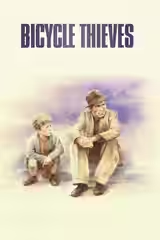
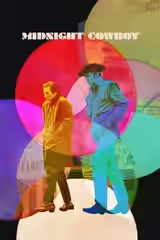
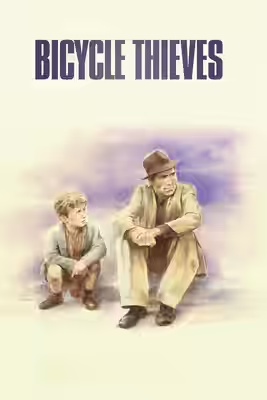
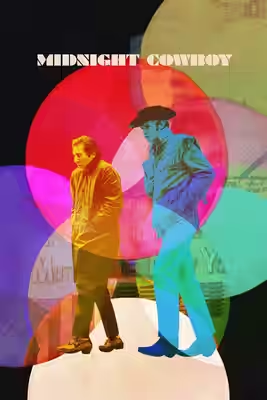
After Of Mice and Men, try The Grapes of Wrath (1940, Fi1m 86): Steinbeck again, Ford directing, the same dust and the same stubborn people. Then Bicycle Thieves (1948, Fi1m 93): A father, a son and a city that has no room for either of them; and Midnight Cowboy (1969, Fi1m 85): Two men, one looking after the other, and a dream of somewhere warmer.

Cast

Awards

Academy Awards, 1940

Nominated
Best Original Score
Nominated
Best Picture
Nominated
Best Sound

If you liked this, try…

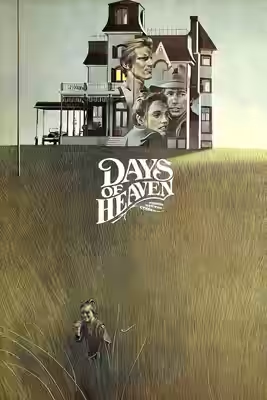
  1. The Grapes of Wrath (1940, Fi1m 86)Steinbeck again, Ford directing, the same dust and the same stubborn people.

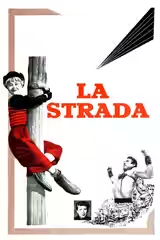
  2. La Strada (1954) · not reviewed yetA strongman and a simple girl on the road; Fellini’s version of the same ache.

  3. Bicycle Thieves (1948, Fi1m 93)A father, a son and a city that has no room for either of them.

  4. Midnight Cowboy (1969, Fi1m 85)Two men, one looking after the other, and a dream of somewhere warmer.

  5. Days of Heaven (1978, Fi1m 85)Malick’s harvest hands in the Texas panhandle; the same work, and far more sky.

Free account

Know what to watch tonight

Two lists that know where things are streaming, collections you can share, your own score beside ours, and Discover that remembers what you have seen.

  • Want to see, sorted by what is streaming now
  • Seen, with your score out of ten
  • No adverts, ever