Chris Renaud’s family comedies work best when the visual mischief grows out of a character’s vanity. We enjoy his comic timing, but the return to Gru finds him settling for sketches where a story should be.
Fi1m perspective
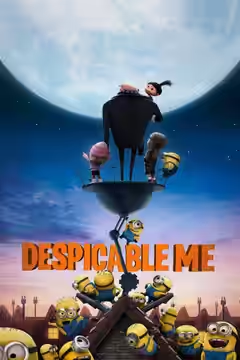
Gru’s determination to be taken seriously is the useful starting point of Despicable Me (2010), directed by Chris Renaud and Pierre Coffin. Steve Carell’s voice work makes the villain good company without requiring him to be pleasant from the start. We were amused by his self-importance well before we were moved by him. The gadgets and comic timing do much of the work, though the predictable story sometimes presses too hard for affection. Renaud is good at this sort of family comedy when he lets an awkward character remain awkward.
The Minions, which Renaud co-created with Coffin, make his taste for visual mischief plain. Yellow, cylindrical and largely non-verbal, they suit a director whose stylised character designs have little interest in looking real. Their misbehaviour gives the first film much of its fun. Renaud’s willingness to let comic performers riff is another useful habit: the voices need room to be funny, too.
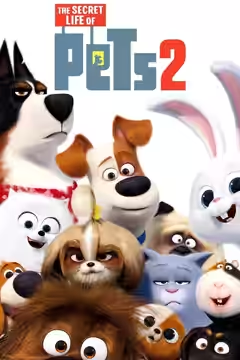
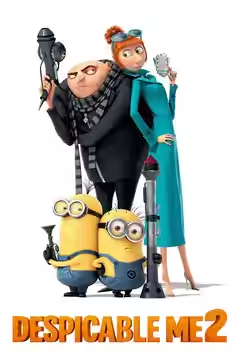
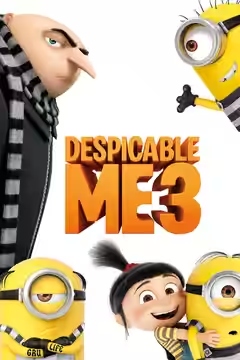
After the first Gru film, Renaud directed Dr. Seuss' The Lorax (2012), his first solo feature, and reunited with Coffin for Despicable Me 2 (2013). The Secret Life of Pets (2016), about pets left alone by their owners, led to a sequel he also directed in 2019. The subjects changed, but family life and outsiders adjusting to unfamiliar company remained recurring concerns.
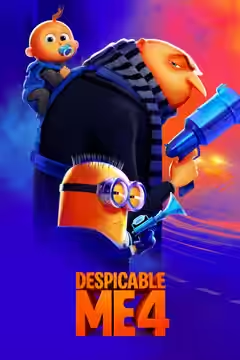
His return to Gru with Patrick Delage on Despicable Me 4 (2024) exposes the limits of that approach. Gru is now a father of four, working for the agency that once pursued him, and Renaud struggles to find him anything else to want. The script by Mike White and Ken Daurio sends the family into suburban witness protection. That ought to give the characters something to adjust to, but the film keeps moving between sketches before any one story can develop.
There are still laughs in the fourth film, even if Will Ferrell’s shouting as Maxime Le Mal is only intermittently funny. Renaud can get a joke out of an absurd character, but sustaining interest across a feature asks more of him. Start with the original Despicable Me, and do not feel obliged to turn a family evening into a franchise commitment.
Biography
Chris Renaud is an American filmmaker, designer, storyboard artist and voice actor. Born in December 1966 in Baltimore, Maryland, he graduated from Syracuse University with a degree in illustration. He began his career as a graphic designer in sports entertainment, creating logos and mascots, before working on comics for Marvel and DC. He later joined Blue Sky Studios as a story artist on films including Ice Age: The Meltdown (2006) and Horton Hears a Who! (2008).
Renaud moved to Illumination, where he co-directed Despicable Me (2010) and Despicable Me 2 (2013) with Pierre Coffin, and directed Dr. Seuss' The Lorax (2012), The Secret Life of Pets (2016) and its 2019 sequel, and Despicable Me 4 (2024). He also voiced characters including Principal Übelschlecht in the latter. He received an Academy Award nomination for the 2006 short No Time for Nuts.