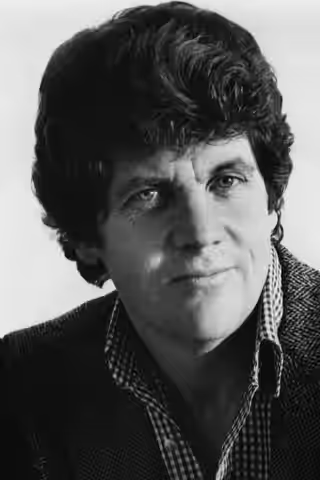
Colin Higgins wrote one film that people still quote, about a boy who loves funerals and the old woman who loves him, and then spent a decade making comedies too polite to hurt anyone. The first was worth it; the last was not.
Fi1m perspective
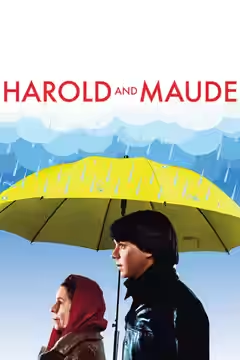
A death-obsessed teenager meets an elderly funeral enthusiast and the two of them fall in love, and the script wants us to know that everyone who finds this odd is the one with the problem. That is Colin Higgins in one sentence. He liked outsiders, he liked pairs who had no business being together, and he liked telling the respectable characters that they had failed at life. Harold and Maude (1971) is the film that made his name, and it is still funny and still affecting, and it still stops every so often to explain why we should approve.
He wrote it as his thesis at UCLA and wanted to direct it. Paramount gave it to Hal Ashby instead, and Higgins co-produced. Ashby was the right choice: he took the couple seriously without pretending they were sensible, and Bud Cort and Ruth Gordon kept the romance believable while the writing was busy dividing the world into people who understand freedom and people who need a lesson. It moved us more than we expected, and it did so in spite of the script rather than because of it, because whenever Higgins pauses to admire Maude the film sags, and whenever Cort and Gordon are simply in a room together it does not.
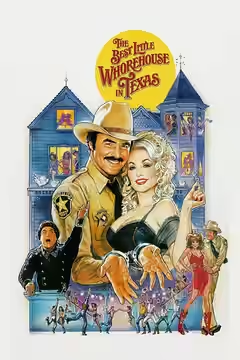
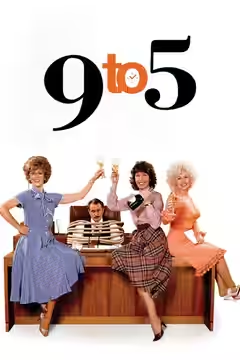
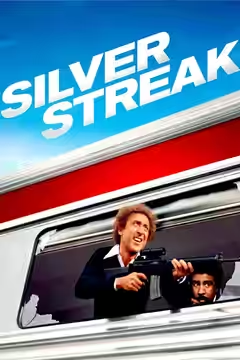
Silver Streak (1976), written for Arthur Hiller, is a comedy-thriller with Hitchcock in its bones, and it got him behind the camera. Foul Play (1978) was his first film as director, another mistaken-identity thriller with jokes, and some found it ran out of ideas after a promising start. 9 to 5 (1980) put Dolly Parton in an office and gave the secretaries the revenge; it knew exactly who it was angry with. Then came The Best Little Whorehouse in Texas (1982), his last feature, written with Larry L. King and Peter Masterson, and the anger had gone.
It is a film about a brothel with nothing in it you could not show a maiden aunt. Nobody is seen paying and nobody leaves unhappy, and Dom DeLuise plays the television crusader as a clown, which lets the town off the hook a comedy about hypocrisy ought to keep it on. Parton is a pleasure and Charles Durning's one number is worth the evening on its own, but the writer who once made an audience laugh at a funeral could no longer bring himself to make one uncomfortable in a brothel.
Higgins once said of Silver Streak that had he directed it himself, "I would have slashed away." As it turned out, the more control he got the less he cut. See Harold and Maude, and forgive it the sermon; see the other one for Durning, and do not expect it to mean anything.
Biography
Colin Higgins (28 July 1941 – 5 August 1988) was an Australian-American screenwriter, director and producer. Born in Nouméa, New Caledonia, to an Australian mother and American father, he studied creative writing at Stanford University before completing an MFA in screenwriting at UCLA. His master's thesis formed the basis of the screenplay for the 1971 film Harold and Maude, which he also produced.
Higgins wrote the screenplays for Silver Streak (1976) and Foul Play (1978), the latter marking his directorial debut. He went on to direct and co-write Nine to Five (1980) and direct The Best Little Whorehouse in Texas (1982). He also adapted Harold and Maude for the stage. Higgins died in Los Angeles from an AIDS-related illness.