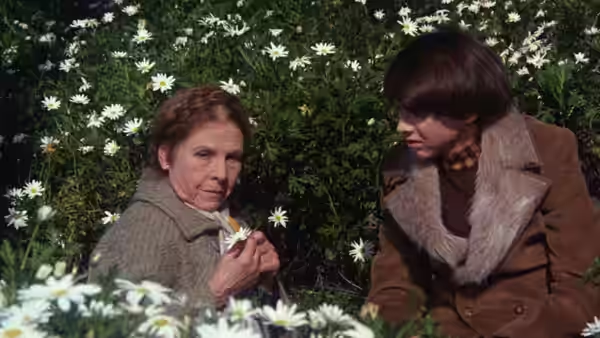
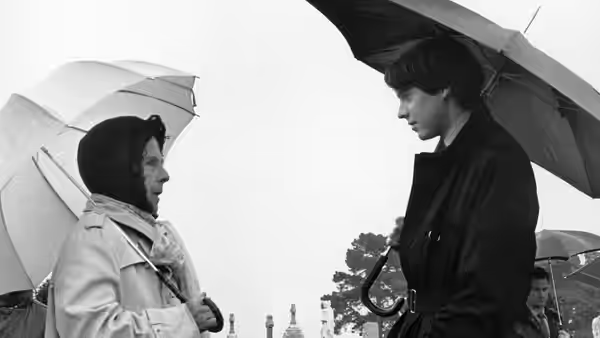
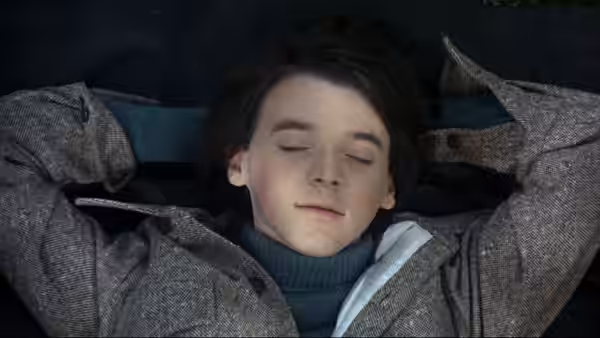
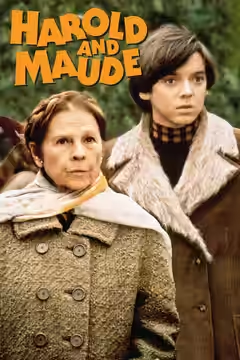
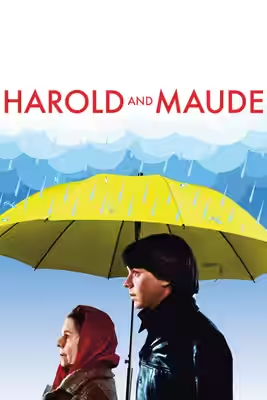
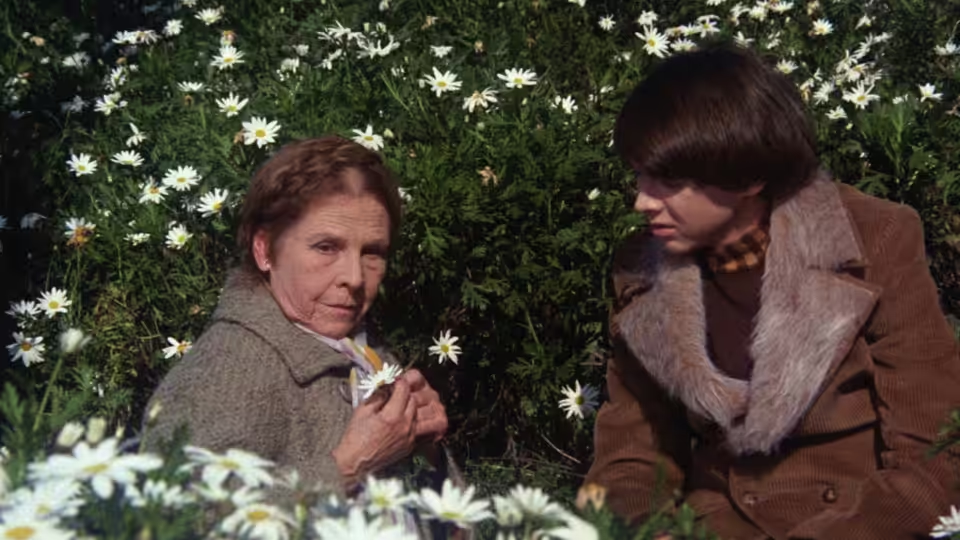
Maude (Ruth Gordon) and Harold (Bud Cort) sit among white daisies holding a flower
Film review

Harold and Maude

1971 · Directed by Hal Ashby · 1h 32m · MPA PG

In a sentenceA funeral is apparently a perfectly sensible place to meet someone who might improve your social life

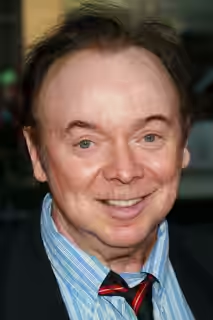
Harold (Bud Cort) is a teenager preoccupied with death, staging suicides and attending funerals. Maude (Ruth Gordon), an elderly fellow funeralgoer, has more enthusiasm for being alive. Harold’s withdrawal puts him at odds with the respectability represented by Mrs. Chasen (Vivian Pickles). He wants little to do with the life expected of him; Maude encourages him to find something he might enjoy. As they get to know one another, their shared pastime offers Harold an escape from his familiar routines and a reason to seek somebody else’s company.

Plays from YouTube when you press play; nothing loads from them until then.

Fi1m review

Hal Ashby’s Harold and Maude makes its morbid courtship funny and unexpectedly touching. Bud Cort and Ruth Gordon keep the romance believable, even when the script grows too pleased with its own disregard for convention.

Harold and Maude is a funny, affecting romance with a weakness for telling us how to live. Hal Ashby takes a death-obsessed teenager and an elderly funeral enthusiast seriously enough to make their attachment matter, without asking us to regard either as entirely sensible. The risk is that every eccentricity will arrive already labelled as wisdom. Colin Higgins’s screenplay sometimes does precisely that, but its central pair are too engaging for the sermon to take over.

The opening’s staged suicides establish a difficult kind of comedy, with Harold’s private misery being offered up for public amusement. We laughed before we had quite decided whether we ought to, because Bud Cort gives the performances of death such painstaking seriousness. He makes Harold’s strangeness seem practised, something the boy can control while the business of living defeats him. The repetition can dull the joke, but the actor keeps enough hurt visible to stop Harold becoming merely an elaborate nuisance.

Ruth Gordon makes Maude’s enthusiasm persuasive because she seems to enjoy Harold’s company, rather than merely spotting someone who needs improvement. Her attention gives him something to respond to, and his reserve prevents their scenes from becoming a contest in colourful behaviour. We were moved by the growing ease between them: Bud Cort allows Harold to seem receptive without abruptly making him a different person. In a romance built around an age difference, that gradual adjustment makes their affection believable.

John A. Alonzo’s cinematography gives the macabre comedy a useful stillness; Harold’s behaviour is disturbing enough without the camera insisting on it. Editors Edward Warschilka and William A. Sawyer let the awkwardness hang around a joke, rather than hurrying us towards the reassurance of another one. Michael D. Haller’s production design is similarly restrained about competing with the actors. The surroundings help the film sustain its fairytale tone without making every scene feel like an exhibition of eccentric taste.

The weakness is how readily the writing divides people into those who understand freedom and those who require a lesson. Vivian Pickles gives Mrs. Chasen a comic firmness that helps, but Colin Higgins is much more curious about Harold and Maude than about anyone who might object to them. As satire, this can feel too easy: respectable behaviour becomes sufficient evidence of emotional failure. The supporting characters could have been allowed stronger objections without making the couple any less sympathetic.

The songs bring warmth without making the death jokes harmless, and their directness suits a film so willing to say what it believes. Sometimes the invitation to enjoy being alive becomes insistent, especially when Maude begins to resemble a treatment prescribed for Harold. This is a familiar danger in romances built around someone teaching someone else to live: the teacher can be denied much life of their own. Ruth Gordon’s pleasure in the part keeps that danger from swallowing the relationship.

At 92 minutes, the film has time to indulge its odd couple without asking us to adopt their entire philosophy. We recommend it with one reservation: a low tolerance for compulsory cheerfulness will be tested. The funeral humour is easier to take than some of the life advice.

Critical consensus AI synthesised

70
Positive
9
Mixed
2
Negative
2

Most critics respond warmly to Harold and Maude, praising its mixture of black comedy, eccentric romance and optimism about life. The strongest notices find genuine tenderness in the relationship between Bud Cort and Ruth Gordon, whose chemistry makes the characters more than vehicles for a message about nonconformity. Hal Ashby’s handling of macabre humour and human connection draws repeated praise, while the Cat Stevens soundtrack is another point of enthusiasm.

The spread is wide, however, and the same eccentricity strikes some critics as forced or overly cute. More qualified reviews question the central relationship’s depth and find Ashby’s loose style uneven. The two sharply negative notices both come from 1971: The New York Times finds the emphasis on death at odds with the film’s affirmation of life. Variety objects to the juvenile, overworked black humour, though it acknowledges some successful gags and supporting performances.

Slant Magazine
11 June 2012 · Jordan Cronk
90*

The review celebrates the film as an indelible fable of love and death, highlighting its sincere exploration of human connection, the transcendent performances of Cort and Gordon, and the perfect Cat Stevens soundtrack.

Read the full review →
Little White Lies
20 December 2021 · Zoe Kurland
85*

The critic praises the film as the story of a Holocaust survivor and her philosophy of living lightly and in the present rather than clinging to loss. It singles out the brief reveal of Maude's concentration camp tattoo as a key symbolic moment that deepens the unconventional romance.

Read the full review →
The Guardian
1 December 2021 · Elizabeth Quinn
85*

The critic praises the film's exuberant mix of black humor and optimism as a quintessential 1970s work by Hal Ashby. They single out its humanistic approach and the way it juxtaposes macabre elements with an undercurrent of redemption.

Read the full review →
The AV Club
18 April 2008 · Scott Tobias
80*

The critic finds the film mostly terrific and the origin of modern indie quirk, praising the endearing chemistry between Bud Cort and Ruth Gordon as they transcend symbolic roles in a story of life-affirming eccentricity.

Read the full review →
The Telegraph
12 February 2026 · Tim Robey
80*

The critic describes the film as an irresistibly odd cultural outlier and a cult hit, noting its loose, shaggy 1970s counter-culture style under Hal Ashby. They highlight the macabre opening and the unlikely romance between the leads.

Read the full review →
Time Out
9 January 2015 · PH
75*

The review calls the film a successful blend of whimsy, absurdity, tough sentimentality and black comedy. It highlights the central story of the death-obsessed teenager liberated by his friendship with the elderly funeral enthusiast as most effective when it maintains its insane fairytale tone.

Read the full review →

Straight answers AI written, from our review

Is Harold and Maude worth watching?
Harold and Maude is worth watching for anyone who can take a romance that begins at funerals, and we scored it 81. Bud Cort and Ruth Gordon make the attachment between a death-obsessed teenager and an elderly enthusiast for living believable and often moving. Our reservation is that the script sometimes lectures, and a low tolerance for compulsory cheerfulness will be tested.
How long is Harold and Maude, and what is it rated?
Harold and Maude runs 1h 32m and is rated PG by the MPA in the US. It is a comedy and drama film.
Where can I watch Harold and Maude in the US?
Harold and Maude is available to rent from Apple TV from $4.99. Availability is checked daily; the links above go straight to each service.
How violent or frightening is Harold and Maude, and is it suitable for children?
Harold and Maude is a 15 certificate in the UK, and its difficulty is tone rather than gore: Harold repeatedly stages his own suicide for comic effect, and the film treats death as a running joke. There is little to frighten anyone, but the subject matter makes it unsuitable for younger children. Teenagers who find dark humour more funny than distressing will manage it well enough.
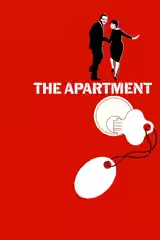
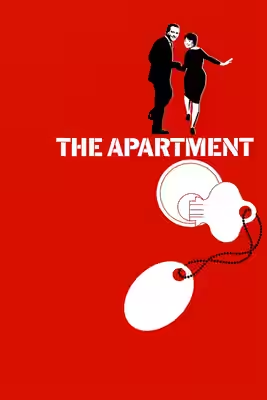
How does Harold and Maude compare to The Apartment?
Harold and Maude and The Apartment are both unlikely romances that let their jokes make room for loneliness, but the earlier film is the more disciplined of the two. Billy Wilder is patient with people who ought to know better, where Hal Ashby tends to tell us how to live. Choose The Apartment for sadness handled lightly, and Harold and Maude for morbid comedy with a warm heart.
What should I watch after Harold and Maude?
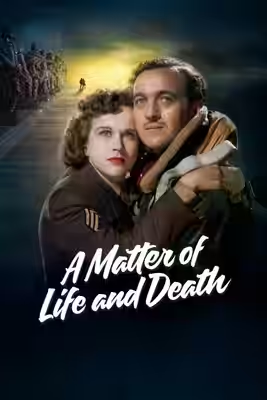
After Harold and Maude, try The Apartment (1960, Fi1m 91): Another unlikely romance whose jokes make room for loneliness without dwelling on it. Then A Matter of Life and Death (1946, Fi1m 92): Death, bureaucracy and romance, handled with wit and an unembarrassed belief in love; and The Lunchbox (2013, Fi1m 75): A quieter connection between lonely people, with small kindnesses carrying the romantic weight.

Cast

If you liked this, try…

  1. The Apartment (1960, Fi1m 91)Another unlikely romance whose jokes make room for loneliness without dwelling on it.

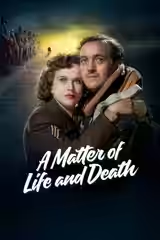
  2. A Matter of Life and Death (1946, Fi1m 92)Death, bureaucracy and romance, handled with wit and an unembarrassed belief in love.

  3. The Lunchbox (2013, Fi1m 75)A quieter connection between lonely people, with small kindnesses carrying the romantic weight.

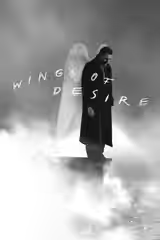
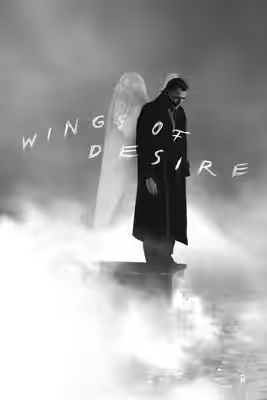
  4. Wings of Desire (1987, Fi1m 88)For more curiosity about being alive, with tenderness that survives the philosophical speeches.

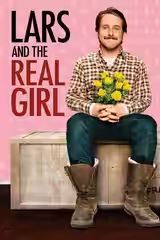
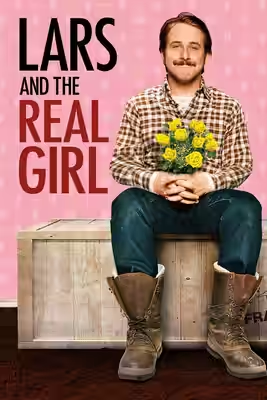
  5. Lars and the Real Girl (2007) · not reviewed yetAn eccentric outsider treated with patience, though the sweetness comes with fewer sharp edges.

Free account

Know what to watch tonight

Two lists that know where things are streaming, collections you can share, your own score beside ours, and Discover that remembers what you have seen.

  • Want to see, sorted by what is streaming now
  • Seen, with your score out of ten
  • No adverts, ever