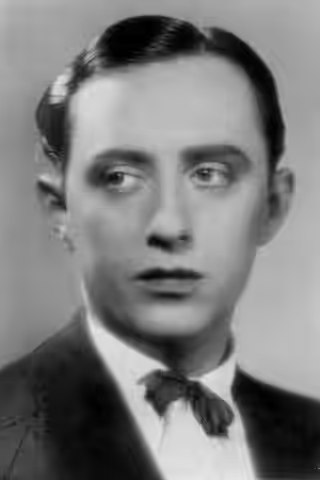
Curt Bois spent eighty years playing clerks, headwaiters and pickpockets, and made most of them worth remembering. Hollywood kept him busy and kept him small; Berlin, at the very end, gave him Homer, and that was the part that lasted.
Fi1m perspective
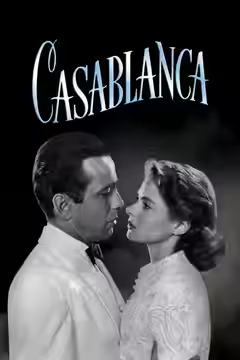
The pickpocket in Casablanca (1942) warns a pair of tourists that the town is full of vultures, and lifts a wallet while he says it. It is a scene of perhaps two minutes, and people who cannot name the actor can still describe the moment. That was the Bois trade: a neat man in a good suit, a little too pleased with himself, doing something quick with his hands while his face carried on being helpful. He had been doing it, in one form or another, since 1907, when he started as a child actor in Berlin, one of the first there were.
The career splits cleanly in three. There is the German stretch, silent shorts and then theatre under Max Reinhardt, with stage success in the twenties that included a Viennese Charley's Aunt. There is exile, from 1933–34: Broadway, then Hollywood from 1937, where he worked steadily until 1950 and was almost never given more than a corner of the frame. And there is the return to Germany in 1950, stage work in both halves of Berlin, at the Schiller Theater and the Theater des Westens, and a late run of film and television that ended with a last screen appearance in 1989.
The Hollywood corner is where most of us met him, and it shows both what he could do and what he was not allowed to. In Hold Back the Dawn (1941) he is Bonbois, the hotel manager, and he is funny in the early going; then the film turns its attention to Charles Boyer's conscience and Bois simply drops out of the picture, which is roughly what happened to him for thirteen years. Caught (1949), for Max Ophüls, gave him a larger part as a fixer with divided loyalties, and it is worth seeking out for that reason. Even back in Germany there was a reservation that his style was too refined for the broad post-war audience, which is another way of saying he did not push.
Then Wim Wenders cast him as Homer in Wings of Desire (1987), an old poet wandering a Berlin that has changed around him, and the miniaturist was finally allowed to be still. We were moved by him more than by the film's romance, which slows in the second half; the sight of that small, precise figure moving through Henri Alekan's roaming camera, unhurried and unnoticed, is the film's argument about ordinary lives made flesh. He was eighty-six.
Start with the wallet in Casablanca, because it takes two minutes. Then watch the Wenders and notice that the hands are still doing the work, only slower.
Biography
Curt Bois was a German actor. Born Kurt Boas in Berlin on 5 April 1901, he began acting as a child in 1907 and appeared in silent films, theatre, cabaret and sound pictures over a career spanning more than eighty years.
He is best known for his roles as the pickpocket in Casablanca (1942) and as the poet Homer in Wings of Desire (1987). In 1934 he left Germany for the United States, where he worked on Broadway and in Hollywood films, before returning to Germany in 1950. Bois won the European Film Award for Best Supporting Actor for Wings of Desire, his final feature film. He died in Berlin on 25 December 1991.