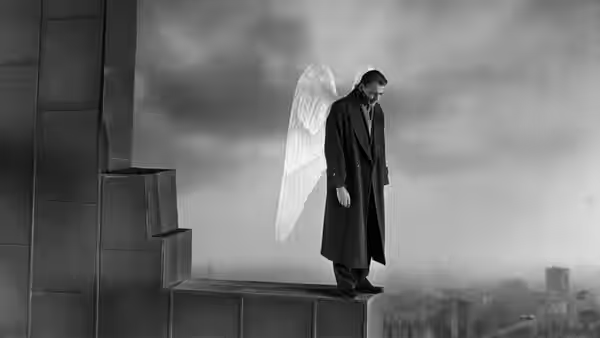
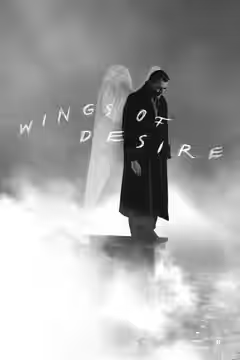
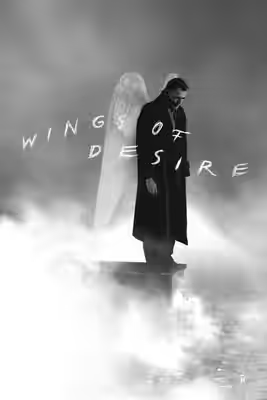
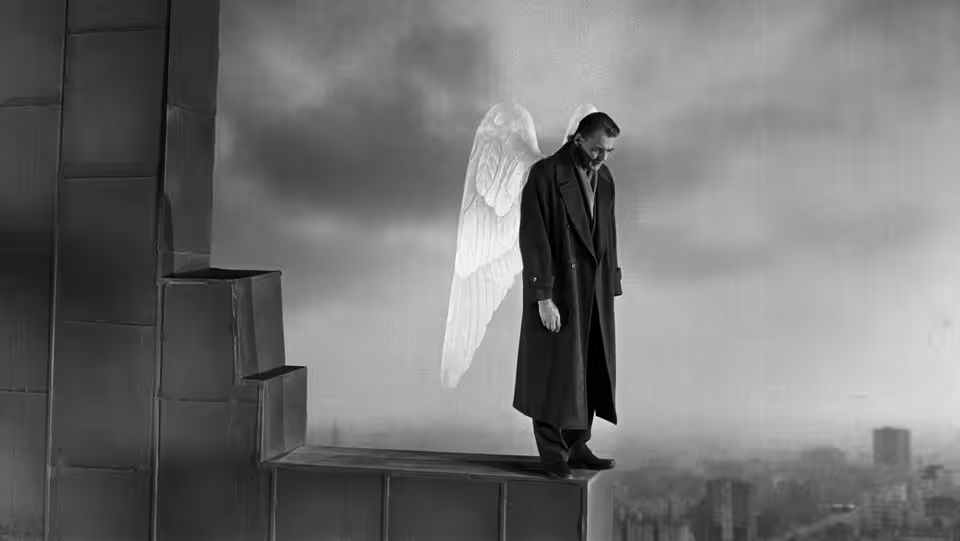
Damiel (Bruno Ganz) with angel wings stands on a ledge above the city
Film review

Wings of Desire

1987 · Directed by Wim Wenders · 2h 08m · MPA PG-13

In a sentenceBruno Ganz listens to everyone’s troubles with the patience the rest of us only claim to have

Angels move through Berlin, listening to the thoughts of the people around them and observing lives marked by loneliness. Damiel (Bruno Ganz) shares this watchful existence with Cassiel (Otto Sander), but begins to long for physical sensations and human company. Directed by Wim Wenders, the film follows the angels’ observations across the divided city, where ordinary human experiences become the focus of Damiel’s longing. The cast also includes Solveig Dommartin as Marion, Curt Bois as Homer and Peter Falk as the Filmstar.

Plays from YouTube when you press play; nothing loads from them until then.

Fi1m review

Wim Wenders’ Berlin fantasy makes a moving case for paying attention to ordinary lives. Bruno Ganz and Henri Alekan’s roaming camera keep it welcoming, even when the dialogue grows solemn and the romance slows.

Wings of Desire is a tender, absorbing fantasy that earns its seriousness, though the romance can become too solemn for its own good. Wim Wenders gives his angels time to listen to Berlin’s inhabitants, and asks us to do much the same. The premise offers plenty of scope for grand explanations of existence, but the film is most persuasive when attending to ordinary human wants. Much of the pleasure is in being allowed to look around without immediately having to ask what happens next.

Bruno Ganz’s Damiel longs for the physical sensations and companionship available to the people he observes. Ganz gives the longing a gentleness that keeps the character from becoming a spokesman for the screenplay. We were moved by him simply listening to the human thoughts around him. There is no impatience in that attention, and his willingness to stay with someone else’s troubles makes the film’s concern for lonely people feel convincing.

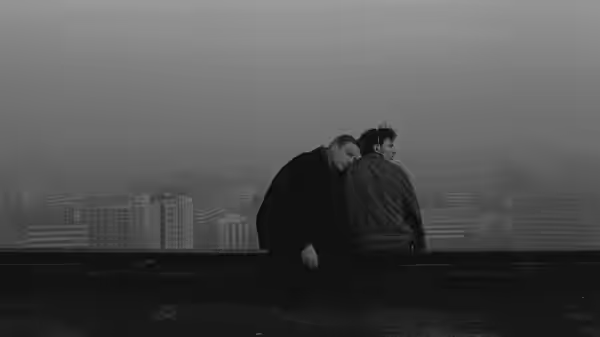
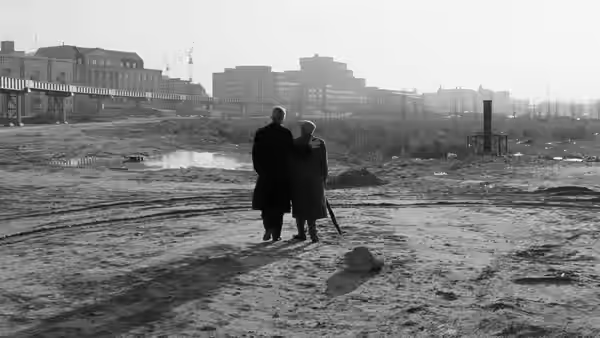
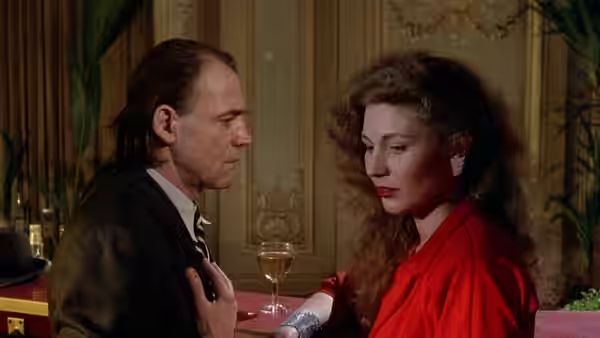
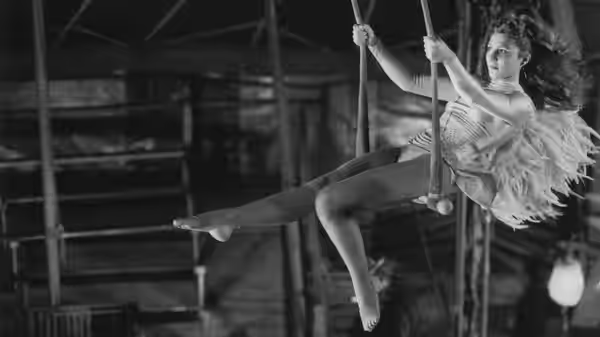
Henri Alekan’s cinematography does much of the explaining that the dialogue occasionally labours over. The gliding camera makes Berlin feel accessible to these observers, while the black-and-white images give familiar human activity a slight distance. We can see why Damiel would want to get closer. Colour belongs to the film’s range too, but it is the patient movement through the city that makes the angels’ presence seem plausible, giving us time to accept them among the people they observe.

Peter Przygodda’s editing gives the observations space, rather than pressing every encounter into service for the romance. That looseness allows the city’s separate lives to hold our interest, although some passages continue after we have understood what they offer. At 128 minutes, the film could lose a little of its deliberation without losing what makes it distinctive. Jürgen Knieper’s music helps hold these passages together, but also contributes to a solemnity that can make small thoughts sound weightier than they need to.

The screenplay is credited to Peter Handke, Wenders, Richard Reitinger and Bernard Eisenschitz, and sometimes gives the spoken thought too much work to do. There are passages whose careful phrasing makes us aware of the writing when we want to be closer to the speaker. Solveig Dommartin’s Marion is allowed too little of the ordinary give-and-take that might make the romance convincing throughout. Here the slow pace becomes an obstacle, because the dialogue keeps asking for attention without always rewarding it.

As fantasy, the film benefits from declining to turn its angels into a set of rules for us to learn. Damiel’s curiosity supplies enough reason to follow him, and the city supplies enough to look at. The mixture of comedy, romance and philosophical talk is less forbidding in practice than it sounds on paper, because Wenders remains interested in the people doing the thinking. We would happily accept the slower stretches for that generosity. Give it an evening when nobody needs the story to hurry.

Critical consensus AI synthesised

78
Positive
5
Mixed
0
Negative
1

Most critics respond warmly to Wings of Desire, with praise clustering around its images of divided Berlin and its attention to ordinary human pleasures. Henri Alekan’s cinematography is admired for making the angels’ observations feel hypnotic, while the poetic writing gives their longing for human connection a concrete emotional pull. The reviews also find hope in Ganz’s performance and in the film’s treatment of loneliness. Berlin itself emerges as a particular strength: a city whose streets and inhabitants reward this patient attention.

The disagreement concerns how much that patience asks of an audience. Supporters welcome a film led by mood and ideas rather than plot, though some stop short of unqualified praise. The New Yorker offers the clearest dissent, finding it sluggish, its romance halfhearted and its colour passages tawdry beside the black-and-white imagery. The spread is therefore wide, despite the strongly positive lean.

Financial Times
23 June 2022 · ★★★★★ · Danny Leigh
100

The passing of time has intensified the melancholy of this poignant 1987 study of angels living among us in a divided Berlin. The critic highlights its status as a bittersweet time capsule of metaphysics, love and great cinema.

Read the full review →
Empire
3 March 2006 · Ian Nathan
85*

The critic calls it an elusive, poetic vision of pre-Wall Berlin, an extraordinary haunting piece that prioritizes mood and ideas over plot. Loneliness pervades but the dialogue, Ganz's performance and Wenders' images offer hope.

Read the full review →
The Guardian
22 June 2022 · Peter Bradshaw
80*

Wim Wenders’ wistful romantic fantasy about angels in divided Berlin is re-released and reads as an elegiac city symphony. The critic praises its distinctive cinema of ideas and extraordinary sequences capturing the city.

Read the full review →
The New Yorker
23 May 1988 · Pauline Kael
40*

The critic sees visual fascination in the angels' observations of fragmented Berlin lives but finds the film sluggish and lacking animating force. She singles out the halfhearted romance and the contrast between black-and-white spirituality and tawdry color sections as weaknesses.

Read the full review →
Los Angeles Times
20 May 1988 · Sheila Benson

The critic calls it a magnificent film of sublime beauty and contagious optimism. She singles out the poetry rooted in the commonplace, such as the crunch of an apple or lacing a child's shoe, that soars to the miraculous.

Read the full review →
The New York Times
29 April 1988 · Janet Maslin

The critic finds loveliness in the film's conception of sad, sympathetic angels gliding through black-and-white Berlin. She singles out the angel Damiel's longing for corporeal sensation and human connection as the central impulse.

Read the full review →

Straight answers AI written, from our review

Is Wings of Desire worth watching?
Wings of Desire is worth watching for anyone happy to spend an unhurried evening with a tender Berlin fantasy, and we scored it 88. Bruno Ganz's patient, gentle Damiel and Henri Alekan's gliding black-and-white camera carry it, though the romance grows solemn and some passages linger past their point. Avoid it on a night when you need the story to hurry.

How long is Wings of Desire, and what is it rated?
Wings of Desire runs 2h 08m and is rated PG-13 by the MPA in the US. It is a drama and fantasy film.
Where can I watch Wings of Desire in the US?
Wings of Desire is streaming on HBO Max and Amazon Prime Video in the US, and it is also available to rent from Amazon Prime Video from $2.99. Availability is checked daily; the links above go straight to each service.
How does Wings of Desire compare to A Matter of Life and Death?
Wings of Desire is the quieter and more deliberate of the two celestial romances, while A Matter of Life and Death is funnier, warmer and easier to recommend to almost anyone. Both let their speeches labour the point at times. Choose Wenders if you want to drift through a city and listen; choose Powell and Pressburger for wit, colour and a romance that moves.
What should I watch after Wings of Desire?
After Wings of Desire, try A Matter of Life and Death (1946, Fi1m 92): Another celestial romance with room for wit, longing and human muddle. Then After Life (1998, Fi1m 85): A patient Japanese fantasy that finds wonder in ordinary remembered experiences; and A Ghost Story (2017, Fi1m 84): A quieter, sterner fantasy about watching human life without joining in.

Cast

Awards

European Film Academy Special Aspect Award for Best Camera, 1988

Nominated
European Film Academy Special Aspect Award for Best Camera

European Film Award for Best Director, 1988

Won
European Film Award for Best Director

European Film Award for Best Film, 1988

Nominated
European Film Award for Best Film

European Film Award for Best Supporting Actor, 1988

Won
European Film Award for Best Supporting Actor

International Submission to the Academy Awards, 1988

Nominated
International Submission to the Academy Awards

Kurd Lasswitz Award for Best Foreign Work, 1988

Won
Kurd Lasswitz Award for Best Foreign Work

If you liked this, try…

  1. A Matter of Life and Death (1946, Fi1m 92)Another celestial romance with room for wit, longing and human muddle.

  2. After Life (1998, Fi1m 85)A patient Japanese fantasy that finds wonder in ordinary remembered experiences.

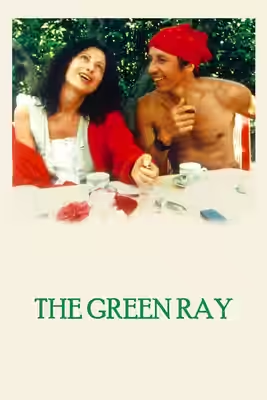
  3. The Green Ray (1986) · not reviewed yetLoneliness and the wish for connection, pursued through hesitant everyday encounters.

  4. A Ghost Story (2017, Fi1m 84)A quieter, sterner fantasy about watching human life without joining in.

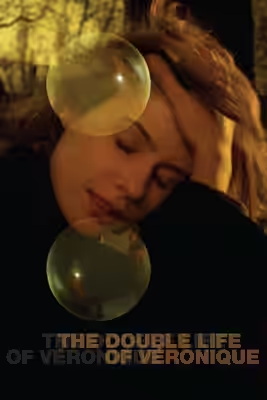
  5. The Double Life of Véronique (1991, Fi1m 86)A mysterious connection between lives, carried by faces, colour and music.

Free account

Know what to watch tonight

Two lists that know where things are streaming, collections you can share, your own score beside ours, and Discover that remembers what you have seen.

  • Want to see, sorted by what is streaming now
  • Seen, with your score out of ten
  • No adverts, ever