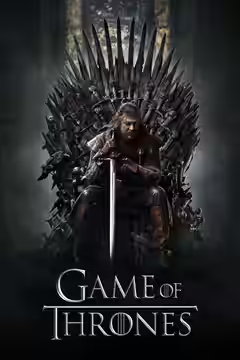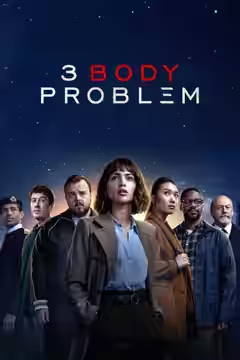
Half of a writing partnership that turns unwieldy novels into television a stranger can follow. Excellent on the map and the money, and on who is weaker in any given room; ordinary once the books run out and the invention has to be his own.
Fi1m perspective
Every scene in the first season of Game of Thrones (2011) tells you who is stronger. A king bored of being king, an old friend dragged south to run the country for him, a queen's family with other plans, and before anyone has drawn a sword you know who owes money to whom and whose children are whose. That is the D. B. Weiss habit, shared with David Benioff, his partner since the two met at Trinity College Dublin: take a book too large for the screen and make it legible one exchange at a time. The dragons can wait.
He came to it from prose. Weiss published a novel, Lucky Wander Boy, in 2003, about video games and obsession, after the Iowa Writers' Workshop, and he wrote an episode of It's Always Sunny in Philadelphia in 2013. The main work was George R.R. Martin's unfinished novels, which took eight years: with Benioff he created Game of Thrones, wrote most of its seventy-three episodes, ran the production and directed several, the finale among them. The pair then developed projects that did not happen, and in 2020 joined Alexander Woo to adapt Liu Cixin for 3 Body Problem (2024).
What works is scope with a floor under it. For six seasons Game of Thrones held a dozen families in the air and made a mass audience care which of them fell, and it did so as political drama rather than spectacle. Then Martin's books ran out, the last thirteen episodes hurried, and it showed. 3 Body Problem has the same shape in miniature. The 1960s scenes and the game inside the headset, which come from Liu, are superb; the Oxford and London scientists that Benioff, Weiss and Woo invented are thin, and they get most of the screen. Liu's novel is cold on purpose; the series tries to warm it and gets it lukewarm, and it finishes as a prologue with most of its promises still to keep.
We should own what that first season did to us. We had the map of Westeros straight before we could pronounce half of it, and when Ned Stark went south we were frightened for him in a way no spell could have managed, because the scenes had already told us exactly how weak he was in a room full of Lannisters. That is writing, not budget.
Weiss has said of adaptation that "Something that you're going to devote this much of your life to, it has to haunt you." Both his series are built on books that plainly did. What he would do with a story nobody wrote first is not yet known. Until it is, watch the first six seasons of Game of Thrones and the 1960s half of 3 Body Problem, and be patient with the rest.
Biography
D. B. Weiss is an American screenwriter and television producer. He graduated from Wesleyan University and earned an MPhil in Irish literature from Trinity College Dublin and an MFA in creative writing from the University of Iowa Writers' Workshop.
With his collaborator David Benioff, Weiss co-created the HBO series Game of Thrones (2011–2019), adapting George R. R. Martin's A Song of Ice and Fire. He wrote many episodes and received directing credit on several, including the season four premiere "Two Swords" and the series finale "The Iron Throne". He has also written for It's Always Sunny in Philadelphia and created the Netflix series 3 Body Problem (2024).
Weiss wrote the 2003 novel Lucky Wander Boy and the screenplay for the 2022 film Metal Lords.