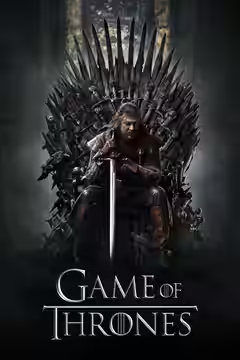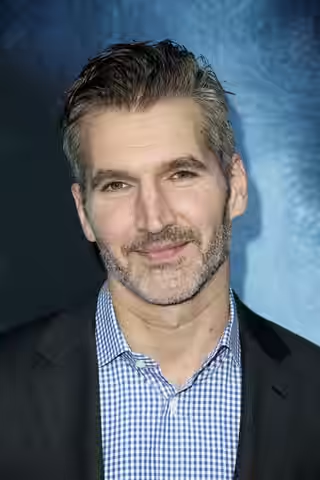
Benioff builds television out of other people's novels, and for six seasons of Game of Thrones, politics in armour, nobody did it better. The last two hurried, and 3 Body Problem is weakest wherever he leaves the book behind.
Fi1m perspective
A David Benioff scene tells you who is stronger. In the first season of Game of Thrones (2011) a king who is bored of being king sits with the old friend he has dragged south to run the country for him, and before anything important is said you know which of them is really in charge. It was Martin's trick before it was Benioff's, and he and D. B. Weiss kept it going for seventy-three episodes: two people, one table, and the power between them doing the talking. For six seasons it made a story with dragons in it feel like a drama about debt and inheritance.
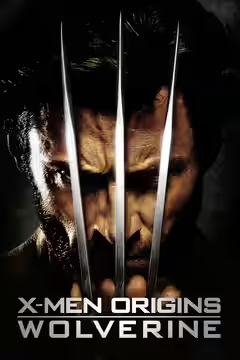
He came to television from the page. His novel 25th Hour became Spike Lee's film in 2002, and for the rest of that decade he wrote other people's stories: Troy (2004), The Kite Runner (2007), X-Men Origins: Wolverine (2009). None of them is why he has a page here. That is the eight years he and Weiss spent turning George R.R. Martin's unfinished novels into the largest thing the medium has attempted, and the five since, in which a Star Wars trilogy was developed and shelved and 3 Body Problem (2024), made with Weiss and Alexander Woo, arrived as the first proper answer to what he does next.
What he is good at is structure. He can hold a dozen strands at once and land them in the same hour, and 3 Body Problem does it for a novel most people said could not be filmed: it moves the present day from China to Oxford and London, leaves the 1960s where Liu Cixin put them, and comes out clear enough that a viewer who has never opened the book can follow it. 'The readers of the book don't get preference over people who have never encountered the book,' he has said, and he means it. The cost falls on the characters he invents to fill the gaps. The present-day scientists are thin, and they get most of the screen, while the inherited material, the 1960s and the game inside the headset, is superb.
The famous problem is the end of Thrones. The last thirteen episodes hurry, and hurrying is the one thing his best scenes never did. We were let down by them, and then a little sorry for the people who had built the rest, because the hurry looked less like carelessness than like a decision to be finished. Then, watching the headset sequences in 3 Body Problem, we found the old patience was still there, and we sat forward for the first time in years.
That series finishes as a prologue, with most of its promises still to keep. Benioff has kept promises before, for six seasons out of eight. We would watch him try again, and we would keep an eye on the clock.
Biography
David Benioff, born David Friedman, is an American screenwriter, television producer and novelist. He studied at Dartmouth College, Trinity College Dublin and the University of California, Irvine.
Benioff wrote the novel and screenplay for 25th Hour (2002). With collaborator D. B. Weiss he co-created the HBO series Game of Thrones (2011–2019), on which he served as writer, executive producer, showrunner and director of several episodes. He wrote the screenplays for Troy (2004), The Kite Runner (2007), X-Men Origins: Wolverine (2009) and Gemini Man (2019), and co-created the series 3 Body Problem (2024).