Darius Marder has directed one feature, and it is built almost entirely out of what its hero can no longer hear. Sound of Metal is patient, physical and trusting of its audience; only when it reaches for plot does it falter.
Fi1m perspective
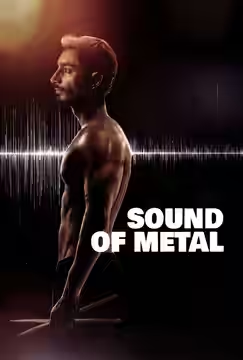
A man stands at a pharmacy counter and the pharmacist is talking to him. We can see the mouth move. What we hear is a murmur behind a wall and a thin ring sitting over the top of it. That is Darius Marder's method in one shot: put the audience inside the body of the person on screen and keep them there until they want out. In Sound of Metal (2020) the body belongs to Ruben, a metal drummer played by Riz Ahmed, whose hearing goes one morning with almost no warning, and Marder spends most of two hours refusing to let us hear more than Ruben does. That scene at the counter made us panic, and we caught ourselves leaning forward as if we could hear for him.
He came to it slowly. Marder began with a documentary, Loot (2008), then co-wrote The Place Beyond the Pines (2013) with its director Derek Cianfrance and Ben Coccio, a story of fathers and sons in Schenectady told in three movements, the first of which, with Ryan Gosling on a motorcycle, we still think is the best hour Cianfrance has directed. Sound of Metal grew from an idea Cianfrance had set aside, and Marder spent around thirteen years getting it made. The script is shared with Abraham Marder, who also shares the music credit with Nicolas Becker, and the film was made with deaf performers and consultants throughout.
What works is the sound and the patience. Becker and Abraham Marder give us very little you would call a score. What they give us instead is Ruben's ears: voices arriving as if through a bedroom wall, a dropped pan landing as a dull thump. Mikkel E.G. Nielsen cuts between Ruben's hearing and everyone else's so cleanly that we never lose track of whose we are using. Marder shoots on film and in story order and limits how much the actors watch back, and you can see the result in Ahmed, who never seems to be performing deafness so much as being caught by it. Olivia Cooke, as his girlfriend Lou, is given less and does a good deal with it.
What does not work, in both films, is the moment the writing stops trusting the pictures. In The Place Beyond the Pines the last movement has characters say what the film is about, and coincidence does the work the robberies had done. In Sound of Metal the final stretch turns to plot after eighty minutes that needed none, and it is not up to what came before. Marder's instinct is to sit and listen; his weakness is a late urge to make sure we understood.
Thirteen years is a long time to wait for a first feature. We would like the second sooner, and we would like it to end the way the pharmacy scene does, with nothing explained and nobody let off.
Biography
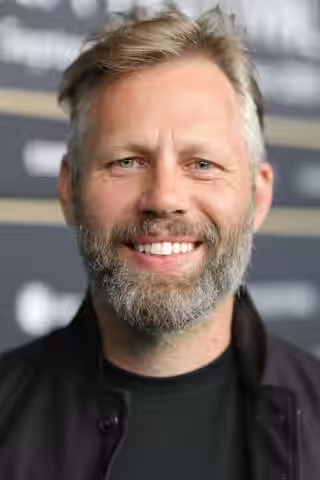
Darius Marder is an American film director, screenwriter and editor. He grew up in Conway, Massachusetts, and began working in film after earlier careers including teaching and catering.
Marder co-wrote the screenplay for The Place Beyond the Pines (2013). He directed and co-wrote Sound of Metal (2019), for which he received an Academy Award nomination for Best Original Screenplay. The film was nominated for six Academy Awards, including Best Picture, and won for Best Film Editing and Best Sound. He also edited the documentary Freeheld (2007) and directed the documentary Loot (2008).
Marder has collaborated with his brother Abraham Marder on screenwriting.