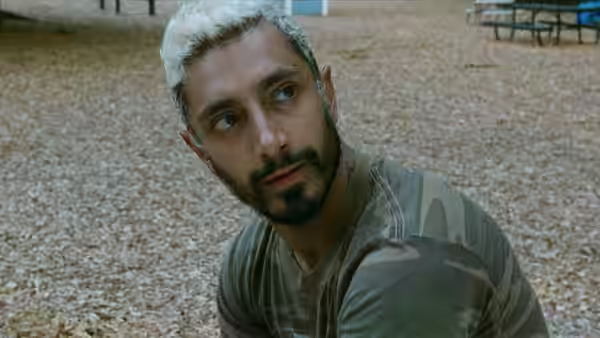
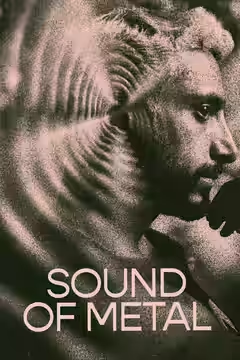
Riz Ahmed makes a drummer’s hearing loss frighteningly immediate, while Darius Marder gives the surrounding Deaf community space to live. The sound is exceptional; the script sometimes pushes its lesson harder than the performances need.
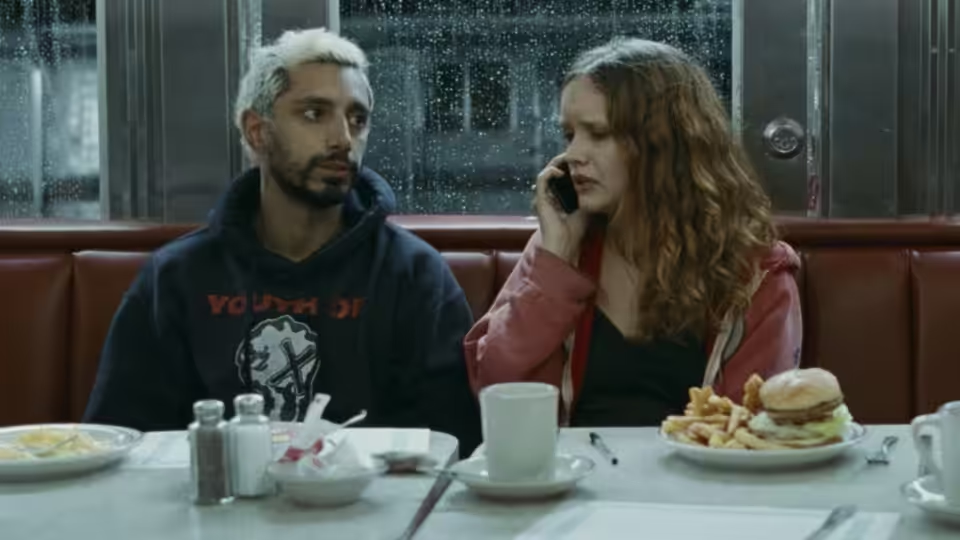
Sound of Metal is a moving, carefully made drama, with a lead performance more persuasive than some of the writing around it. Darius Marder follows a heavy metal drummer losing his hearing, watching the panic of someone whose working life has suddenly become uncertain. Ruben Stone, played by Riz Ahmed, has trouble enough imagining how to get through the next conversation. Asking him to reconsider the rest of his life is a considerable demand.
The sound makes that demand immediate: familiar noise becomes muffled, and listening takes effort rather than happening unnoticed. We felt frightened by how quickly the music became difficult to make out, because the change left us sharing Ruben’s uncertainty about what he could still hear. These passages do more than announce that something is wrong. They make a simple exchange hard to follow without suggesting that our few minutes of disorientation amount to knowing what every deaf person experiences.
Riz Ahmed lets Ruben’s panic show through the effort to contain it, and his restlessness keeps even the quieter stretches tense. Daniël Bouquet’s close-ups let us study that effort without a succession of grand breakdowns. Mikkel E.G. Nielsen leaves room in the edit for that discomfort to grow, although some passages linger after we have understood the feeling. Even when Ruben is hard to like, his need to do something about his situation remains painfully easy to understand.
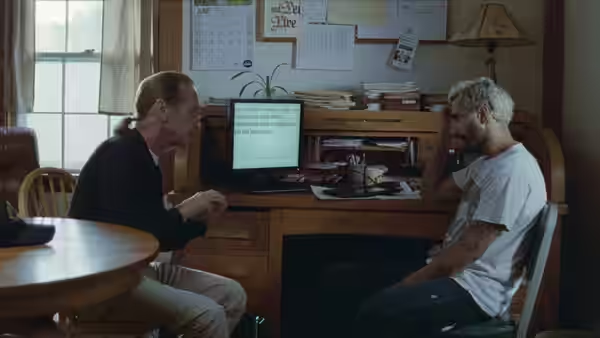
The scenes within the Deaf community are especially valuable because other people have conversations and concerns beyond Ruben’s distress. Exchanges in sign language require him, and us, to pay attention differently. Jeremy Woodward’s production design keeps those surroundings ordinary and credible, without turning them into a conspicuously welcoming retreat. Paul Raci, as Joe, brings a steadiness that does not feel soft or obliging. His performance gives the film room to consider a life Ruben cannot yet imagine wanting.
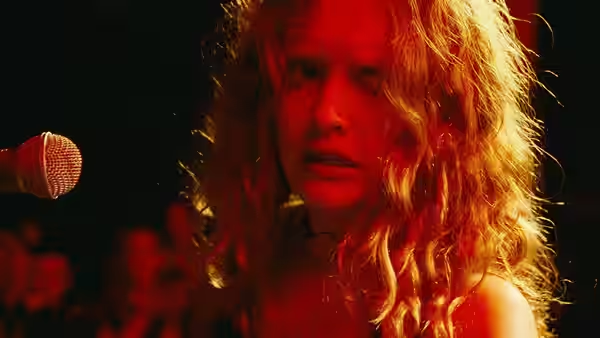
Abraham Marder and Nicolas Becker’s music works best when it leaves the unease unresolved. In a drama about a musician, it would be easy to make every feeling arrive on a cue. Here the altered sounds carry much of the distress, and the music has the sense not to insist on telling us what to feel. The live performance passages give Ruben’s attachment to playing a physical force that dialogue alone would struggle to supply.
The screenplay, by Darius Marder and Abraham Marder, is less sure when it presses the case for acceptance. There are moments when Ruben’s desperation seems to be waiting for the film to correct it, and the community risks being reduced to a source of good advice. Addiction adds weight to his fear of change, but the writing sometimes makes that connection too neatly. The later plotting is also more conspicuous than the patient observation that precedes it; we can feel the story being steered when the performances have already made its concerns clear.
These reservations matter because the film is otherwise so good at letting us watch someone struggle without instructing us how to judge him. We recommend it warmly, but it needs an evening when there is some concentration left to spare. Watch somewhere quiet, with the phone out of reach.