Twenty years as the quiet man at the edge of British films and the leading man of Arab television; now he writes and directs his own thrillers. The stillness is his asset; the question is whether his films will match him.
Fi1m perspective
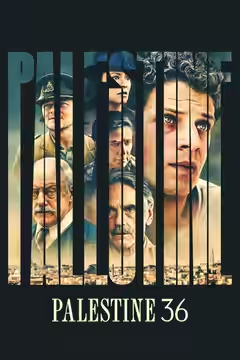
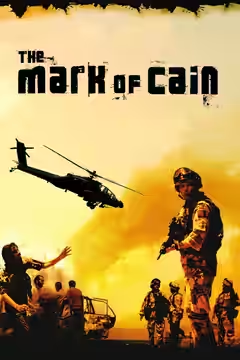
Watch Dhafer L'Abidine in a British film and you will usually find him near the edge of the frame, saying little, with the face of a man who has already decided how this will end. In Palestine 36 (2025) he is Amir, a wealthy Jerusalem newspaper publisher, one voice in Annemarie Jacir's crowded ensemble. In The Mark of Cain (2007) he is Abdullah Omar, in Tony Marchant's angry 87 minutes about two British soldiers in Iraq. Neither film is his, and in neither does he try to make it so. He holds still, listens, and lets the camera decide when to come back to him.
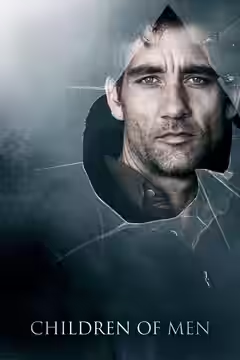
That is partly temperament and partly the shape of a career with two halves that do not quite meet. He was a footballer in Tunisia until injury stopped him, came to England at 27, and started in British television, Spooks, The Bill, Dream Team. The film parts that followed between 2006 and 2010, Children of Men, The Da Vinci Code, Centurion, Sex and the City 2, were small. Then in 2008 he played Dali in the Tunisian series Maktoub and became a household name across the Arab world, and the Egyptian and regional dramas that followed gave him the leads Britain never did. He learned Lebanese and Saudi accents to get them. British casting saw a face for the background; Tunisian and Egyptian producers saw a leading man, and they were right.
We should be honest about what our own reviews can and cannot say. In The Mark of Cain it was Gerard Kearns we could not shake, not L'Abidine; the film gives Abdullah Omar little to do beyond being present, and he is present, which is not nothing but is not a performance we remember either. Palestine 36 we admired as an ensemble, and its trouble, people explaining what their faces have already told us, is a trouble that falls on everyone in it, Amir included. Our clearest view of him is of a man who serves the film he is in and does not reach past it.
Since 2021 he has stopped waiting to be reached for. Ghodwa (2021) was his first film as writer, director and star; To My Son (2023) was shot in Saudi Arabia in Saudi dialect, a family story outside his own experience; Sophia (2025) is a UK-Tunisia thriller about a mixed-culture family. "I think it is important to be in control of your career," he has said, and he has taken it. We have not reviewed the three, so we will only note that the early notices find the thrillers predictable and slack over their running time, and find him strong at the centre of them.
Which is the pattern of the whole career, and the thing to watch for next. The actor is reliable. The next test is whether the writer can give him a part as good as the ones Egyptian television did.
Biography
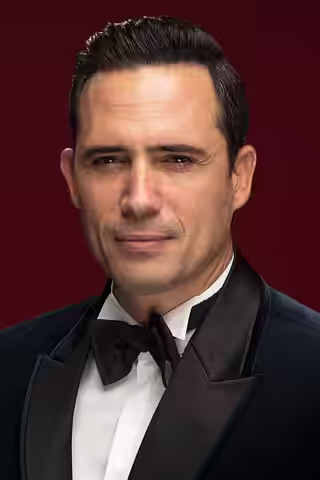
Dhafer L'Abidine is a Tunisian actor and director. He trained at the Birmingham School of Acting and began his career in the United Kingdom, appearing in series such as Dream Team, Spooks and The Bill.
He is known for roles in films including Children of Men (2006), Sex and the City 2 (2010), Centurion (2010) and A Hologram for the King (2016). In Tunisia he gained prominence playing Dali in the series Maktoub. He has also worked in Egyptian, Emirati and Lebanese productions. L'Abidine plays Amir in the 2025 film Palestine 36.