Dick Clement’s comedy gives people practical problems and the wit to negotiate them. His work with Ian La Frenais is funny, though a sharp exchange can sometimes take precedence over a character.
Fi1m perspective
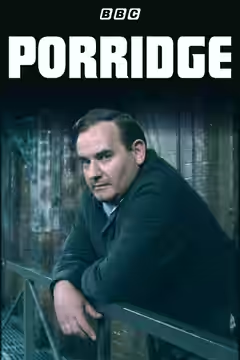
Norman Stanley Fletcher wants the last word, even when it will win him almost nothing. In the prison comedy Porridge (1974), Dick Clement and Ian La Frenais make that small ambition worth following because Fletcher knows how to adjust his excuse to the person listening. Ronnie Barker makes the calculation visible without making the dialogue feel laboured. We can follow each exchange because we know what Fletcher wants and what the other person is unwilling to concede. The writing respects his intelligence and lets us enjoy it without forgetting that somebody else controls his day.
The partnership’s breakthrough, The Likely Lads (1964), established their ear for working-class conversation. Auf Wiedersehen, Pet (1983) widened the company to an ensemble of migrant workers, and their later film work extended to the heist story of The Bank Job (2008). Clement often handles structure while La Frenais handles dialogue, though they write together in the same room. We would be wary of treating the jokes as separate from the planning. Porridge works because an excuse is aimed at a particular listener, who may already know perfectly well what Fletcher is doing.
For Alan Parker’s The Commitments (1991), the pair adapted Roddy Doyle’s novel with Doyle himself. The auditions show how much comedy there is in trying to get something organised: finding musicians gives the exchanges a purpose and allows the humour to keep changing shape. We laughed more than we expected at the business of putting this group together, because the jokes kept coming out of the practical difficulties. The performers get quick exchanges that mostly sound like things people might say to each other. That leaves them room to make the band’s unruly company worth spending time with.
The weakness comes when those exchanges are allowed to become the main attraction. In The Commitments, some hurry past before the characters have time to develop, and a succession of funny encounters occasionally leaves us wishing somebody would stop talking. Porridge has its own repetition, particularly in Fletcher’s battles with the warders, but the immediate wants remain clear enough to keep us involved. Richard Beckinsale helps make the company worth returning to. Start with Porridge for the care taken over an excuse, then try The Commitments for the less orderly business of recruiting a band.
Biography
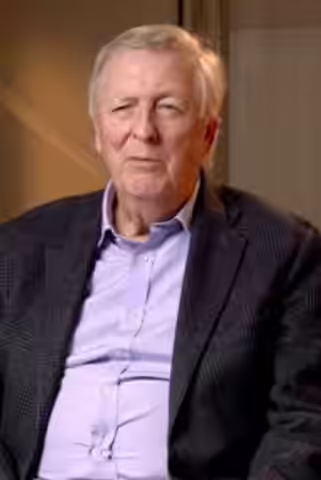
Dick Clement is an English screenwriter, director and producer. Born on 5 September 1937 in Westcliff-on-Sea, Essex, he was educated at Bishop's Stortford College. He is best known for his long-term writing partnership with Ian La Frenais.
Together they created several acclaimed British television series, including The Likely Lads (1964–66), Whatever Happened to the Likely Lads? (1973–74), Porridge (1974–77) and Auf Wiedersehen, Pet (1983–2004). Their film credits include The Commitments (1991), Still Crazy (1998), Goal! (2005), Flushed Away (2006), Across the Universe (2007) and The Bank Job (2008). Clement has also directed some of their adaptations.
Clement and La Frenais have lived in the United States since the 1980s. Clement was appointed OBE in the 2007 Queen's Birthday Honours.