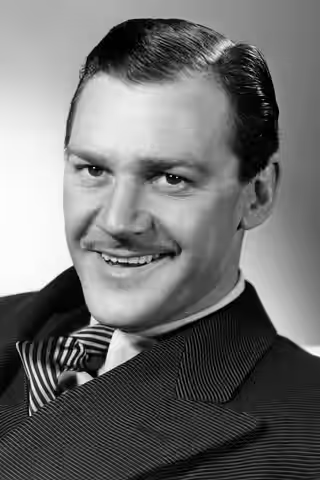
Douglas Fowley spent two decades playing hoods and reporters in B-pictures, then took out his false teeth and became a western codger. In between he gave us Roscoe Dexter, the director in Singin' in the Rain, and that is the part that has lasted.
Fi1m perspective
Douglas Fowley had a trick, and he was happy to explain it. He lost his upper teeth to an explosion aboard an aircraft carrier in the Pacific during the war, and for the rest of his career he wore a plate. When a part called for an old man, out it came. "I started playing old character roles by removing my false upper plate, adding a beard, voice and gait to match my interpretation," he said in 1994. No talk of inner life there; that is a working actor describing his tools.
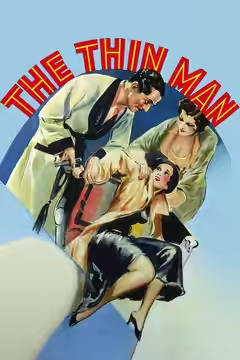
The career runs in two halves with the plate as the hinge. He started in 1933 in The Mad Game with Spencer Tracy, after stage and nightclub work, and for the next fifteen years he was a heavy: gangsters, slick villains, fast-talking reporters, the sort of man who turns up in a Charlie Chan picture. He drove a taxi, uncredited, in The Thin Man (1934). Then the Navy, then the teeth, and by Battleground (1949) he was using the plate for laughs. From 1955 to 1961 he was Doc Holliday, and before that Doc Fabrique, opposite Hugh O'Brian on The Life and Legend of Wyatt Earp, a run of more than thirty appearances together.
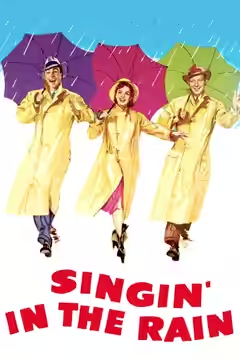
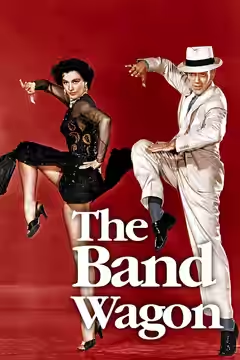
The part in the middle is the one to see. Roscoe Dexter in Singin' in the Rain (1952) is the director whose job has changed under him overnight, trying to get a silent star to say her lines into a machine that will not cooperate. Our review scored the film 93 and did not single Fowley out, which is the character actor's lot: the picture is so full of good work that the man shouting from behind the camera gets lost in the count. We laughed at Dexter harder than at almost anyone else in it, because Fowley plays him as the one person on the set who is not enjoying himself, and the less he enjoys it the funnier it gets. He turned up again a year later, uncredited, as the auctioneer in The Band Wagon (1953), another Comden and Green musical.
The limits are plain enough. For most of his working life the budgets were small and the parts were smaller, and the heavies of the 1930s and 1940s are interchangeable by design. We have not reviewed the westerns and will not pretend to judge them, though the record suggests he found more room in them. His best film role is a supporting one in someone else's picture.
Still, not many actors have a career you can date by whether their teeth are in. Watch Singin' in the Rain again and keep an eye on the man behind the camera. He is the only one in the picture having a bad day, and it is one of the reasons we have a good one.
Biography
Douglas Fowley (born Daniel Vincent Fowley) was an American actor. He appeared in more than 240 films and dozens of television programmes between 1933 and 1982.
Fowley made his film debut in The Mad Game (1933). He is best known for his role as the frustrated director Roscoe Dexter in Singin' in the Rain (1952) and for his regular supporting role as Doc Holliday in the television series The Life and Legend of Wyatt Earp (1955–1961). He also appeared in numerous other films and series, including The Thin Man (1934), The Band Wagon (1953) and Walking Tall (1973).