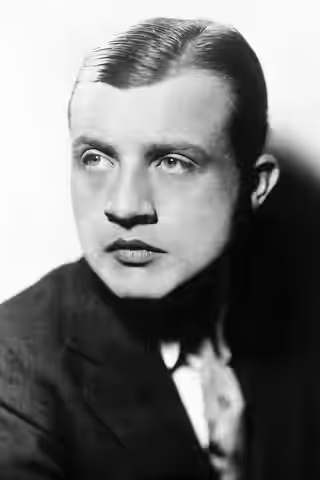
Dwight Frye makes horror’s supporting characters difficult to dismiss. His theatrical delivery can be excessive, but Renfield in Dracula has a vulnerability worth looking past the mannerisms to find.
Fi1m perspective
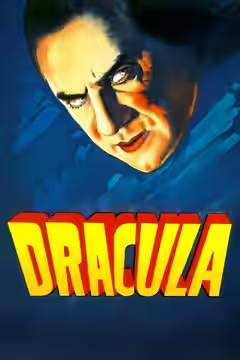
In Dracula (1931), Dwight Frye’s Renfield stares and laughs with an intensity that makes it difficult to look elsewhere. His delivery does not pretend to be natural, and anyone who finds the laugh excessive has a point. We were unsettled by him because vulnerability keeps showing through the hysteria. The performance asks us to notice the distressed man as well as the alarming behaviour, which gives the theatrical effects something useful to do.
Tod Browning’s film is an uneven setting for that performance, with an opening the later stiff, talkative stretches cannot match. Bela Lugosi remains its chief attraction; Frye is not a reason to pretend the rest moves any faster than it does. But a supporting role played this insistently can hold our attention when the film struggles to do so. There is also a danger in that insistence: the high-pitched voice and mannered delivery can become all we remember, and there is more to Renfield than that.
The decisive turn came with that film and James Whale’s Frankenstein (1931), in which he played the hunchbacked assistant Fritz. Frye had performed comedy and drama on stage, but those two horror parts helped confine his screen work to eccentric or unbalanced supporting characters. Fritz made good use of his physical commitment, though the repeated casting left less room for the comedy he had already played. His Wilmer Cook in The Maltese Falcon (1931) is a useful reminder that horror was not his only screen employment.
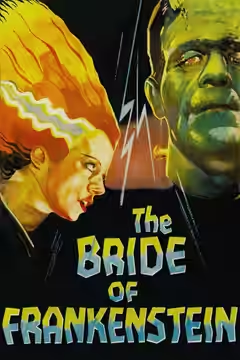
The later work also needs to be judged with some allowance for what survived the cutting room. His roles in Bride of Frankenstein (1935) and Son of Frankenstein (1939) were reduced, and smaller or uncredited appearances became more common in the 1940s. That does not make every mannerism worth defending, or every brief appearance worth seeking out. It does make the repeated casting frustrating when Dracula shows how much feeling he could bring to such a narrow assignment. For a first encounter, Dracula is worth its slower stretches; do not watch only for Lugosi.
Biography
Dwight Frye was an American character actor of stage and screen. Born Dwight Iliff Fry on 22 February 1899 in Salina, Kansas, he began as a concert pianist before moving into theatre in the 1920s, appearing in Broadway productions including the original 1922 staging of Luigi Pirandello's Six Characters in Search of an Author.
With the advent of sound films he became known for roles as mentally unbalanced characters in Universal horror pictures. He played Renfield in Dracula (1931) and Fritz in Frankenstein (1931). In Bride of Frankenstein (1935) he portrayed Karl, Pretorius's henchman; the part had been longer but many scenes were cut before release. Frye also appeared in The Vampire Bat (1933) and later Universal Frankenstein sequels. He died of a heart attack on 7 November 1943 in Los Angeles, aged 44.