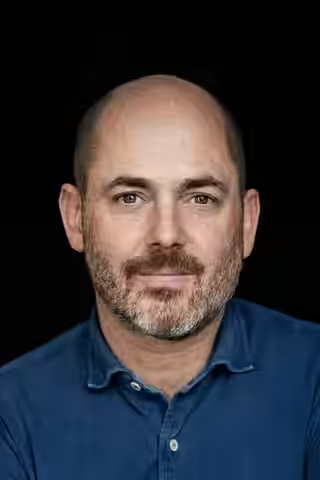
Edward Berger puts men in rooms they cannot leave and watches what the rooms do to them. His quiet, procedural work is his best; when he turns the volume up he is less interesting, and he knows how to do both.
Fi1m perspective
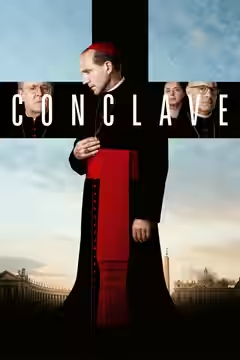
Edward Berger's idea of a set piece is a man in red walking quickly down a corridor. In Conclave (2024) the pope is dead, the cardinals are locked in, and the tension comes from folded paper: a name read aloud, a needle threaded through the ballot, a face in the second row doing arithmetic. Nick Emerson cuts the votes as procedure and Berger trusts us to keep count. We were more gripped by that than by most chases, because nothing is rushed and nobody explains what we can already see.
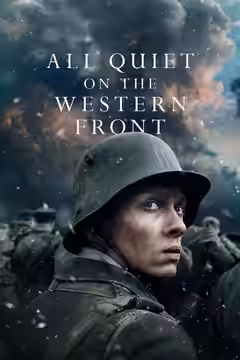
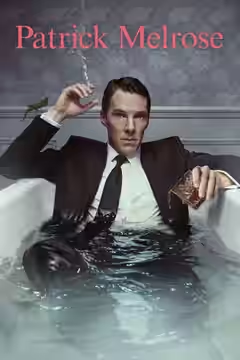
He came to this by a long road. He trained at NYU Tisch and worked at Good Machine in New York, then went back to Germany and spent the best part of two decades in German television and features, among them Jack (2014), a small film that already had his habit of staying close to one person and refusing the wide shot. Deutschland 83 (2015) got him noticed abroad; Patrick Melrose and The Terror (both 2018) got him English-language work. Then came All Quiet on the Western Front (2022), which was loud, and Conclave, which was not, and he is better at not.
The Terror, on which he directed alongside Tim Mielants and others, is the clearest case. Above decks the sky and the ice are the same dirty white; below, the ceilings are so low the officers stoop and the lantern light shows breath before it shows faces. The shots are held still until we feel the cold ourselves. It is the most frightening period television we have sat through in a long while, and the creature is the least of it.
What Berger does well is the sealed place: two ships frozen into the Arctic, a Vatican with the doors shut. Volker Bertelmann has scored five of his projects, and in Conclave the strings are plucked and bowed close to the bridge so they sound like wire under strain; the score does the nerves so the actors do not have to. What he does less well is know when he has said enough. Conclave is a potboiler that wants to be taken for a meditation, and its ending gives the game away. The Terror goes slack in the middle. His war film was faulted by some German reviewers and historians for departures from the record and from the novel; we have not reviewed it, and will only note that the complaint attaches to the loud one.
He has said he saw Conclave as a chance to make an Alan J. Pakula political conspiracy thriller, and that is the right ambition for him: men in robes, in rooms, deciding things. He is now attached to a Bourne film. Bourne films are mostly running. We would rather he kept the doors shut and made us wait.
Biography
Edward Berger is a director and screenwriter. Born on 6 March 1970 in Wolfsburg, West Germany, he holds Swiss and Austrian citizenship. He studied at the Hochschule für Bildende Künste Braunschweig and graduated from New York University’s Tisch School of the Arts in 1994.
He is known for the German films Jack (2014) and All Quiet on the Western Front (2022), as well as his English-language debut Conclave (2024). Berger has also directed television series including Deutschland 83 (2015) and Patrick Melrose (2018).
For All Quiet on the Western Front, Berger won an Academy Award for Best International Feature Film, was nominated for Best Adapted Screenplay, and won three British Academy Film Awards. For Conclave, he received a Golden Globe nomination for Best Director and a British Academy Film Award for Outstanding British Film.