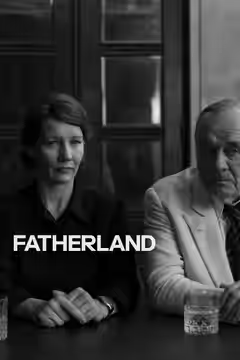
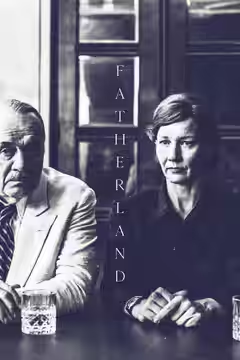
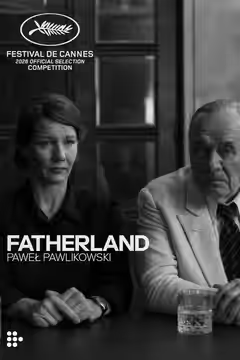
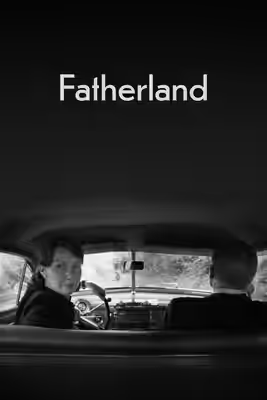
Paweł Pawlikowski’s account of Thomas Mann’s 1949 return to a divided Germany is exact, handsome and over in 82 minutes. Sandra Hüller, as the daughter who steers him, gives it the pulse the script keeps politely to itself.
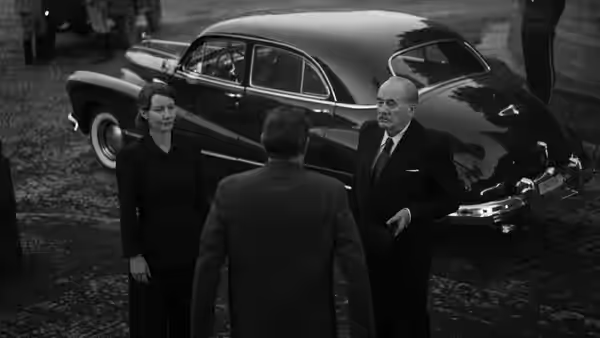
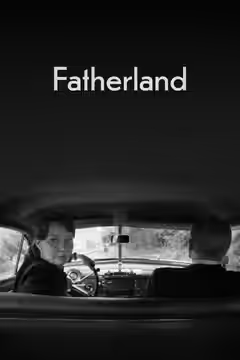
In 1949 Thomas Mann, sixteen years out of Germany, went back to give a speech in Goethe’s bicentenary year to a country that had done without him. Paweł Pawlikowski’s film follows him and his daughter Erika across the wreck of it, west to east, in 82 minutes of black and white. It is a road film with no scenery, only rubble, hotel rooms, reception halls and the faces of people who stayed. The script, by Pawlikowski and Hendrik Handloegten, is mostly conversation, and nearly every conversation is about what the old man is going to say.
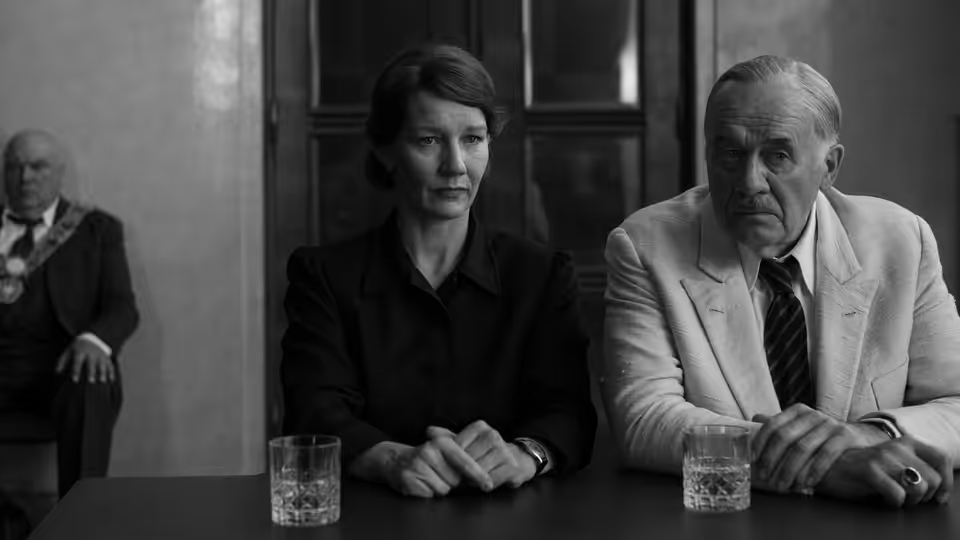
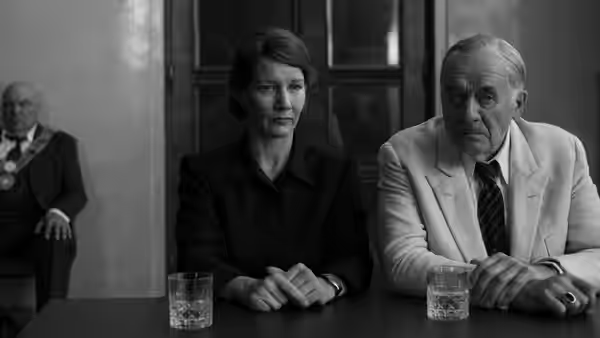
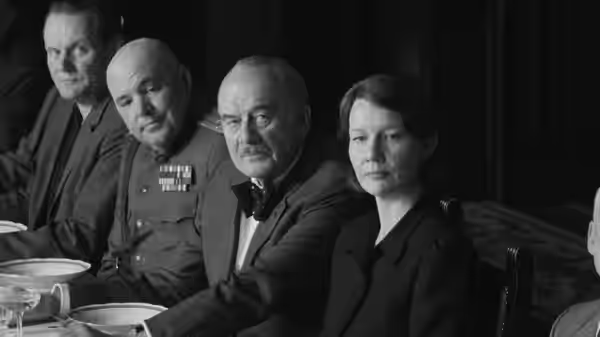
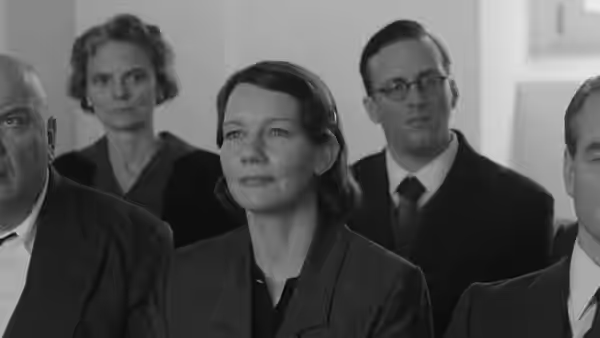
Erika does the work. She reads the drafts, handles the officials, decides which invitations are traps, and Sandra Hüller plays her almost without raising her voice. What she does instead is watch. At one of the receptions the camera stays on her while a room full of Germans applaud her father, and we found ourselves near tears: she is the only person in the shot who knows what the applause cost, and nobody is applauding her. Hüller carries that knowledge in the set of her mouth. It is quieter work than Anatomy of a Fall and, we think, harder.
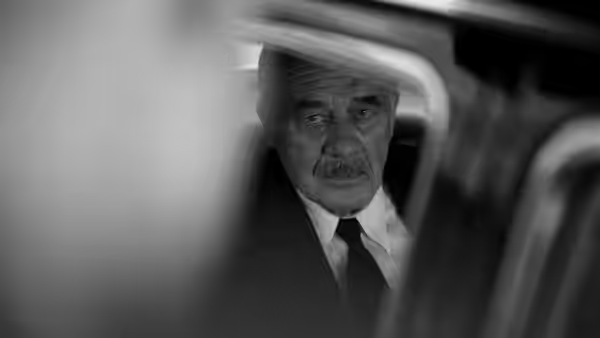
Hanns Zischler plays Thomas Mann as a man who has decided to be a monument and finds it restful. He is courteous, slow, vain in the way of someone who has earned it, and nearly impossible to read. The film’s tension comes from watching Erika try to read him anyway. When he does say something unguarded, it lands because Zischler has spent an hour giving us nothing.
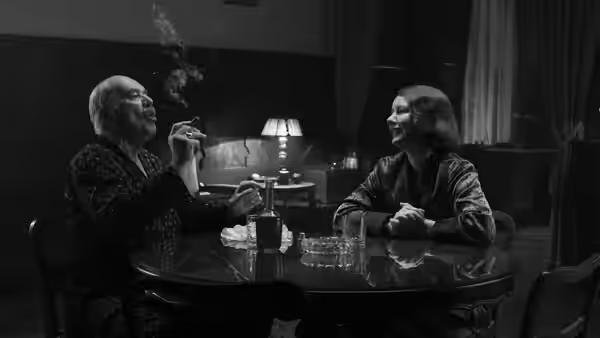
Łukasz Żal photographs all this in a silvery monochrome that flatters nobody. Interiors are lit from windows, and the windows look out on ruins; production designers Marcel Sławiński and Katarzyna Sobańska build the hotels and halls as places that have been swept but not repaired. Aleksandra Staszko puts the Manns in good, dark, slightly foreign tailoring, so that in every room they look like visitors. Marcin Masecki’s music is used sparingly and stops when people speak. Pawlikowski cuts the film himself with Piotr Wójcik, and scenes end on the line that matters and not a beat later.
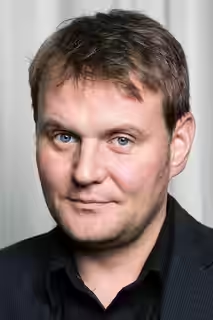
Around the two of them is a gallery of people who stayed and managed. Joachim Meyerhoff plays Gustaf Gründgens, the actor Erika was once married to and who kept working through the Third Reich; his scenes with Hüller are the sharpest in the film, two people being civil across a gap neither will name. Devid Striesow’s Johannes R. Becher, the poet courting Mann for the East, is all warmth and paperwork. Enno Trebs and Theo Trebs appear as Wieland and Wolfgang Wagner, and Anna Madeley’s Betty Knox gives Erika someone to talk to who is neither German nor family. None of them is allowed to run long enough to become a relationship.
That is our complaint, and several critics have made it more gently. The film is so well trimmed that it has trimmed away some of what we came for. Klaus Mann (August Diehl), Erika’s brother, is present, and how he is present we will leave you to find out, but we wanted more of him and of what he meant to her. The last twenty minutes have the shape of a film that is getting somewhere, and then it stops. We admired the discipline and sat through the credits feeling short-changed, which Pawlikowski has not made us feel before.
Ida and Cold War were also short, and neither felt small. This does, a little. Those films were free to invent their people; here Pawlikowski is tied to what Thomas Mann did and said in a documented summer, and the tether shows. The ideas are all there: exile, who gets to come home and on what terms, a daughter spending her life on a father’s reputation. They are more often stated than dramatised.
See it in a cinema: Żal’s greys need a big dark room, and so does Hüller’s stillness. Then go home and argue about whether Thomas Mann was right to go back. The film will not have told you, and we think that is a choice rather than a failure.